1992 – Yamaha OX99-11

EngineDisplacementPowerAccelerationTop Speed
70° V123.5 L400-420 BHP3.1s352 km/h
219 mph

When it comes to F1 technology for the public roads, the McLaren F1 is often considered very alike motorsport machines. Ferraris have the opinion of those „true Formula 1 cars made available to the customer.” Most of the time, though, that’s just a catchy marketing slogan. But no one went as far as the Japanese. They shoved a legit detuned engine – one that was actively powering race cars in the pinnacle of motorsport – into a supercar meant for civilians. Well, they were going to, but Yamaha ended up in the oblivion. Still, it’s a concept worth knowing about.
The early ’90s could be called the golden age of the supercar craze – a time when fast cars were not only stunningly designed but also packed with cutting-edge technology. The revival of Bugatti, the McLaren F1 raising the bar, and the epic rivalry between the Ferrari F40 and Porsche 959… A market was emerging that couldn’t simply be ignored. Even Jaguar, which had never ventured into this territory before, threw its hat into the ring. Many followed suit, and Yamaha was among them.

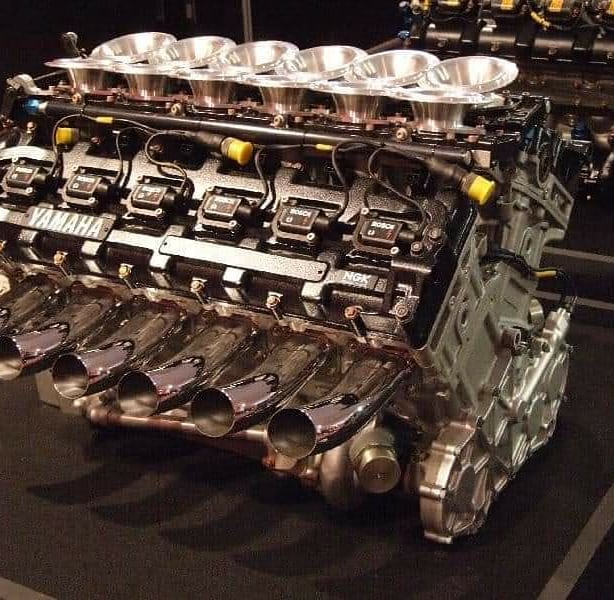
At first glance, Yamaha might seem like just a motorcycle brand, but back then, they were making waves with their engines in F1 racing. Drivers from teams like Zakspeed and Jordan were relying on Yamaha’s technology. In 1991, Yamaha developed a new engine, codenamed OX99, designed to give team Brabham a competitive edge. It was a 3.5-liter, 60-valve V12 with cylinders arranged at a 70-degree angle – an architecture reminiscent of Ferrari’s handiwork. Capable of delivering 660 horsepower at around 13,000 RPM, it was impressive on paper, but it fell short compared to the Italians.

It broke down more often, struggled with reliability, was a bit too heavy, slightly underpowered, and produced vibrations so intense that it could self-destruct without warning – which, unsurprisingly, happened a few times. While it didn’t make a mark on the racetrack, Yamaha thought it might find a second life on the showroom floor.

When it came to building cars, Yamaha could be described as vegetarians in a room full of carnivores – more into tuning motorcycles than designing full-blown cars. Sure, they had a hand in the Toyota 2000GT, but that was ancient history by this point. Here, we’re talking supercar, so the project was handed over to Yamaha’s British subsidiary, Ypsilon Technology. This division existed solely to keep their F1 engines alive, so they had some expertise under their belt.

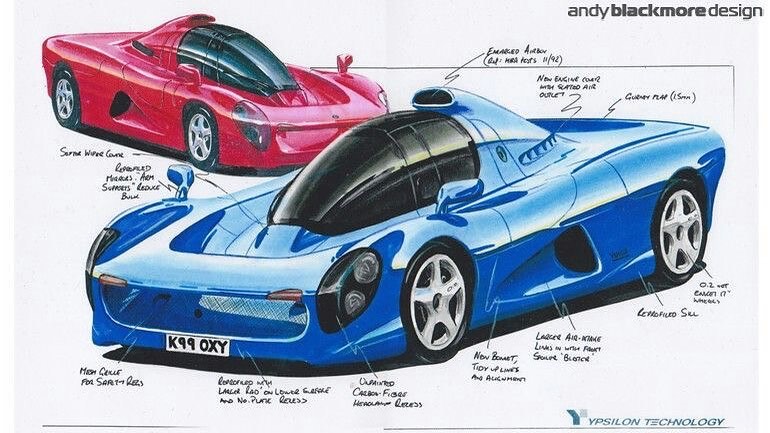
To help develop the car, Yamaha enlisted the design studio IAD and consulted with engineers who had F1 experience. Initially, the project was handed to some German design office, but the car they presented was… well, let’s just say it wasn’t exactly groundbreaking. After that lukewarm effort, the prototype development was handed back to the specialists at Ypsilon and IAD. At the helm of the project was Robin Herd from March Engineering, an F1 car expert, which was promising for the car’s motorsport pedigree.
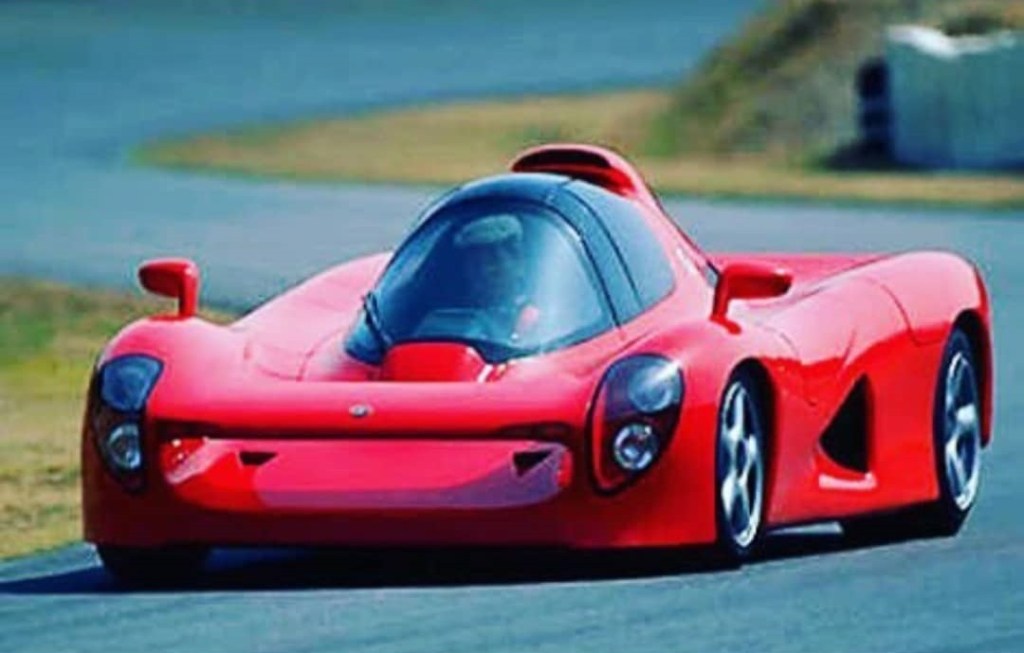
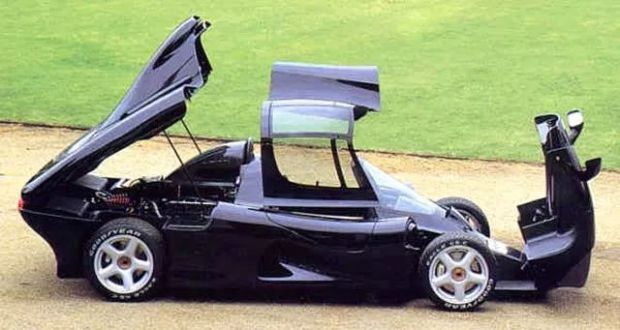
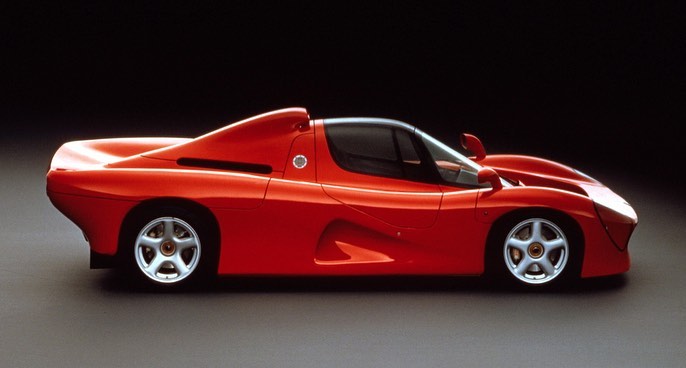
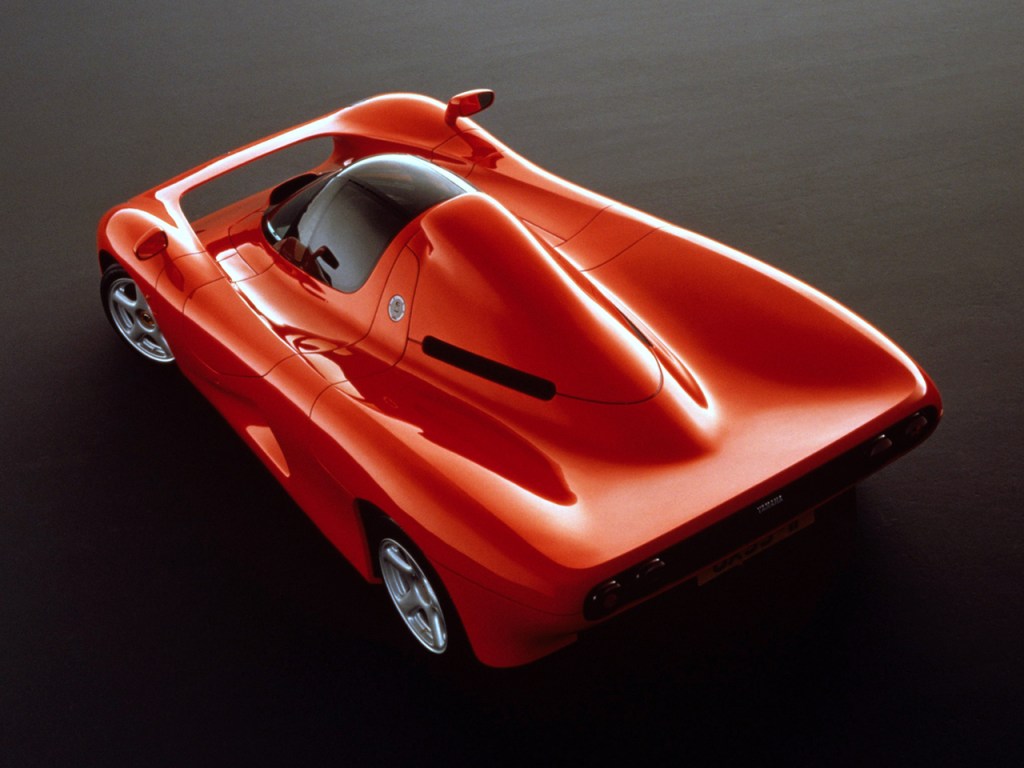
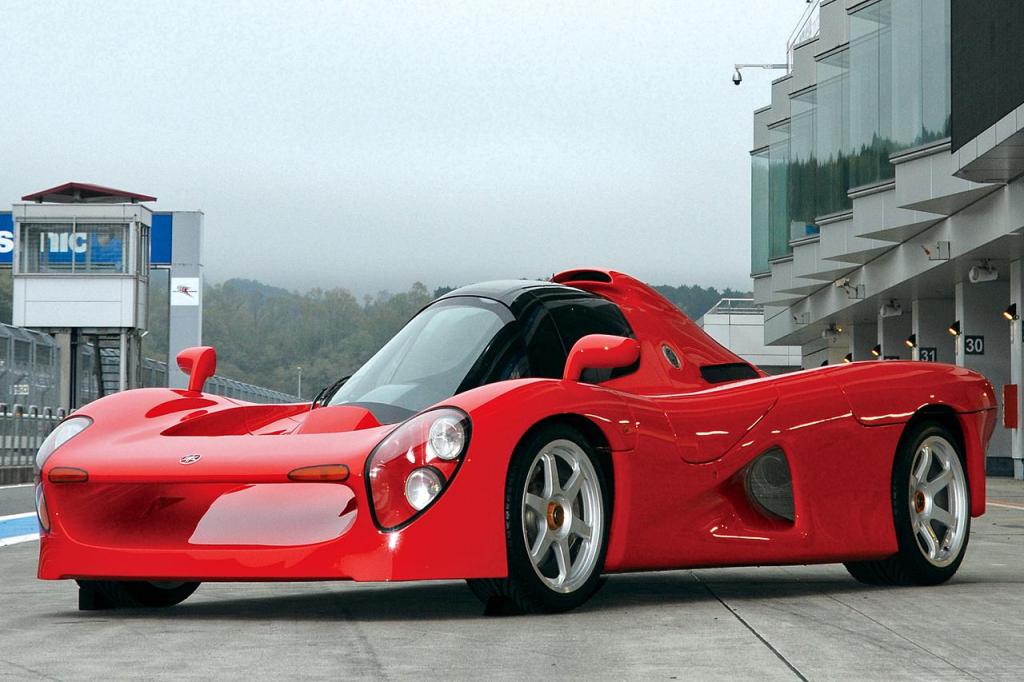
The rolling platform they came up with was nothing short of radical – dare I say, completely insane. It was a two-seater, but not in the way you’d imagine. The seats were arranged in a tandem layout, with the passenger sitting directly behind the driver, so close that their legs wrapped around the driver, much like you’d see on a motorcycle. The aerodynamic cabin strongly resembled a fighter jet cockpit.

As for the doors – well, calling them „doors” doesn’t really do them justice. They were more like a roof, or maybe a hatch? Whatever you’d call it, it was an integral piece of the car that opened wide to give access to both the driver and the passenger. The chassis and engine were deeply rooted in Formula 1 technology, making this machine a blend of motorsport and madness.

This was one of the most radical projects ever undertaken, both technologically and visually. It drew heavily from Group C racing, hence the centrally positioned seats within a cockpit surrounded by polycarbonate, akin to a fighter jet’s canopy. The wheelbase was incredibly short, and there was a front splitter integrated between the headlights. Interestingly, apart from a diffuser, the rear of the car was completely devoid of spoilers – a bold choice.

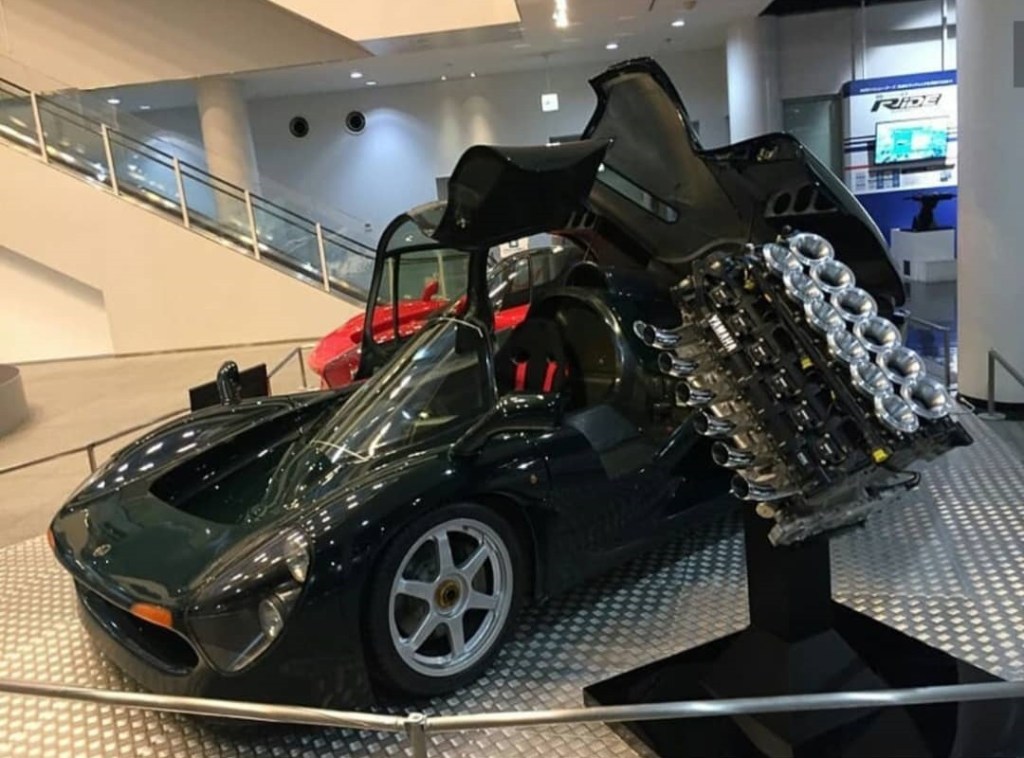
In true Formula 1 fashion, the engine was mounted directly to the platform, which was a carbon-fiber honeycomb monocoque. This setup was closer to F1 engineering than anything McLaren or Bugatti could even dream of at the time. Power was delivered through a transaxle system developed by FF Developments, featuring a 6-speed manual gearbox integrated with a multi-plate clutch and a limited-slip differential.

Braking was handled by ventilated cast-iron discs with six-piston calipers up front and four-piston calipers at the rear. Suspension setup consisted of double wishbones on all four corners, with inboard springs and pushrod-actuated dampers – a setup straight out of Formula 1.

The bodywork? Hand-pressed aluminum, crafted with the same care and precision as Aston Martin’s racing cars – and, in fact, the very same Aston Martin team did the thing for Yamaha. While many supercars of the era were notorious for questionable build quality, Yamaha stood out for its impeccable craftsmanship. This wasn’t just radical; it was a masterclass in engineering and execution.
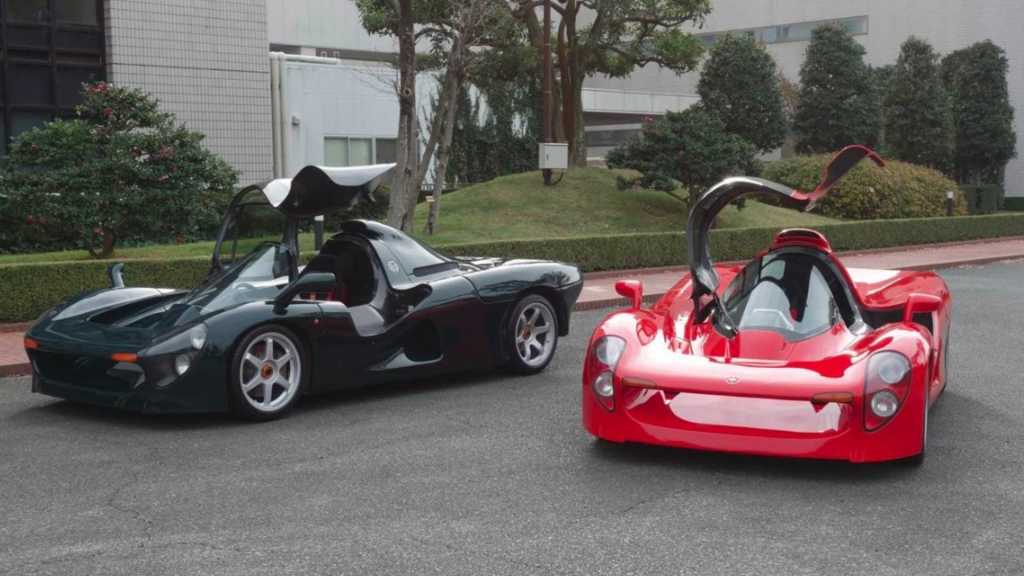
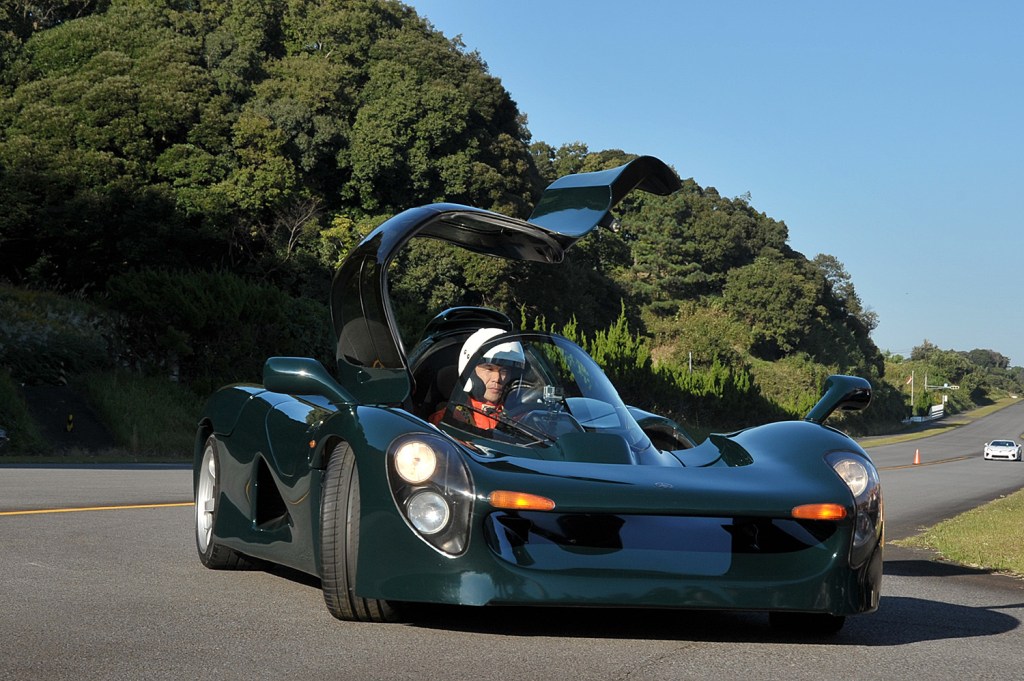
The V12, which in Formula 1 could easily generate well over 600 horsepower – closer to 700, really – was tuned here to produce 400. Still, that’s impressive: a solid 114 horsepower per liter, and it revved up to 10,000 RPM. Not many engines at the time could come close to such figures.

They aimed for a curb weight under a ton, but let’s be honest… that was a tough ask. At 1,100 kg with 400 horsepower, the power-to-weight ratio wasn’t bad at all. However, to be fair, that kind of power output doesn’t exactly set the world on fire today – and even in the ’90s, it wasn’t groundbreaking. Especially with McLaren just around the corner. Within a year, they would unleash the F1, sitting in the same weight category but boasting over 600 horsepower. That was game over for everyone else.

As for the interior, well, there wasn’t much – though the presence of functioning air conditioning was a saving grace. There was no sound insulation, so the scream of the V12 revving up to 10k RPM drilled straight into your ears. This wasn’t a car for comfortable road trips – it was never meant to be. Instead, it focused entirely on delivering an unparalleled driving experience and emotions that no “street go-kart” like a Lotus or Morgan could match – thrills reserved exclusively for F1 cars.

And you have to admit, if this model had hit the market, it wouldn’t have had any real competition. Supposedly, you could drive it “normally” up to 6,000 RPM. But cross that threshold, and it was all-out chaos – either you became the fastest person in town, or you met your end trying.
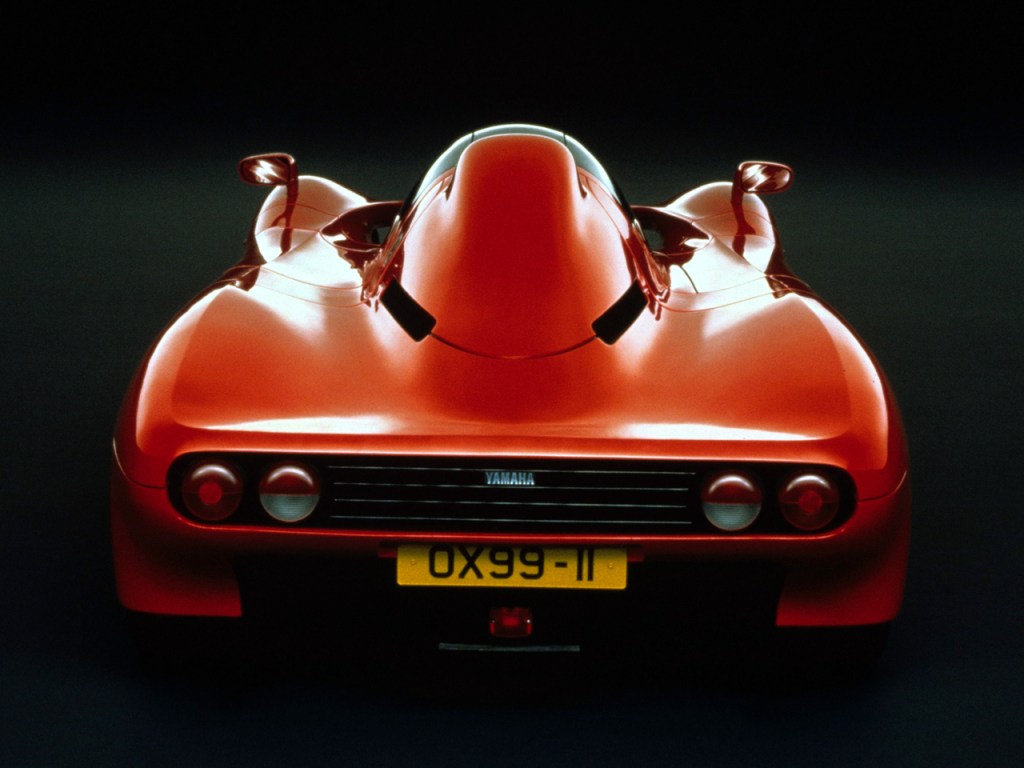
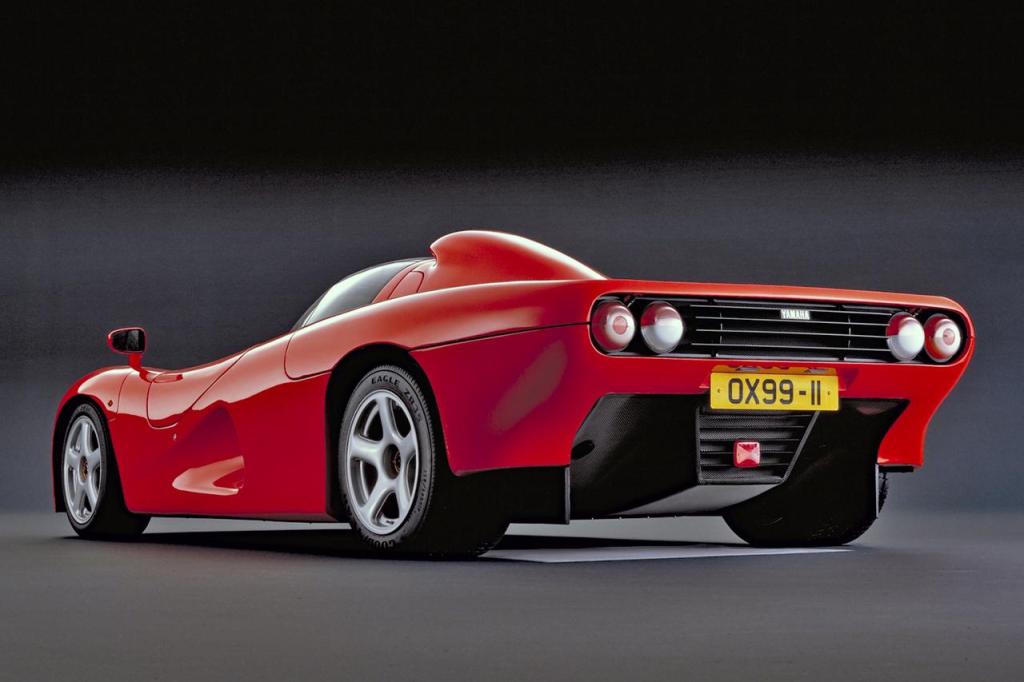
The Japanese set out to create a hardcore supercar built around a purebred racing engine… Unfortunately, Yamaha couldn’t come to financial terms with IAD, so they pulled the project and handed it entirely to their Ypsilon bureau – but even they were given an ultimatum. The car had to be ready in six months, or the whole thing would be scrapped. With every passing moment, the chances of finding buyers for such a car were getting dangerously close to zero. Delays piled up, and eventually, the project was officially shut down.

Only three prototypes were built: one red, one green, and one black. One of them even went up for sale not long ago, valued at $1.3M. When the car was initially supposed to hit the market, its price tag was set at $800k – around $1.5M in today’s money. For that price, you could’ve bought three Lamborghini Diablos with Lamborghini V12 power. Selling it was always going to be an uphill battle. And that’s a shame. The price was steep, but realistically… nothing else like it was available, not anywhere, not at any price. If you added air conditioning and a few extras (like, say, a body shell) to an F1 car, this is exactly what you’d end up with: the Yamaha.

Then again, maybe it’s for the best that it never went into production – depends on how you look at it. The world soon faced a financial crisis, and the supercar craze fizzled out. Many smaller manufacturers that tried to ride that wave sank without a trace. Meanwhile, Yamaha stuck to motorcycles and eventually got the chance to contribute to the Lexus LFA project.

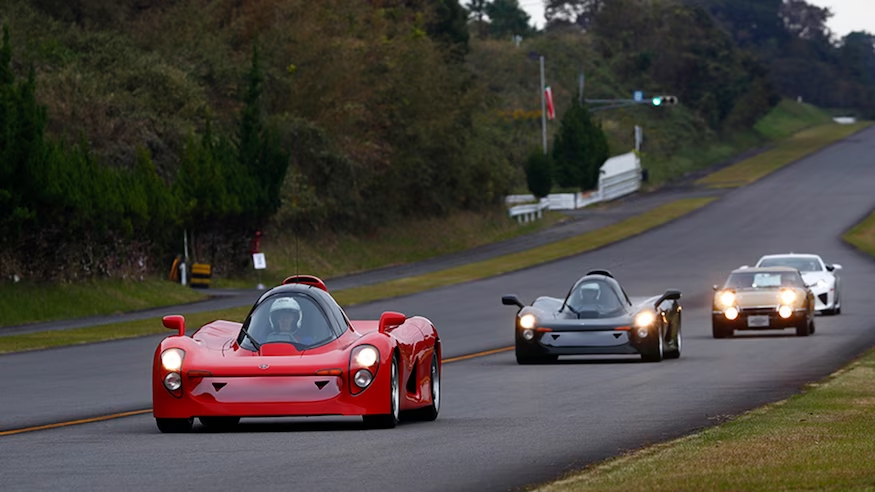
Usually, manufacturers don’t like to talk about their old failed projects. Not the Yamaha. They’re still proud of this model to this day. The prototype in their Japanese museum is often driven at various events, a rolling reminder of what could’ve been.

Krzysztof Wilk
All sources: TO BE ADDED
1992 – Yamaha OX99-11

EngineDisplacementPowerAccelerationTop Speed
70° V123.5 L400-420 BHP3.1s352 km/h
219 mph

Jeśli chodzi o technologię z F1 na drogach publicznych, to o McLarenie F1 uważa się, że to bardzo bliska pochodna. Zawsze o Ferrari zwykło się mówić, że „ten najnowszy model to już naprawdę bolid Formuły 1 dostępny dla klienta”. To często nic więcej jak marketingowy slogan… Nikt jednak nie posunął się tak daleko jak Japończycy. Wsadzili oni przyduszony silnik, który dostarczali wtedy do wyścigów w królowej motorsportu – i na co dzień napędzał bolidy w zawodach – a miał zawitać również i pod maską supersamochodu dla cywili. Miał, bo Yamaha skończy na śmietniku historii a jest projektem, o którego istnieniu warto jednak wiedzieć.

Początek lat ’90-tych można nazwać szałem na supersamochody – generalnie na szybkie samochody. Atrakcyjne wizualnie i zaawansowane technologicznie. Odrodzenie Bugatti, McLaren F1 podnosi poprzeczkę, wielka wojna między Ferrari F40 i Porsche 959… Rodził się rynek, którego nie można było ot tak zignorować. Nawet Jaguar, który przecież nigdy przedtem – a teraz również przedstawił swoje propozycje. Wielu się skusiło. Yamaha… na pierwszy rzut oka tylko marka motocykli, ale zaistniała w tamtym okresie kontraktem na zespoły napędowe do wyścigów F1. Kierowcy teamów takich jak Zakspeed czy Jordan jeździli na technologii Yamahy. W 1991 roku powstał nowy motor – o kodzie 0X99 – mający dać przewagę zespołowi Brabham. 60-zaworowe V12 o pojemności 3.5-litra i cylindrach ustawionych pod kątem 70 stopni. Architektura bardzo podobna do tej z warsztatów Ferrari. Zdolne do 660 koni mechanicznych przy jakichś 13k obrotów – ale nie był tak dobry jak Włochów, bo psuł się częściej, przez co nie wygrywał. Był przyciężki, z deka niedosilony, a wibracje generował takie, że mógł się rozpierdolić bez ostrzeżenia – parę razy się przytrafiło. Na torze, co prawda, sukcesów brakło – mógł się za to nadać na sprzedaż.

Jeżeli chodzi o budowę samochodów, to można powiedzieć, że byli jaroszami. Toyota 2000GT została opracowana przez Yamahę, ale to było dawno i nieprawda. Tutaj mowa była o supersamochodzie, więc oddano projekt do filii na wyspach brytyjskich. Ypsilon Technology w ogóle powstało tylko po to, żeby utrzymywać przy życiu te wyścigowe motory z Formuły 1, więc wiedzę jakąś tam mieli. Do rozwoju zaangażowano studio IAD, i pracę konsultowano z inżynierami pracującymi przy F1. W ogóle najpierw projekt przejęło jakieś tam niemieckie biuro – ale auto, które zaprezentowali to… no tak średnio, bym powiedział – i dopiero wtedy rozwojem prototypów zajęli się specjaliści z Ypsilon i IAD. Szefem projektu został Robin Herd z March Engineering, ekspert od budowy bolidów F1.

Jeżdżąca platforma jaka powstała była bardzo radykalna, żeby nie powiedzieć pojebana. To był dwuosobowy pojazd z siedzeniami w układzie tandem – jeden za drugim, tak blisko ściśnięte, że pasażer obejmuje kierowcę nogami jak dzieje się to podczas jazdy motocyklem. Aerodynamiczna kabina mocno przypominała kokpit samolotu. Drzwi… właściwie to dach – jakkolwiek zdecydujemy się to nazwać – obejmuje to szeroką część auta i służy tak kierowcy, jak i pasażerowi. Podwozie wraz z silnikiem były mocno spokrewnione z F1.

To był jeden z najbardziej radykalnych projektów, zarówno pod względem technologicznym, jak i wizualnym. Garściami czerpał również z wyścigów Grupy C. Stąd, siedzenia centralnie w kokpicie ze wszech stron otoczonym poliwęglanem, jak w kabinie myśliwca. Do tego bardzo krótki rozstaw osi i znajdujący się pomiędzy lampami przedni spojler. Co ciekawe, prócz dyfuzora – tył auta pozbawiony był ospojlerowania. Zgodnie z praktyką z F1, silnik został przymocowany bezpośrednio do platformy w postaci monokoka z włókna węglowego o strukturze plastra miodu. To było bliżej F1 niż modele McLarena, czy Bugatti mogły w ogóle pomarzyć. Za przeniesienie napędu odpowiadał układ transaxle FF Developments składający się z zespołu 6-biegowej przekładni manualnej zintegrowanej z wielotarczowym sprzęgłem i szperą. Siłę hamowania zapewniały wentylowane żeliwne tarcze z 6-tłoczkowymi zaciskami (4-tłoczkowymi z tyłu). Zawieszenie opierało się na podwójnych wahaczach ze wszystkich stron, ze sprężynami do wewnątrz i amortyzatorem operowanym z popychacza. Typowy setup z F1. Karoseria była ręcznie prasowanym aluminium, tak jak to robili w zespole Aston Martin… i nawet ci sami ludzie z Astona to dla Yamahy zrobili. Wiele można było im zarzucić, ale wykonanie to była pierwsza klasa. Zwykle supersamochody z tego okresu jakościowo wołały o pomstę do nieba – Yamaha wyróżniała się i pod tym względem.

V12, któe w F1 zdolne było wykrzesać grubo ponad 600 koni – właściwie to bliżej 700 niż 600 – tutaj miało robić 400… ale to i tak dużo. Dobre 114 na litrze, a kręciło do 10k RPMu. To mało kto mógł w tamtym momencie zbliżyć się do takiego poziomu. Co prawda chciano się zmieścić w mniej jak tonie masy własnej, ale no – spójrzmy prawdzie w oczy… byłoby ciężko. 1100 kg i 400 koni, to i tak nie jest źle. Uczciwie jednak należy przyznać, że tego typu przedział mocowy w dzisiejszych czasach nie robi wrażenia – a i w latach ’90-tych przełomowy nie był. Szczególnie, że rok nie minie, a przyjdzie McLaren i w tyj samej kategorii wagowej pokaże model F1 o mocy ponad 600 koni mocy. No to – to już będzie pozamiatane.

Jeśli chodzi o wnętrze, to raczej go nie było – choć obecność działającej klimy ratowała sytuację. Nie było wygłuszenia, więc dźwięk V12 kręcącego do 10k obrotów wwiercał się w uszy. No nie było to auto do wygodnych podróży – nigdy takie nie miało być. Raczej skupiało się na dostarczaniu doznań za kierownicą i emocji niedostępnych nawet w żadnym z „drogowych gokartów” jak Lotusy czy Morgany – a zarezerwowanych wyłącznie dla bolidów F1. I trzeba przyznać, że jakby model wszedł do sprzedaży, to nie miałby żadnego prawdziwego rywala. Podobno do 6000 RPMów dało się tym nawet jeździć normalnie. Po przekroczeniu 6 tyś. obrotów dział się już Bagdad i albo jesteś najszybszy we wsi, albo się zabijesz.

Japończycy chcieli zrobić hardkorowy supersamochód na rasowym wyścigowym silniku… niestety Yamaha nie dogadała się z IAD w kwestiach finansowych, zabrała projekt i w całości zajęło się nim biuro Ypsilon – ale i oni dostali ultimatum. W 6 miesięcy auto miało być gotowe, albo wszystko miało skończyć w koszu. Z każdą chwilą zwłoki, szanse na znalezienie chętnych na tego typu auto niebezpiecznie zbliżały się do Ziobra. To wiązało się z opóźnieniami i decyzją o ostatecznym zamknięciu przedsięwzięcia. Powstały wyłącznie 3 egzemplarze: czerwony, zielony i czarny – jeden z nich był nawet jakiś czas temu na sprzedaż, warty 1.3M amerykańskich prezydentów. W momencie wypuszczenia na rynek, auto miało kosztować 800k dolary, czyli 1.5M sztuk dzisiejszego pieniądza. Można było za to kupić 3 sztuki Diablo z V12. No, mogło być ciężko ze sprzedażą. No i szkoda. Cena była zaporowa, ale w praktyce… nic podobnego nie było do dostania tak naprawdę nigdzie i za żadne pieniądze. Jakby do bolidu F1 dodać klimę i parę bajerów w postaci np. karoserii – no to właśnie wyjdzie nam coś takiego jak Yamaha… A może dobrze się stało, że auto nigdy nie trafiło do produkcji – zależy jak na to spojrzeć. Świat zderzył się z kryzysem i wkrótce szał na supersamochody dobiegł końca. Wielu mniejszych producentów, którzy chcieli popłynąć na fali, poszło na dno – a Yamaha dalej zajmuje się motocyklami i mieli szansę się przyczynić przy produkcji Lexusa LFA. I zwykle producenci nie przyznają się do starych nieudanych projektów. Nie Yamaha. Oni chwalą się swoim modelem do dziś. Egzemplarz z japońskiego muzeum jest często jeżdżony na różnych zlotach.

Krzysztof Wilk
Żródła: DO UZUPEŁNIENIA

Drive safe

I wanted to throw in my two cents for the new series of memes about safe driving… Have you heard the story about little Johnny who kissed a tree? No? Go ahead, make yourself a coffee, and I’ll tell you all about it.

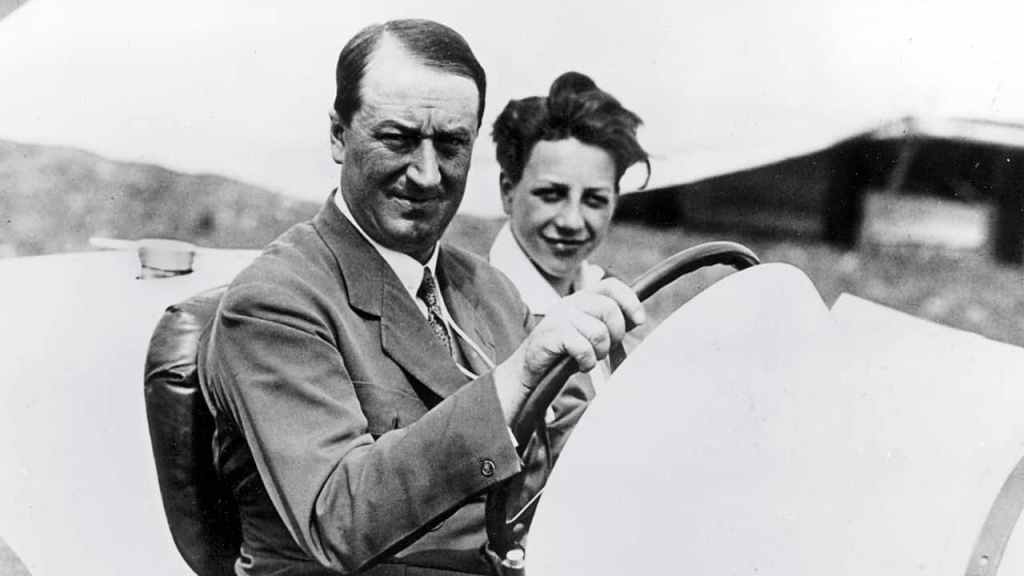
This gentleman here is Ettore Arco Isidoro Bugatti (the one on the left) – his name might sound familiar because it’s suspiciously similar to a certain brand of luxury cars. What a coincidence! He was a Frenchman born in Italy who started a business in Germany. So who’s who?

Well, Carlo Bugatti – his father – designed jewellery and furniture in the Art Nouveau style. Ettore’s brother, Rembrandt, was a sculptor. His aunt married a painter, and his paternal grandfather was an architect… who also sculpted on the side. Following the family tradition, Ettore went to the Academy of Fine Arts too. So, like his father, he became a designer – just in a different field.

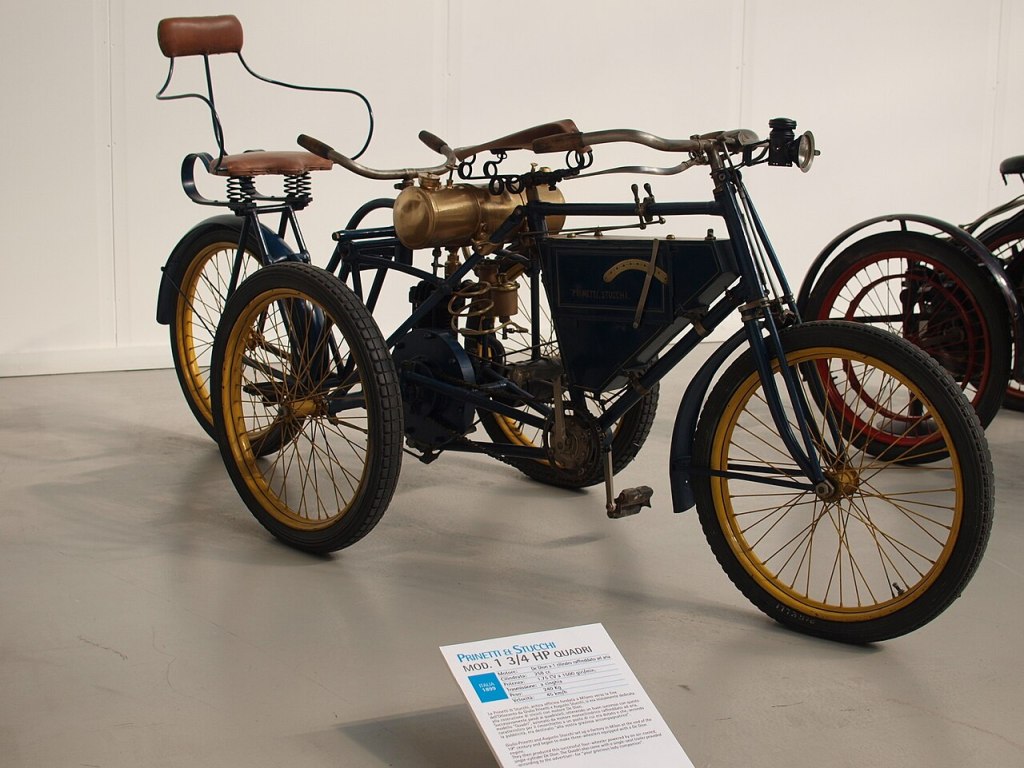
Prinetti & Stucchi Bugatti Type 1

He started boldly – by strapping a rocket engine (not really) to a scooter-like contraption, which he then used to win 8 out of 10 races he entered. That was during his apprenticeship at Prinetti & Stucchi, who quickly realized Ettore had talent. They built that machine for him in 1898 and named it the Bugatti Type 1. He achieved all that before he turned 18… just saying.

Not only did Prinetti see his talent, but so did Baron de Dietrich Adrien de Turckheim. The baron came across Bugatti’s latest designs, including a four-wheeled vehicle powered by four engines. Impressed, he offered Ettore the resources to bring his ideas to life. Ettore started designing vehicles for Lorraine-Dietrich, producing models from the de Dietrich Bugatti Type 2 to the Type 7. Somewhere in the middle of this came the Franco-Prussian War, and the company ended up split, with factories on opposite sides of the border – but that’s not important.

What is important is that Ettore met Emile Mathis – or rather, Ernest Charles Mathis, a French (now, though pre-war he’d have been German) businessman who, like Bugatti, had a sharp mind (until 1956, when he fell out of a Geneva hotel window, but that’s beside the point). Before that, Mathis collaborated with Ford, and before that, he founded a company with Ettore Bugatti. In 1904, the two left Lorraine-Dietrich and created Mathis-Hermes Licence Bugatti. After two years of working together, they parted ways.

Ettore went on to build prototypes for Deutz in his new research facility. Soon after, he became Deutz’s Production Director while simultaneously working on the Bugatti Type 10 in his personal garage. The Type 10 was an inline-four with a monoblock design of his own creation, featuring an overhead camshaft and two valves per cylinder – in 1908! It had leaf springs at the front and no suspension at the rear. Ettore used this car for a significant journey: when his collaboration with Deutz ended, he loaded up his family, piled them into his self-designed car, and headed to Alsace to start his own company.

He made his roots in Molsheim, Alsace – now France, but back then, Germany. Ettore built unbelievably fast cars that were also ridiculously luxurious and technologically advanced. His success in motorsport was nothing short of monumental because his machines were simply the best. The very first Grand Prix Monaco was won by a Bugatti driver.

Even now, the revived Bugatti brand produces vehicles that leave everything else in the dust in terms of performance, craftsmanship – as well as price and exclusivity. Personally, there are two models in Bugatti’s history that I have a soft spot for. The EB110, which probably graced the bedroom walls of every ’90s kid, has always had a special place in my heart. The second is the Type 57…

Type 57

Just like today Bugatti cars often come in numerous variants – frequently produced in small runs of just a few units – the same was true back in the day. For example, this is the Bugatti Type 57 Grand Raid Worblaufen Roadster from 1935, of which only two were ever made.

Both found buyers in Switzerland, one of them being Prince Louis Napoleon Joseph Jérôme Bonaparte. Interestingly, the two cars had distinct differences in detail. This one, for instance, is front-wheel drive! In contrast, the other roadster featured a proper rear-wheel-drive setup. But this isn’t the first Type 57 example – before it came the Gangloff Cabriolet. Earlier that same year, at the 1934 Paris Motor Show, the Type 57 Gangloff Grand Raid was unveiled, with Coupe and Sport Saloon versions also introduced.

I’m a bit torn here because the Type 57C Gangloff Cabriolet from 1938 is an absolutely stunning car. The C versions of the Type 57 came about because Bugattis were ridiculously fast for their time… but they could always be faster. Ettore used to claim that supercharging was for wimps, though he did try it once – following the logic that ‚one time doesn’t make you a sellout.’

Only two of these were made initially. However, when customers saw these supercharged versions, they started coming back to Ettore with their new cars, asking to have similar systems retrofitted. So, while Bugatti wasn’t a fan of the idea, when the customer pays, the customer gets what they want. And that’s why I’m torn – because there was also the Stelvio Gangloff, another supercharged beauty. Honestly, I’m not sure I’d be able to pick a favourite between the two.

Apart from the 57C, there were also the S and SC variants, which took their name from Surbaisse Compresseur. These versions were both supercharged and lowered. They featured a dry sump lubrication system because the engine simply wouldn’t fit under the new hood otherwise. To top it off, the front end was equipped with what was practically independent suspension – though Ettore himself had little love for such a solution.

Bugatti Type 57 Aérolithe

There were also the sportier versions: the 57G, S, SC Corsica Roadster, and Competition, which competed worldwide. However, one of the most iconic Type 57 models is undoubtedly the Aerolithe – a prototype born during the throes of the 1930s economic crisis.

The goal was to keep the business afloat, and a bold new project seemed like the way forward. Thus, in 1934, the Type 57 was born. Its popularity surged with the introduction of the sporty variant unveiled shortly after. At the Paris and London motor shows, both models stood side by side. The streamlined, sporty coupe initially bore the name Type 57S Coupe Special but quickly earned the nickname Aérolithe.

The project featured a 3.3-liter DOHC inline-six engine and was a direct competitor to the Mercedes 500K and Talbot-Lago… but truthfully, not one of them came close to its daring design. The car’s body was crafted from Elektron, a magnesium-aluminum alloy that was incredibly lightweight and durable – but also highly flammable. Welding the body panels was out of the question, so aircraft-style riveted construction was used instead. Production models, however, switched to aluminum, sidestepping these challenges.

Speaking of production models – those were named Atlantic. Initially set to carry the Coupe Aero name inherited from the prototype, the moniker was changed to honor Ettore’s friend, French aviator Jean Mermoz, a pioneer of aviation who tragically disappeared over the Atlantic, reportedly due to engine failure. To commemorate him, the model became the Atlantic Coupe. Only five were ever made: the prototype, two Coupe Aeros built before the rename, and two officially branded Atlantic Coupes.

The prototype shocked and dazzled, but it failed to win over customers. It returned to France, where it was disassembled. Only 11 photographs, one painting, and two schematics of the car exist – yet that was enough to recreate a 1:1 replica in Canada in 2013, a process that took five years.

The first Coupe Aero was sold to Victor Rothschild, the 3rd Baron Rothschild. Over the years, it passed through several owners and was eventually sold in 2010 for a staggering $30 million. The second Coupe Aero, also known as La Voiture Noire, is currently lost and estimated to be worth around $115 million. This car was commissioned by a Greek racing driver and uniquely came factory-equipped with a supercharger, making it a 57C-spec vehicle. In 1937, after winning the 24 Hours of Le Mans, Bugatti driver Robert Benoist received this car as a gift. Interestingly, it was never officially registered to anyone. It lacked a legal owner, though it was frequently driven. In 1941, it mysteriously disappeared, leaving no trace.

The third car, a 57S Atlantic Coupe, was owned by individuals who were tragically murdered by Space-Nazis from space that came to us in the 1930s – totally from space. The car, along with the estate it resided in, was later acquired and remains a showstopper at beauty competitions to this day. Although it underwent a series of repairs in the 1970s – where many parts, if not most, were replaced with non-original components – it still stands as a breathtaking piece of automotive history.

The last Type 57 SC Atlantic Coupe also survives to this day. Originally built for British pennis player Richard Pope, it featured a slightly redesigned front end. The grille was distinct from other models, and the car lacked front bumper guards. Shortly after purchase, it returned to Bugatti for the installation of a supercharger, upgrading it to 57C specifications. This car endured a minor collision and passed through various owners before finding its way, in 1988, to famed fashion designer Ralph Lauren. Under his ownership, the car was meticulously restored to pristine condition. This particular example has also racked up awards at prestigious car shows, cementing its status as an icon.

Type 57s are still being discovered even today. A few years ago, at an auction held by Bonhams, one of the objects up for bidding was a Type 57S valued at $5 million – found shortly beforehand in an abandoned shed. An earlier discovery was inherited from a deceased owner who had possessed the car for decades. What’s truly remarkable is that the family had always been aware of the car’s existence but had no idea of its true worth. When the time came to auction the car, it fetched over $30 million, making it the most expensive automobile sold at the time, until the Ferrari 250 GTO was auctioned a few years later…

Bugatti Royale

Beautiful cars, yes… What was I saying? Oh right, safe driving… I’ll get to that in a moment.

What connects all these cars? Well, almost all of them – the Type 57s were designed by Jean Bugatti, Ettore’s son. Since his earliest days, Jean was interested in his father’s work and became an integral part of the business in the 1920s. Even then, he displayed exceptional talent, designing most of the elements of the Type 41 Royale at the age of just 23. As a brilliant designer, he complemented his father, a superb engineer. The 57 Stelvio, Ventoux, Atalante, and Atlantic were his creations. He was also the author of the new generation of independent suspension, meant to replace the fixed front axle.

Jean often tested vehicles of his own project, including the 57C Tank, which won Le Mans in 1939. He was driving on a public road, you know, just a typical weekend. A drunk postman on a bicycle was riding down the middle of the road. Despite the Bugatti cruising safely at 200 km/h on a narrow road, it couldn’t avoid the tragic collision with a quickly approaching tree.

So, I say to you all: don’t drive too fast.

And then: never under the influence – not even on a bike.

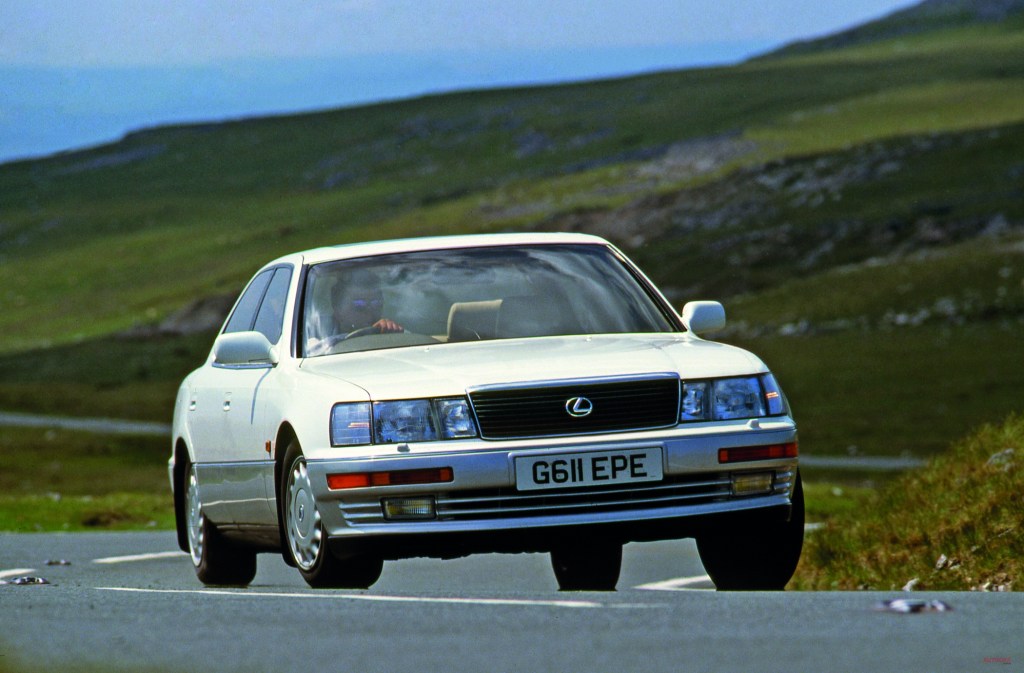
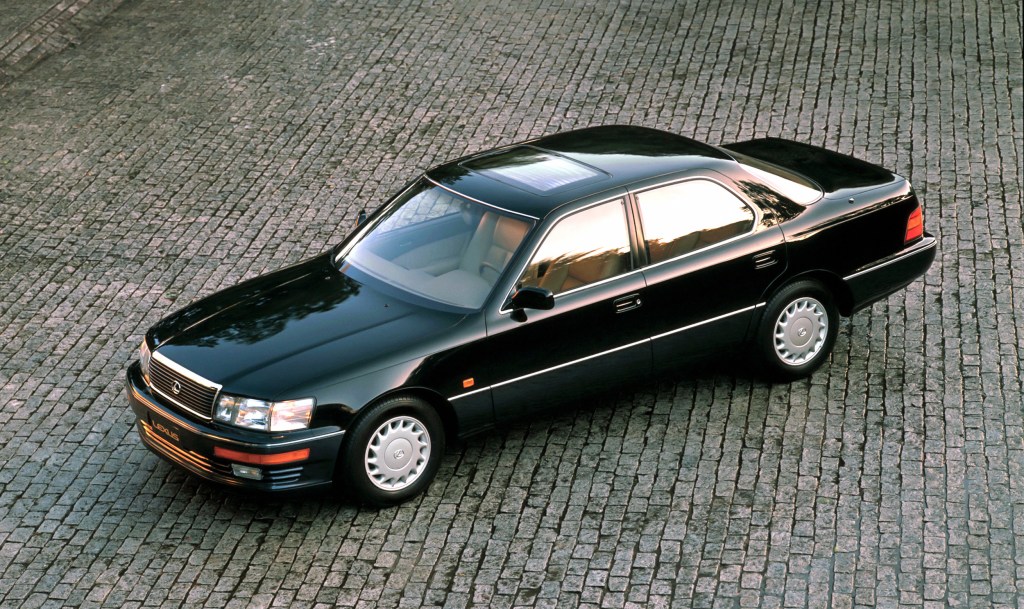
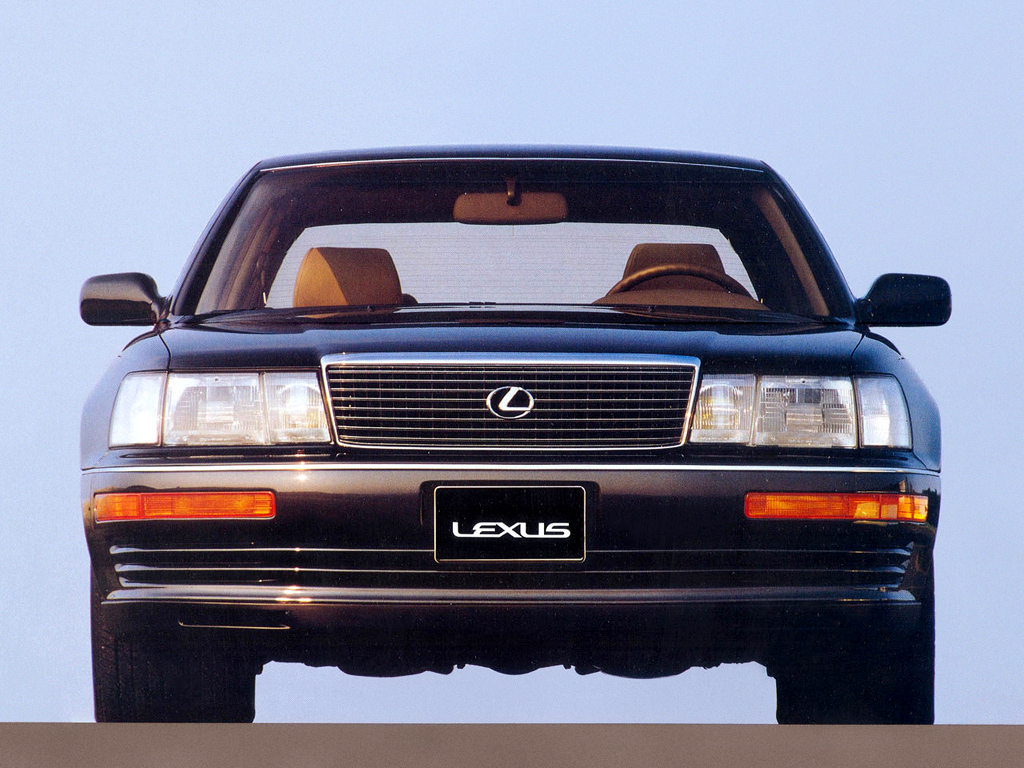
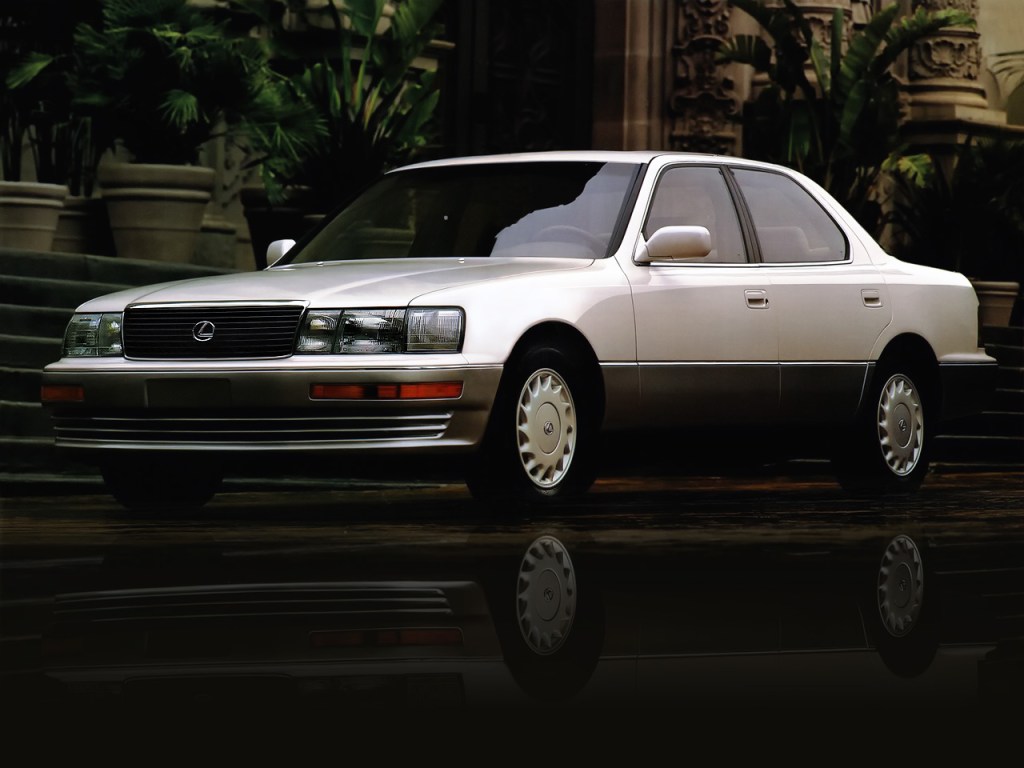
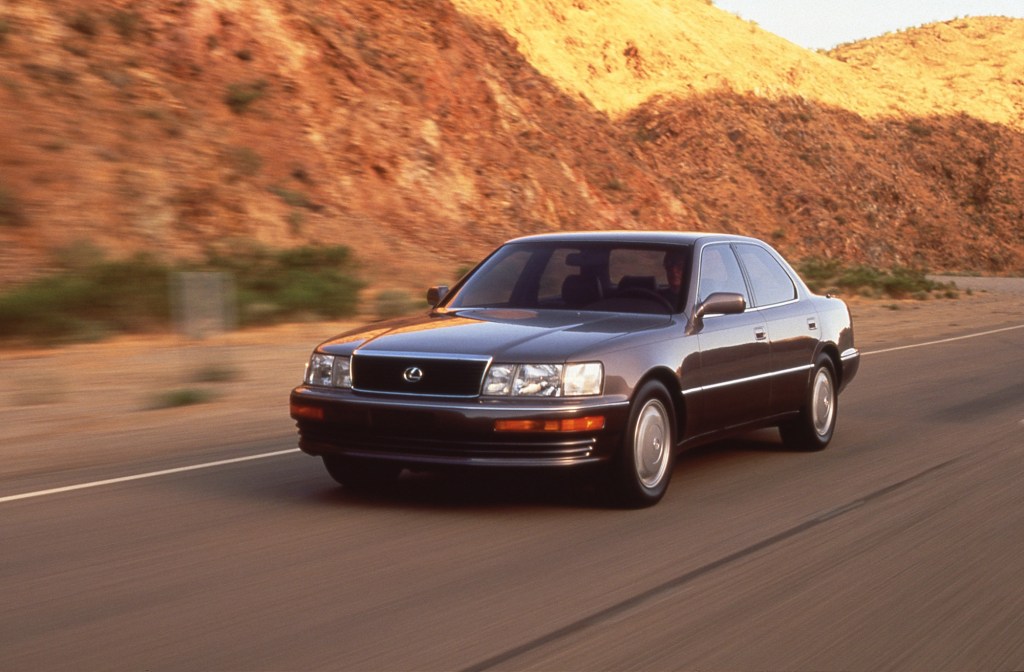
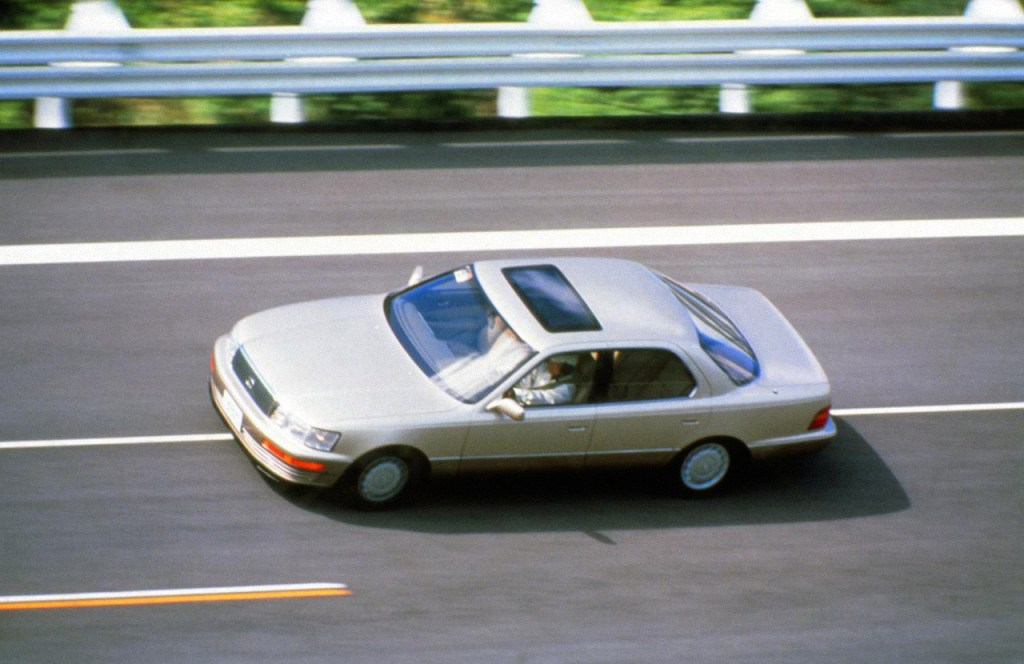
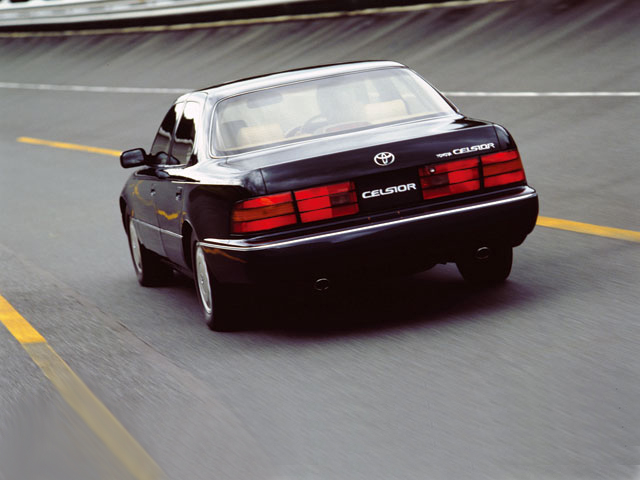
1989 – Lexus LS400 UCF10 / Toyota Celsior

EngineDisplacementPowerAccelerationTop Speed
90° V84.0 L240-253 BHP7.9-8.0s241*-250 km/h
150*-155 mph

Imagine this: you’re sitting in a movie theatre, eyes glued to the screen, completely immersed in the film. Everyone around you is just as captivated, their focus entirely on the movie. Suddenly, you feel a tap on your shoulder. You turn around, but before you can even register what’s happening… WHAM! A massive, resounding slap lands square on your face with such brute force that you find yourself on the floor, legs numb and useless. You flail your arms, but there’s no getting up… I think this vivid metaphor perfectly captures the impact left behind by the car we’re discussing today.

The first blow came in the 1960s. It wasn’t a single swift strike but a relentless pummeling. The Japanese attacked with affordable sports cars, and it almost resulted in two knockouts. They obliterated the entire British car industry, which flatlined – despite being dominant before the arrival of the Asians. Even the Germans pooped their pants. As the hype for sports cars began to fade elsewhere, in Japan, it was the opposite: cult followings for domestic brands began to emerge. However, the value of the yen kept dropping, and producing sports cars became less profitable. That’s when the focus shifted to luxury vehicles.

Honda went first. They found success with the Acura brand and the Legend V6, but in reality, it was more of a well-equipped Accord than a true luxury sedan. However, Honda wasn’t the main contender. The number one in Japan was Toyota, and both they and the second-place Nissan decided to compete directly with the best. Backing them was serious cash and production capabilities far beyond what Honda could muster. Let’s note that, at the time, Japan didn’t offer anything remotely on the same level as the E-Class – let alone rivals for the BMW 7 Series or the S-Class. But that was about to change.

Toyota already had comfortable cars in its lineup. The Crown and Century sold well in Japan, but to gain global recognition, they simply wouldn’t cut it. We’re talking wool seat upholstery, lace curtains – seriously, get outta here… To appeal to the Western customer, they had to go above and beyond. So, they sent 20 scouts to America. They were conducting interviews, taking notes, filming videos, some weird anime porn with tentacles – literally all they could. They observed everything: what people wore, where they shopped, what cars they drove. They knew the size of their shoes if needed.

As early as 1983, Toyota’s president, Eiji Toyoda, launched Project F1 – short for „Flagship One.” The goal? To create a model unlike anything Japan had ever produced before. Engineers were tasked with building a car so groundbreaking it would obliterate the Mercedes S-Class – the brand synonymous with nearly a century of the ultimate luxury. And what would they use to achieve this? A Toyota. Yes, the same manufacturer known for the likes of the cheap Corolla. One of the project managers outright said, “This is impossible. There’s no way… Can’t be done.” Building such a car? It would require hundreds of engineers, creating hundreds of prototypes. He was dead wrong. Not the hundreds, but thousands. Nearly a thousand different variations of the engine alone were developed, and over 400 prototype cars were built for testing.

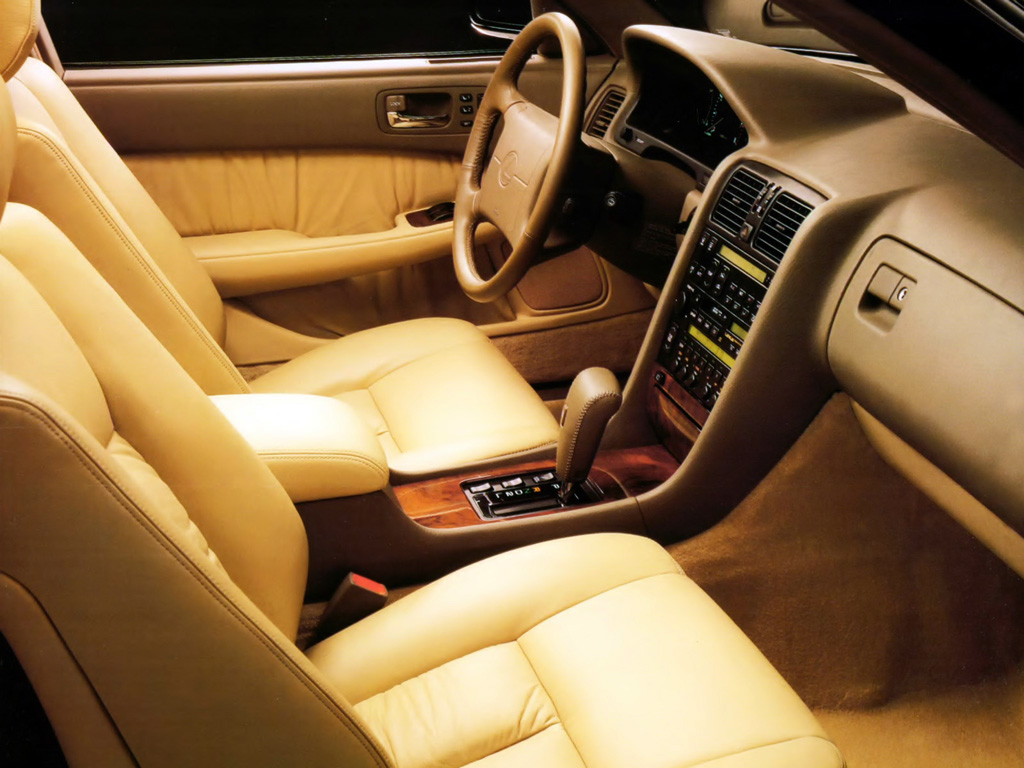
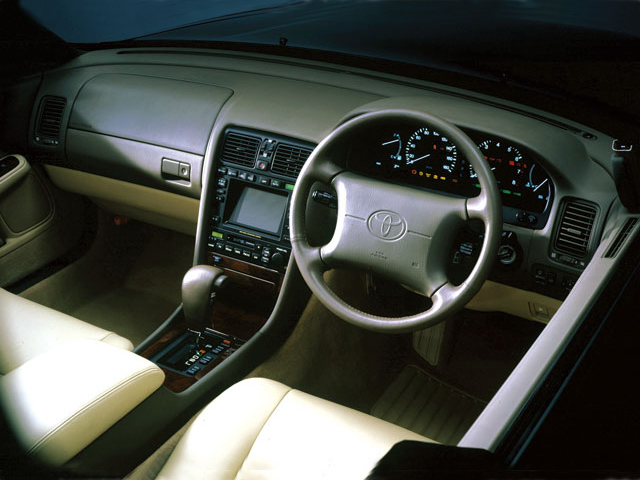
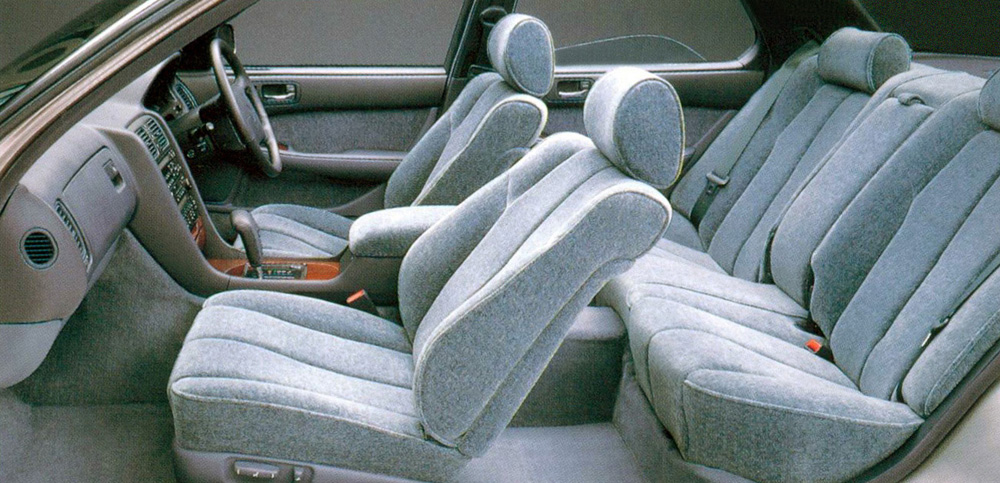
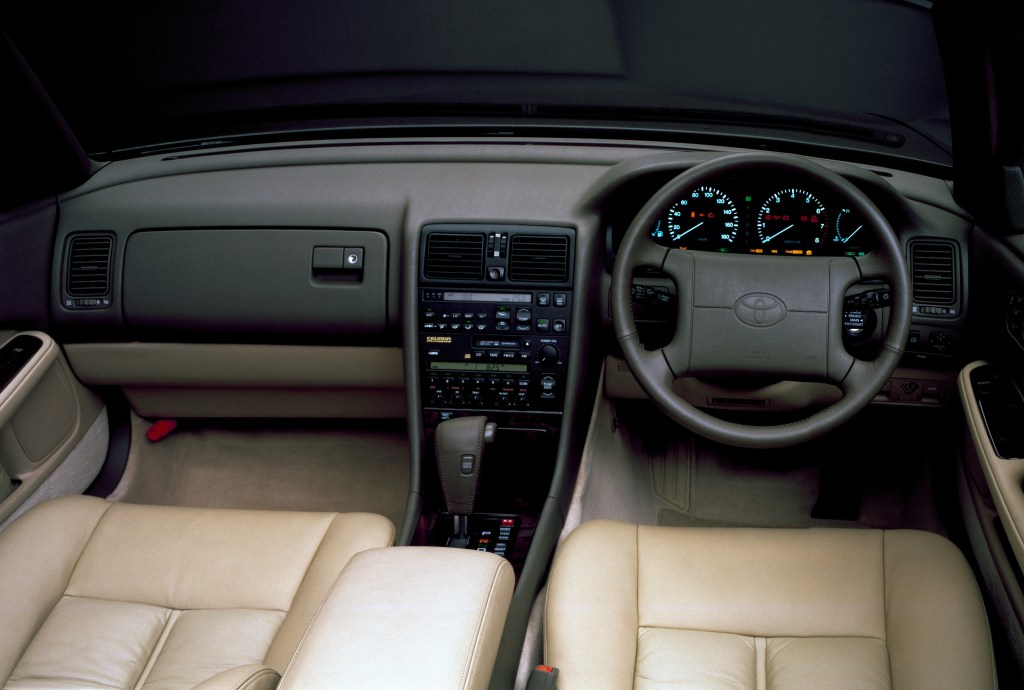
And there you can see it: the car that cannot to exist. The car that – as Toyota itself admitted – was impossible to create. Even with the best manufacturing techniques in the world (and let’s face it, the Japanese had no equal), this car simply shouldn’t have been feasible. And yet, here it was: the LS400. Around 4,000 people worked on the project. They weren’t given any deadlines; the job would be done when it was done. Cost wasn’t an issue. No shortcuts needed. They were free to do whatever it took. Two years before production even started, they were deliberating over 24 different types of wood, paired with various leather options, to find the ultimate combination for the interior. In collaboration with Yamaha – yes, the piano and violin maestros – they decided on California walnut for the trim. When the team debated whether their key design was good enough, the chief engineer pulled out a box containing keys from every car manufacturer imaginable to prove theirs was superior. This automobile packed over 300 innovative features for its time. There wasn’t much you needed to choose, either; nearly everything came as standard. Your choice was limited to options like a different radio or air suspension. Everything that mattered – everything good – was already included.

This car was the result of an enormous amount of work and dedication. It involved 60 designers, 1,400 engineers, and 2,300 additional technicians working across 24 teams over six years. They created 973 prototypes of the engine alone, developed in collaboration with Formula 1 specialists. They built 450 functional platforms and 14 full-scale models. Test drives lasted an unbroken 15 months. A hundred units were sacrificed in crash tests. They drove a staggering 2.7M kilometers across Germany’s Autobahns, the deserts of Arizona, and locations in Australia and the Middle East. Some sources even claim the figure was closer to 4.5M kilometers. This wasn’t dedication anymore – it was a downright obsession. The cost? Over a billion U.S. dollars – ridiculous money for a single model. Failure was not an option; success was the only acceptable outcome, regardless of cost. Initial forecasts predicted U.S. sales of 16,000 units, but in just one year, Lexus sold over 42,000 – far surpassing anyone’s expectations. The first thousand barely had time to hit showrooms before heading straight to customers. In the end, 160k units were sold, with Toyota never officially disclosing exact figures for the domestic Toyota Celsior variant, which played a minor role in these numbers. The vast majority of Lexus vehicles found homes in America, where the Japanese outperformed domestic automakers on their own turf. Lexus, with its debut model, became the best-selling luxury sedan in the U.S. market.

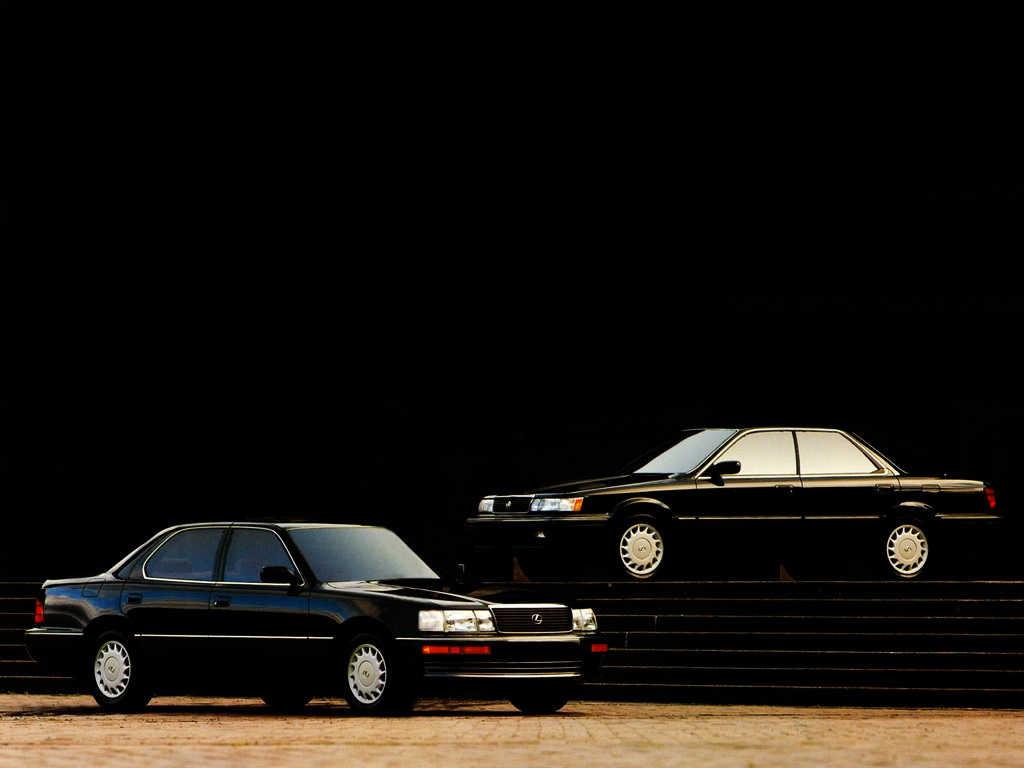
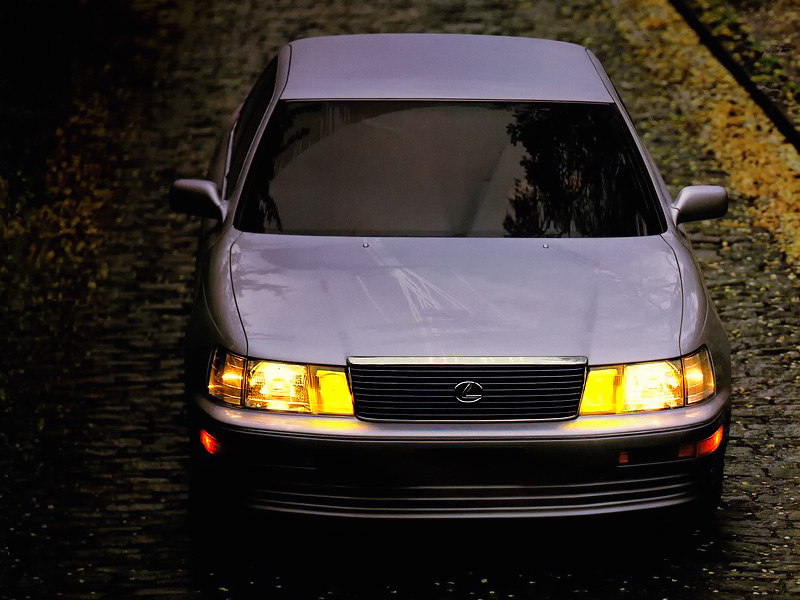
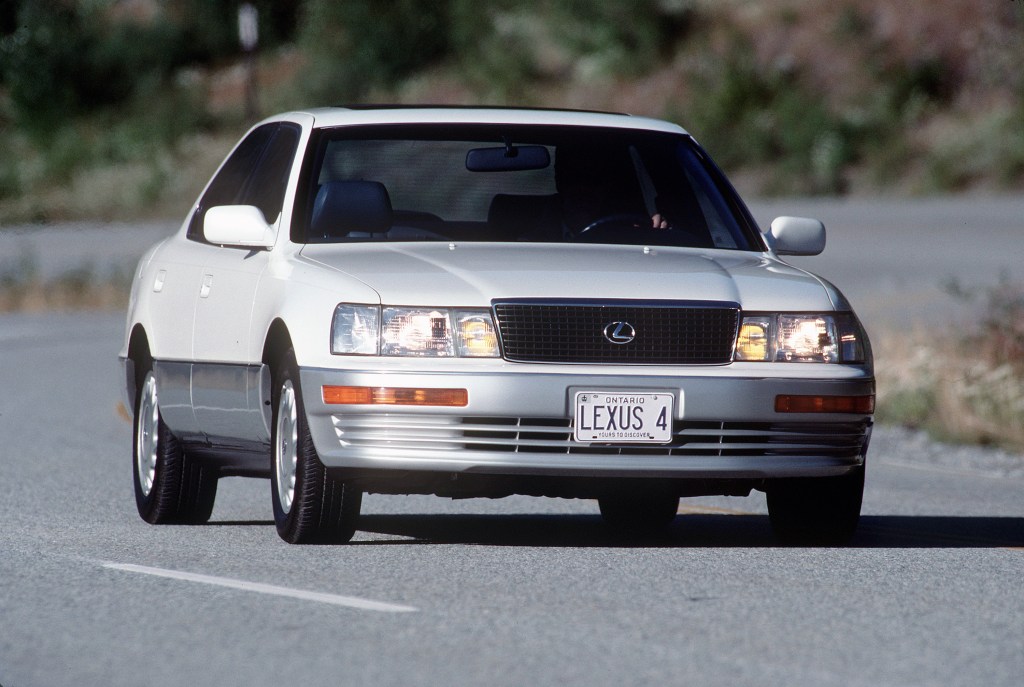
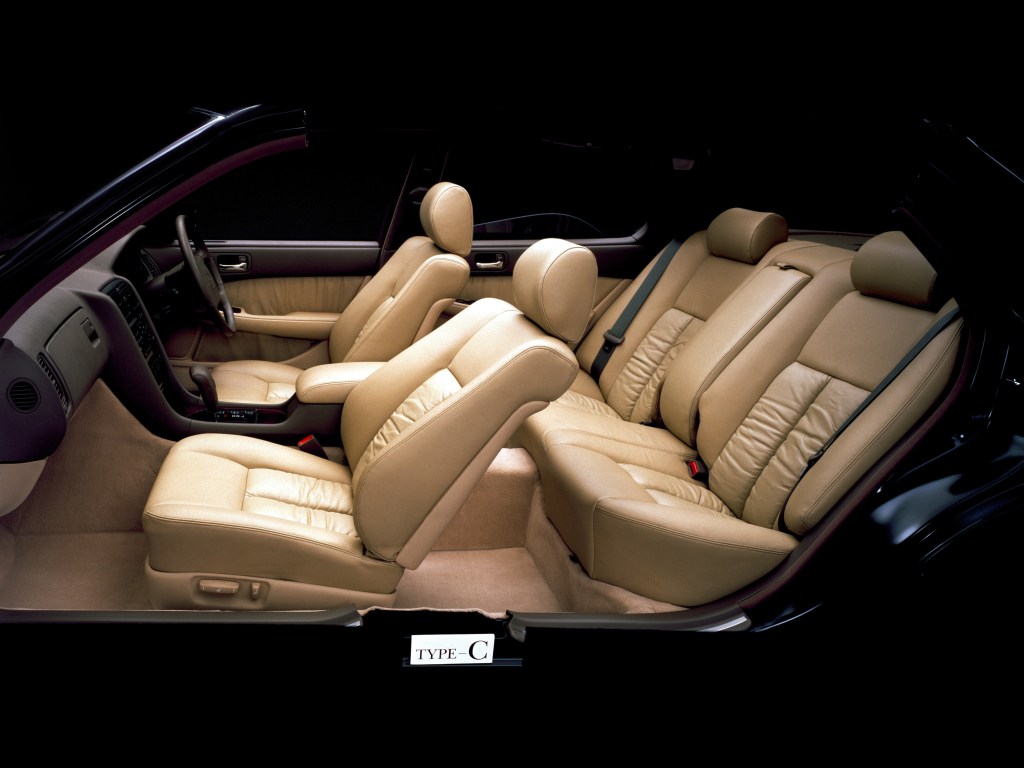
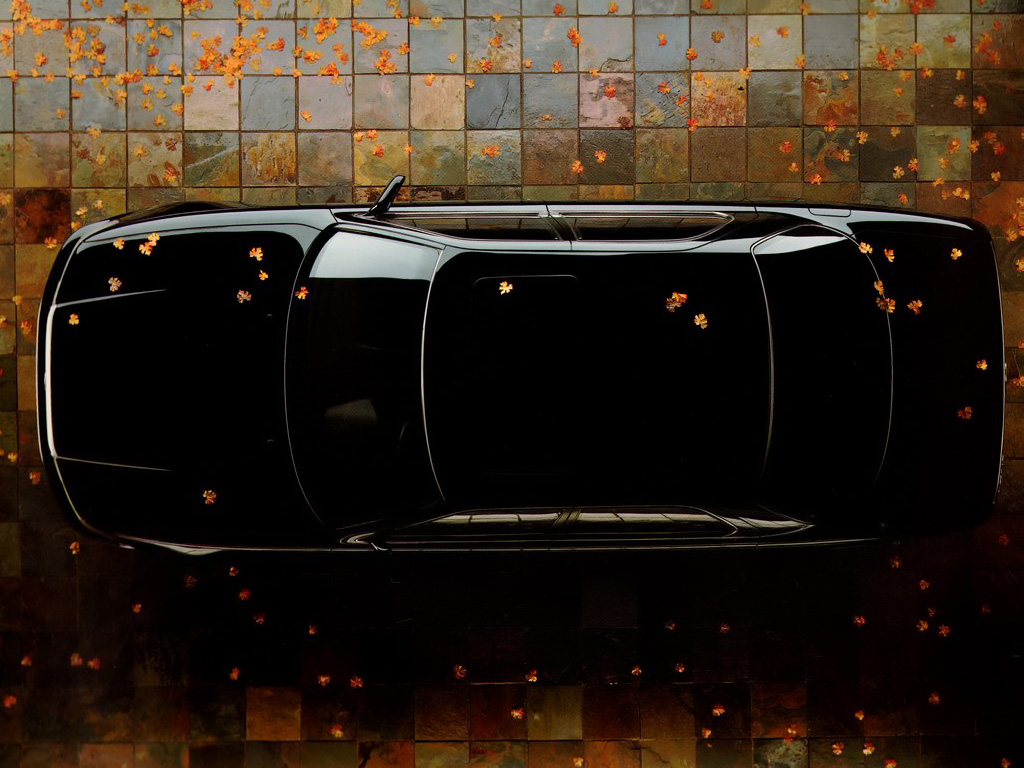
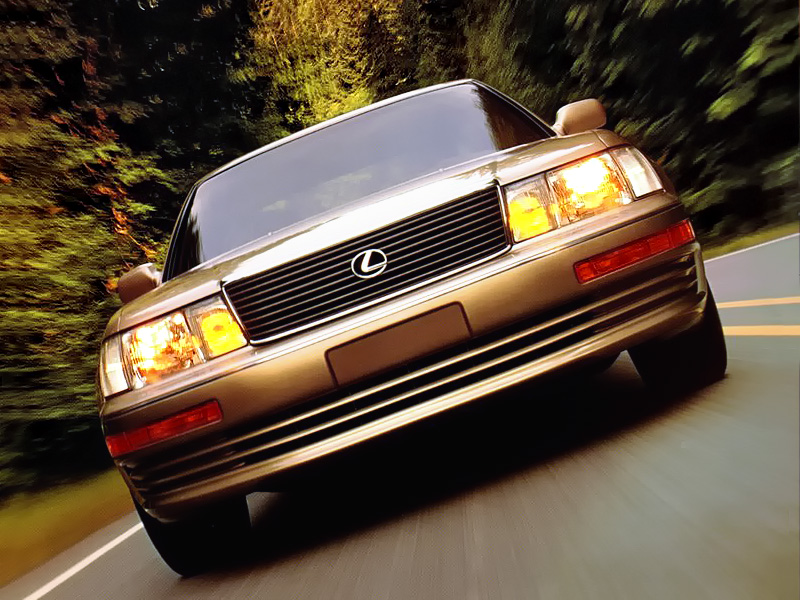
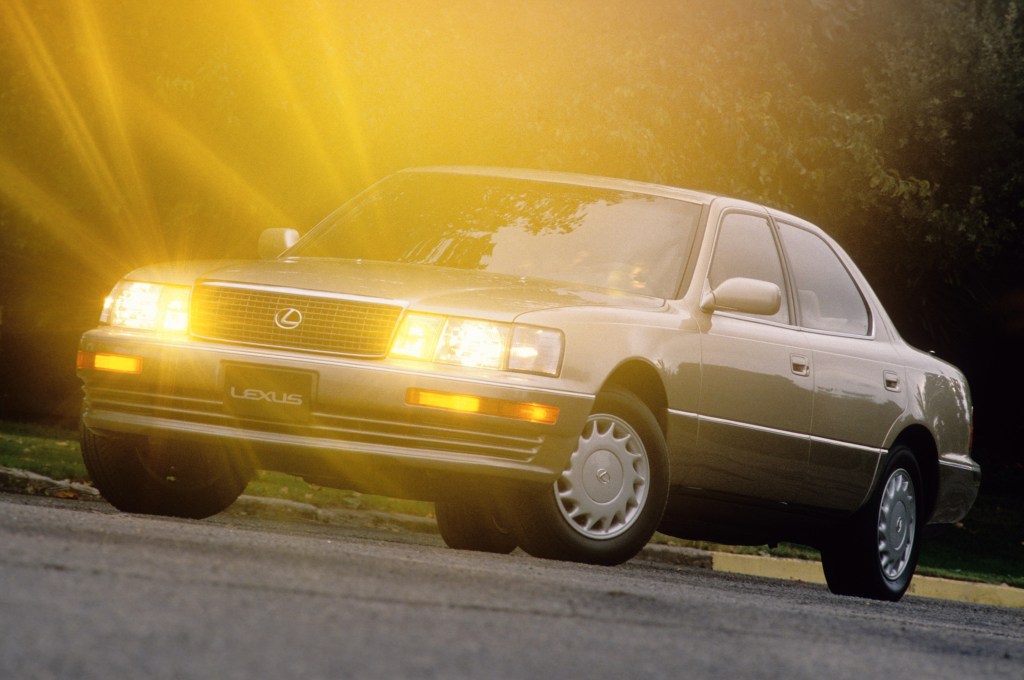
Both the Infiniti Q45 and Lexus LS400 aimed for the same lofty goals but approached them in vastly different ways. Infiniti followed the path set by the Jaguar, offering sleek, sporty lines and a potent V8 engine. Its suspension was tuned to deliver exhilarating driving dynamics, making it a car that stirred the emotions of its driver. Lexus, on the other hand, charted a completely different course. Where Nissan delivered a sports-oriented character, Lexus prioritized unmatched ride comfort. Infiniti’s spirited approach could not rival the refinement of Toyota’s engineering. The interior of the LS400 wasn’t designed to provoke excitement – it was inspired by the best generation of the Mercedes-Benz S-Class, emphasizing calm sophistication. The attention to detail in the Lexus far surpassed that of any Mercedes. Though the car’s conservative styling might resemble a rolling credenza, it boasted the best-in-class drag coefficient of just 0.29. Even the quality of the paint that coated its bodywork was leagues ahead of any European counterpart. Lexus was built in the same factory as the Supra and Soarer, but it had its own dedicated production line and over 1,600 bespoke quality control processes. If the car couldn’t crush Mercedes, Jaguar, Audi, and BMW on all fronts, it wasn’t allowed to leave the factory. The assembly line was so clean that technicians were required to wear lab coats – a level of sterility and precision that McLaren now employs in its facilities, but Toyota pioneered as early as the 1980s.

The V8 they designed was a masterpiece of engineering – silent and silky-smooth. The 4.0-liter, 32-valve DOHC engine was so exquisitely balanced, it was nearly impossible to tell if the engine was running if not looking at the tachometer. The motor was subtly tilted backward to reduce vibrations, mounted on hydropneumatic supports, and featured a revolutionary valvetrain design that further minimized any residual tremors. Lexus engineers left nothing to chance, ensuring an experience of unparalleled refinement. For promotional purposes (and yes, you can still find these ads on YouTube), they placed a pyramid of wine glasses on the hood and accelerated the car to 220 km/h. And what happened? Nothing happened. Not a single glass tipped over. Swiss watches were crap compared to this engine. It’s very likely that this was the finest V8 to ever power humanity.

Its transmission – an indestructible 4-speed automatic – was responsive, lively, and seamless in operation. Thanks to its communication with the engine management computer, it could automatically match revs before shifting gears, ensuring silky-smooth transitions. Moreover, it adapted itself to the driver’s style, whether relaxed cruising or spirited acceleration – it could read your mood without fault. This car doesn’t just drive – it glides. Traveling in it was an experience of supreme comfort and near silence. With the introduction of the LS400, Toyota redefined the benchmark for interior quietness and refinement. Not even the S-Class offered such tranquility and comfort within its cabin. Even minor details were engineered to perfection: the windshield wipers adjusted their resting position based on vehicle speed, reducing wind noise at higher velocities. While the Lexus might not have delivered the dynamic driving experience of a BMW, its 250-horsepower V8 was more than sufficient to deliver comparable performance. On the highway, the Lexus outpaced its German rivals. It was lighter and benefited from a superior drag coefficient, making it faster and more efficient at high speeds. This wasn’t just a luxury sedan – it was a quiet revolution on wheels.

If you’re asking yourself right now whether Toyota was a good enough car to destroy the European competition, the answer is simple. Absotively posilutely. European newspapers were writing about how the launch of the Lexus sent a clear message to all the manufacturers from the old continent – and from across the ocean – that a storm was brewing, and it was headed straight for their pants. In Europe, they were saying that yes – Toyota lacked the prestige to compete – but that wouldn’t last forever, and it was only a matter of time before they made their mark. And that was the only flaw of this model. The Motorweek couldn’t find a single weak point. Top Gear called the Lexus „terrifyingly good.” Americans immediately ranked it first. They recognized it as better not only than Mercedes (using the 420SEL as a reference), but also far superior to BMW, Infiniti, Audi V8 Quattro, or Jaguar Sovereign. And it wasn’t just „better” – it was easily surpassing anything. There was no match to Lexus, only a huge gap before everyone else.

There were some issues, of course. 8,000 units were already shipped to America when two people complained about some cables that caused the battery to die quickly, or about a light at the back not working, or something like that. Just some petty stuff. The cruise control sometimes wouldn’t turn off – in cars that were already on the road. It wasn’t much – just a few thousand working cars, and the faulty ones could be counted on one hand. In theory, they could just ignore it… But that’s not what they did. Get this: Two complaints came in, and they called back all 8,000 cars, whether they were working or not, didn’t matter – they recalled every single one. Normally, you’d think… no fucking way. I’m not going to waste a month driving to the service, giving up my car that I actually need, waiting who knows how long – without a car – and then coming back. You’d have to take time off work, figure out transport home… Now, listen to this – none of that was ever your problem when you were a Lexus owner. The manufacturer sent out 8,000 little Chinese guys from Toyota… or maybe it was one guy who just made 8,000 trips? Who the hell knows. So they sent these little guys to pick up each car. They’d take it from your home, drive it to their place, tinker with it where needed, and then drop it back at your house. Full of gas, washed, polished, pampered so that it looked better than it did at the dealership – and they even left a bottle of something in there as a parting gift. Let me remind you, we’re not talking about Rolls-Royce here; this is Toyota’s customer service we’re talking about. The same brand that makes Corollas. And guess what, it didn’t even take them a month. They handled everything in 20 days, done and sorted. In 20 days, you can’t even get through to Jaguar’s service. None of the cars built after that ever had those problems again. Mercedes had positive reviews from 77 percent of users at that time – which was a record in America. Over 96% of Lexus customers rated their service and support as „good” or „excellent.” And that’s all I got to say about that.

The facelift in 1991 involved over 50 changes. But wait, was there something wrong with the previous model? Not at all – it was simply a matter of listening to customer feedback. They added bigger brakes, larger tires, power steering, and a few new colour options. Nothing dramatic. The car was already perfect. It didn’t need any improvements. These vehicles, nearly 40 years old now, still perform exceptionally. They haven’t lost any of their comfort. The seats are worthy of the Führer himself. There’s no couch better anywhere. Every button on the dashboard works. There was an employee at Lexus, whose sole job was to press every and any switch on the dashboard to ensure each one made the desired sound. That was his only task. The materials used to make the interior still impress today. The engine delivers power without hesitation, even decades after production. The car doesn’t feel sluggish in the slightest. Even after all these years, even with the air conditioning running full blast. Toyota guarantees that these V8 engines do 250,000 miles, no problem. Cars exist with 1.5 MILLION kilometers on the clock – and still drive like new. There are cases – more than one, and more than two in America – where Toyotas with over a million miles on the odometer are cruising around, having driven the distance from Earth to the Moon twice and still not complaining. There are such that have never broken down.

German rivals could not believe it. Lexus was a nobody – a brand that had just emerged – and it could take on their best with such ease. And win so dramatically. Japanese car was a better choice – not because more comfortable than the German limousines. Not even because just faster. The fact it was more reliable was not the reason, either. It was because it was better thought through. It had no downsides. It was planned to make no compromise and designed to take no prisoners. Chief Engineer Ichiro Suzuki once said, that if they had stepped back just for once – the whole project would have failed. They would have resulted with a average car and that was not their goal… The best car made by men – and you can get it quite cheap today.

Krzysztof Wilk
All sources: TO BE ADDED
1989 – Lexus LS400 UCF10 / Toyota Celsior

EngineDisplacementPowerAccelerationTop Speed
90° V84.0 L240-253 BHP7.9-8.0s241*-250 km/h
150*-155 mph

Wyobraźcie sobie, że siedzicie gdzieś powiedzmy w kinie – wpatrzeni w ekran – nie zwracacie uwagi na to, co się dzieje dookoła. Wszyscy inni robią przecież to samo: ich uwaga skupiona jest na filmie. W pewnym momencie czujecie jak ktoś puka was w ramię. Odwracacie się, ale nie jesteście w stanie zarejestrować co następuje… Olbrzymie soczysty liść ląduje na waszej mordzie tak silnie, że budzicie się na podłodze i bez władzy w nogach. Wierzgacie rękami, ale nie jesteście w stanie się podnieść… Sądzę, że ta lotna metafora trafnie oddaje impakt, jaki po sobie zostawiło omawiane dziś auto.

Pierwszy cios wyszedł w latach ’60-tych. To nie było jedno szybkie uderzenie, ale konsekwentne okładanie po ryju. Japończycy zaatakowali przy użyciu tanich aut sportowych i prawie doszło do dwóch nokautów. Zmiażdżyli całą angielską produkcję, która zdechła na śmierć – a do czasu pojawienia się Azjatów była dominująca. A i Niemcy obesrali zbroje. Kiedy hype na auta sportowe zanikał, to w Japonii wręcz odwrotnie: powstawały strefy kultu ich rodzimych marek… ale wartość yena wciąż spadała i robienie aut sportowych stało się mało opłacalne. Tak zmieniono kurs na auta luksusowe.

Honda była pierwsza. Odniosła sukces z marką Acura i modelem Legend V6, ale to był w gruncie rzeczy bardziej doposażony Accord, niż limuzyna z prawdziwego zdarzenia… Ale Honda to nie był główny zawodnik. Numerem 1 w Japonii była Toyota i zarówno ona, jak i drugi Nissan, zdecydowali się konkurować bezpośrednio z najlepszymi. Za nimi przemawiał już hajs i możliwości produkcyjne dużo większe niż jakaś tam Honda. Zauważmy, że w tamtym momencie Japonia nie oferowała nic, co by było na levelu zbliżonym do Klasy E – a rywalem miały być dla nich od teraz BMW Serii 7 oraz sama S-Klasse.

Toyota miała już w ofercie wygodne auta. Modele Crown i Century sprzedawały się na ich rodzimym rynku, ale żeby zyskać uznanie na świecie, to się nie nadawały. Tam były wełniane obicia siedzeń, jakieś koronkowe firanki – no gdzie, panie?! Żeby trafić w gusta klienta z zachodu, trzeba było wznieść się ponad wszystko. W tym celu wysłano 20 scoutów do Ameryki. Robiono wywiady, kręcono materiały wideo, porno z mackami, spisywano notatki. Zwracano uwagę na wszystko: na to co ludzie noszą, gdzie robią zakupy, jakimi autami jeżdżą. Znali ich numer buta, badali rozmiar fiuta – dosłownie wszystko.

Już w 1983 prezes Toyoty (Eiji Toyoda) otworzył projekt F1, co miało oznaczać „Flagship One”, czyli prace nad modelem, który nie mógłby się równać z niczym innym, co do tej pory Japończycy pokazali. Technicy mieli nie używać żadnych istniejących części ani platform w posiadaniu Toyoty – i mieli zbudować auto, które zmiecie Mercedesa Klasy S z powierzchni Ziemi. Wiecie… może kojarzycie – to ta marka, która od prawie 100 lat specjalizowała się / znana była z tego, że oferowała największy luksus, jaki można było sobie wyobrazić. I chciano tego dokonać pokazując w zamian… Toyotę. Auto producenta kojarzonego głównie z modelami takimi jak Corolla. Jeden z głównych managerów (do spraw projektu) rzekł był, że kurwa to się nie da. „Nie ma takich rzeczy… Panie idź pan w chuj”. Takie auto nie może powstać – że to potrzeba będzie setek inżynierów do setek prototypów, aby to doprowadzić… Przykro mi oznajmić, że iż otóż się pomylił. Był w błędzie – nie miał racji. Nie setek a tysięcy. Samego silnika powstało prawie 1000 różnych wersji i ponad 400 jeżdżących aut do testów.

I proszę bardzo: oto auto, którego nie ma… Które – jak sama Toyota stwierdziła – nie ma prawa powstać. Nawet przy takich technikach produkcji, jakie Azjaci mieli (czyli najlepsze na świecie), nie da się takiego auta wykonać… A więc oto i jest: LS400. Pracowało nad tym dobrych 4 tysiące ludzi. Nie dano im na to żadnego deadline’u. Jak robota będzie zrobiona, to wtedy mieli skończyć. Cena nie miała znaczenia. Nie musieli iść na skróty – piłka była po ich stronie i mogli zrobić właściwie co tylko chcieli. Na dwa lata przed rozpoczęciem produkcji mieli 24 rodzaje drewna do wyboru, w kombinacji z różnymi typami skóry, aby spośród nich wybrać to najlepsze połączenie do wykończenia wnętrza. Wspólnie ze specjalistami Yamahy – ekspertami w budowie pianin i skrzypiec – zadecydowano, że będzie to kalifornijskie drewno orzechowe. Jak dyskutowano nad tym, czy aby kluczyk się na pewno nadaje, to szef inżynierów pokazał swoje pudełko, w którym trzymał kluczyki wszystkich możliwych producentów, aby udowodnić, że ten jego jest najlepszy. W tym modelu znajdowało się ponad 300 innowacyjnych w tamtym czasie rozwiązań. Do wyboru nie zostało wiele, bo wszystko dostawałeś od razu. Zastanowić, to się mogłeś nad innym typem radia, albo pneumatycznym zawieszeniem. Wszystko co dobre w tym aucie było już w standardzie.

To efekt olbrzymiego nakładu pracy i poświęcenia dla tego auta. Pracowało nad nim 60 projektantów, 1400 inżynierów i 2300 innych techników w 24 zespołach. Pracowało przez 6 lat. Zbudowali 973 prototypy samego silnika, wykonane we współpracy ze specjalistami z Formuły 1. 450 jeżdżących platform. 14 modeli w skali 1:1. Jazdy testowe trwały bite 15 miesięcy. 100 sztuk rozbito w crashtestach. Pokonano 2.7 miliona kilometrów po niemieckich Autobahnach, przez pustynie Arizony, jeżdżono w Australii i na Bliskim Wschodzie. Inne źródła mówią, że to było 4.5 miliona kilometrów… To już nie było poświęcenie, tylko jebana obsesja. Miliard amerykańskich prezydentów ta dyskoteka kosztowała. Kurwa miliard – więcej jak miliard! Na jeden model. Porażka nie wchodziła w grę. Musiało się udać – bez względu na koszta. Przewidywano sprzedaż na poziomie 16 tysięcy w USA, a w jeden rok Lexus poszedł w ilości sztuk 42 tysiące ponad. To dużo więcej niż ktokolwiek inny. Pierwszy tysiąc to nie zdążył dobrze zawitać do salonu, jak już jechał do klienta. Ostatecznie 160k ich zeszło i – Toyota nigdy nie podała tego oficjalnie – ale Toyota Celsior oferowana na ich rynek niewielki miała w tym udział. Sporą większość Lexusów przygarnęła Ameryka. Japończycy wyprzedzili amerykańskie marki na ich własnym podwórku i Lexus – debiutancki model – był najlepiej sprzedającą się limuzyną za oceanem.

Zarówno Infiniti Q45, jak i Lexus LS400 celowały w tym samym kierunku, to jednak używały do tego z goła innego zestawu narzędzi. Infiniti szło śladem Jaguara. Miało bardziej sportowe linie i V8 o dobrej mocy. Ich zawieszenie pozwalało na czerpanie soczystych emocji z podróżowania takim pojazdem. Lexus zmierzał zupełnie inną drogą. Tam, gdzie Nissan serwował sportową charakterystykę, tam Lexus oferował ostateczny komfort jazdy. Infiniti z bardzo emocjonującym zacięciem nie mogło się równać poziomem wyrafinowania Toyoty. Lexus miał na uwadze jakość wykonania ponad wszystko. Wnętrze LS400 nie będzie prowadzić do serii orgazmów, ale to dlatego, że było wzorowane na najlepszej generacji S-Klasse. Dbałość o detale w limuzynie Toyoty była nie do porównania nawet z Mercedesem. Auto wygląda jak kredens na kołach, a miało najlepszy w swojej klasie współczynnik oporu powietrza: na poziomie 0.29. Nawet jakość farby pokrywającej karoserię pojazdu deklasowała każdy europejski pojazd. Lexus powstawał w tej samej fabryce co Supra i Soarer, ale miał osobną linię montażową i ponad 1600 swoich własnych procesów kontroli jakości. Jak auto nie było zdolne miażdżyć Mercedesy, Jaguary, Audi i BMW, to nawet nie wyjeżdżało z fabryki. Technicy musieli nosić fartuchy – to była najczystsza montownia na świecie. McLaren dziś używa tej metody – a Toyota już w latach ’80-tych.

Jego V8 było ciche i jedwabiste. To było 4-litrowe, 32-zaworowe DOHC na czterech wałkach – tak wyśmienicie zbalansowane, że klękajcie narody. Bez spojrzenia na obrotomierz nie idzie się zorientować, że jest na chodzie. Motor był delikatnie przechylony do tyłu, aby zredukować wibracje, wsparty na hydropneumatycznych mocowaniach i miał rewolucyjny układ rozrządu, który jeszcze bardziej niwelował drgania. Dla reklamy (można sobie wyczarować na YouTubie) ustawili na masce piramidę z kieliszków – i rozpędzili auto do 220 km/h. I co się stało? Nic się nie stało. Szwajcarskie zegarki były wykonane gorzej jak ten silnik. Wielce możliwe, że to najlepsze V8 jakie napędzało ludzkość.

Skrzynia biegów – pancerny automat o czterech przełożeniach – reagował sprawnie, żywo i bezproblemowo. I, dzięki komunikacji z komputerem zarządzającym silnikiem, sam równał obroty przed dopięciem przełożenia. Sam też dopasowywał się do stylu jazdy kierowcy. To auto płynie a nie jedzie. Podróż jest arcywygodna i bezszelestna. Z wprowadzeniem tego modelu Toyota wyznaczyła nowy standard w kwestii wygłuszenia wnętrza. W S-Klasie nie było tak cicho i wygodnie w środku. Nawet głupie wycieraczki zmieniały swoje położenie zależnie od prędkości. Może Lex nie oferował takich właściwości jezdnych co BMW, ale 250 koni z V8 było wystarczające do co najmniej porównywalnego poziomu osiągów. Na autostradzie Lexus był szybszy od wszystkich Niemców. Był lżejszy i z lepszym współczynnikiem oporu.

Jeżeli w tym momencie zadajecie sobie pytanie, czy Toyota była na tyle dobrym autem, żeby zniszczyć europejską konkurencję – to odpowiem. Jak najbardziej. Europejskie gazety pisały o tym, jak prezentacja Lexusa wysłała jasny sygnał do wszystkich producentów ze starego kontynentu – jak i zza oceanu – że kupa już nadciąga na spotkanie w gaciach. W Europie mówiono, że tak – że Toyota nie ma prestiżu, którym mogłaby konkurować – ale to nie potrwa wiecznie i to tylko kwestia czasu, jak się wyrobi. A to była jedyna wada tego modelu. Motorweek nie mógł znaleźć żadnych słabych punktów. Top Gear mówił, że Lexus jest „przeraźliwie dobry”. Amerykanie od razu przyznali mu pierwsze miejsce. Uznali, że jest lepszy i od Mercedesa (na przykładzie modelu 420SEL), i od BMW, od Infiniti, Audi V8 Quattro, czy Jaguara Sovereign. I to nie, że „lepszy”, tylko dużo lepszy. Że po Lexusie długo nie ma nic – a dopiero potem cała reszta.

Nie obyło się bez problemów. 8 tysięcy sztuk poszło już w Amerykę, kiedy dwóch ludzi się poskarżyło na jakieś kabelki, przez które akumulator szybko zdychał, czy że lampka z tyłu się nie świeciła, czy coś. No jakieś tam gówno. Tempomat czasem się nie wyłączał. W autach, które już jeździły po drogach, nie. Niby nic – parę tysięcy sprawnych, a te wadliwe to można na chuju policzyć. Teoretycznie dałoby się olać temat… Co Chińczycy zrobili? Uważajcie to: 2 skargi wpłynęły a oni 8 tysięcy aut, które poszło w świat – sprawne czy nie, nieważne – wszystkie ściągnęli z powrotem. Normalnie pomyślałbyś… kurwa no nie ma szans. Nie będę tracił miesiąca na wycieczkę do serwisu oddanie auta, którego przecież potrzebuję, czekanie chuj wie ile – bez samochodu – i potem powrót. Trzeba ogarnąć jakiś urlop, znaleźć czas, a jeszcze i transport do domu… Słuchaj tego – otóż nic z tych rzeczy. Takie rzeczy nigdy nie były twoim problemem, gdy byłeś właścicielem Lexusa. Producent wysłał 8000 małych chińczyków z Toyoty… a może to był jeden chińczyk, tylko jeździł 8000 razy? A chuj go tam wie. To wysłali tych małych chińczyków po każde auto. Oni tam zabierali ci je spod domu, jechali do siebie pogmerać gdzie trzeba, i sami ci je odstawiali pod chatę. Zalane pod korek, umyte, wypolerowane, wychuchane tak, że wyglądało lepiej jak w salonie – i jeszcze ci jakąś flaszkę w środku na odchodne zostawili. W tym miejscu może przypomnę – nie mówimy o Rolls-Royce, tylko o serwisie klienta w kurwa Toyocie. Tej samej marce, spod której wychodzą Corolle. I słuchajcie, nawet miesiąc im to nie zajęło. W 20 dni wszystko ogarnęli i było po sprawie. W 20 dni to się do serwisu Jaguara nawet dodzwonić nie można. W żadnym egzemplarzu zbudowanym po tym czasie nigdy ponownie te usterki nie wystąpiły. Mercedes miał pozytywne opinie od 77 procent użytkowników aut tej marki – i to był wtedy rekord w Ameryce. Ponad 96% klientów Lexusa oceniało ich usługi i serwis jako „dobry” lub „doskonały”. Tyle w tym temacie.

Facelift następujący w 1991 roku uwzględniał ponad 50 zmian. Ale jak to? Czy z poprzednim modelem było coś nie tak? Otóż nie – zwyczajnie wysłuchano uwag klientów. Dodano większe hamulce, większe opony, wspomaganie kierownicy, kilka dodatkowych wariantów kolorystycznych. Takie tam – nic inwazyjnego. Auto i tak było perfekcyjne. Model nie wymagał usprawnień. Te auta dziś – prawie 40 letnie – sprawują się wyśmienicie. Nie tracą nic ze swej wygody. Fotele godne są samego Fuhrera. No nie ma kanapy lepszej – nigdzie. Wszystkie przyciski deski rozdzielczej działają. W fabryce Lexusa był pracownik odpowiedzialny tylko za to, żeby klikać wszystkie przełączniki na desce i upewnić się, że każdy wydaje pożądany dźwięk. To było jego jedyne zadanie. Materiały użyte do wykonania wnętrza robią wrażenie nawet dziś. Silnik zapodaje moc bez zastanowienia nawet tyle dekad od produkcji. Auto w najmniejszym stopniu nie sprawia wrażenia ociężałego. Nawet po tylu latach, nawet z klimą odpaloną na full. Toyota gwarantuje, że te ich V8 – że 250 tysięcy, to one robią z palcem w dupiu. Auta z 1.5 MILIONA kilometrów jeżdżą jak nowe. Są takie przypadki – nie jeden i nie dwa w Ameryce zapierdalają z ponad milionem mil na liczniku – przejechały dystans z Ziemi do Księżyca dwukrotnie i się nie skarżą. Są egzemplarze, które nie zepsuły się nigdy.

Niemcy po prostu nie mogli uwierzyć. Lexus był marką, która pojawiła się znikąd, model LS obrał na celownik najlepszych… i wygrał. Był lepszym wyborem. Po prostu. Nie dlatego, że wygodniejszy od niemieckich propozycji, nie dlatego że szybszy. Nawet nie, że niezawodny. Był po prostu bardziej przemyślany. Lexus był lepszy, bo nie miał wad. On miał tylko silne strony. Był zaprojektowany, aby nie robić kompromisów – aby nie brać jeńców. Szef inżynierów Ichiro Suzuki powiedział, że gdyby projektanci na pewnym etapie ulegli, wyszłoby z tego przeciętne auto – a on tego nie chce… A teraz można go dostać za psi chuj, to się aż w dupie nie mieści.

Krzysztof Wilk
Na podstawie: DO UZUPEŁNIENIA