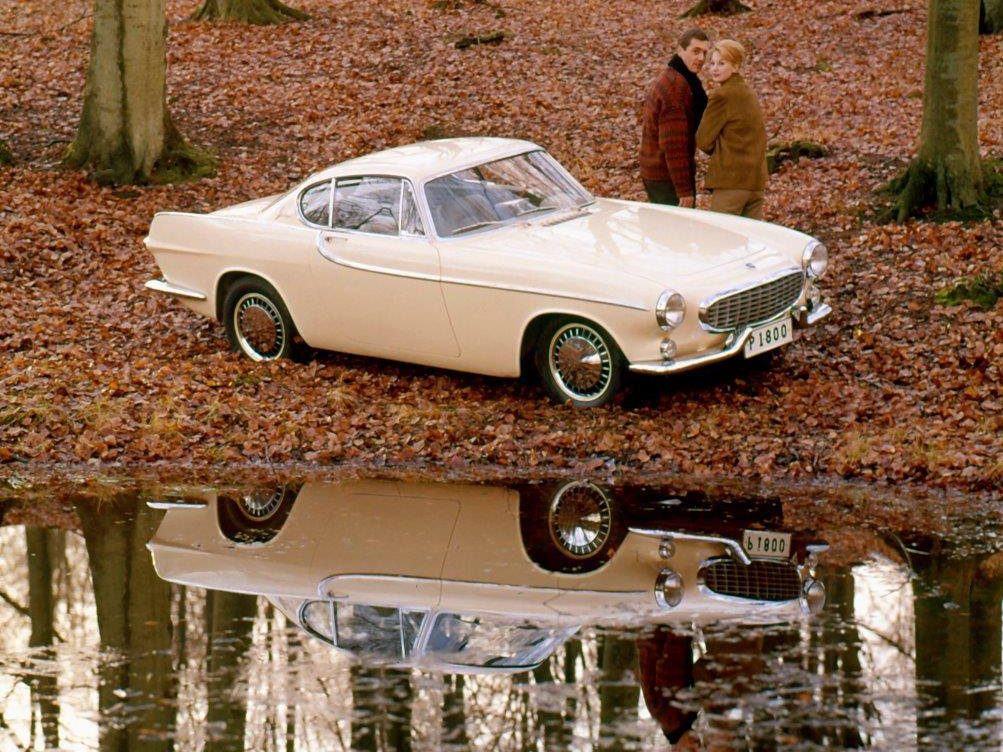
Volvo had a beautiful Frua-penned body, and it became a star of The Saint alongside Roger Moore. The TV fame stuck to the model permanently. Today, hardly anyone remembers the Swedish sports coupe without mentioning that show, but the car itself attracted enormous attention when it was on sale… even though, underneath, its architecture was actually quite conventional. And on top of that – despite Volvo’s reputation for reliability – the early P1800s were built to questionable quality.
Jensen-type front end
I’ll tell you for why: because Volvo simply did not have the production capacity, so manufacturing of the sports model was handed over to the British company Jensen. They received steel bodies shipped in from Scotland – and Volvo itself was practically uninvolved in the whole operation.
Jensen had a contract to build the first 10k cars, but when the Swedes saw the result, they basically said: „Nuh-uh. Nope.” The British managed to build barely 6000 examples, and in 1964, when all production was moved to Sweden, the quality finally improved. Those cars carried the 1800S designation.
The 1800S engine received a higher compression ratio and an improved valvetrain, which meant more power and more speed. Apart from that, it was essentially the same car. The „S” in the name can be misleading, because it had nothing to do with sport. The S stood for „Sverige.” But the Swedish-built car was better put together and, despite being fundamentally the same thing, it was a far better automobile than the early British-built examples.
Displacement did not increase until 1968, when it grew to two liters – although it was still the same B18-derived unit used in the Volvo Amazon. Fuel injection soon followed with the 1800E version (the „E” meaning „Einspritz”), and an automatic transmission became available a year before production ended. This variant could also be distinguished by its alloy wheels.
Volvo-type front
Because of all this mess, you can end up with two examples of supposedly the same car standing side by side: one built like a tank because it’s Swedish – and the other a piece of shit built in England. It was not a typical sports car. More of a vista cruiser in the style of Aston Martins. Only the front suspension was independent, using double wishbones. At the rear, there was a solid axle with coil springs.
The car was certainly capable of high speeds, but the fully synchronized gearbox with overdrive clearly favoured long motorway journeys in the comfort of a 2+2 coupe rather than drag racing acceleration or brutal sportscar performance – definitely not that. Volvo also equipped these cars properly. The front end had disc brakes with servo assistance, which helped the car handle well and made it very safe.
Safe and comfortable, but that was hardly a surprise… It shared a lot of its mechanical hardware with the 121 and the Amazon – the larger sedan in Volvo’s range. That gave the P1800 plenty strength. Most simply inherited from other models.
It looked Aston Martin, but underneath it was basically a Volvo. It certainly wasn’t cheap to buy, but it was still roughly half the price of the competition. Nearly 50 000 examples of all variants were sold – including the „ES” shooting brake, which was a direct rival to the Reliant Scimitar GTE in Britain – and one of those buyers was the star of the TV series himself. Roger Moore drove one on the set of The Saint, but he also owned a P1800 privately.
The final 1800E examples had a 130-horsepower B20 engine with Bosch D-Jetronic fuel injection, an improved valvetrain, and disc brakes on all four wheels. That setup was already capable of a solid 120 mph and could reach 0-60 in 9.5 seconds. That was more than enough to qualify the car for some proper track action.
E, S i ES variants engines
By that point, the Volvo was no longer merely keeping up with sports cars from MG or Triumph – it was considerably faster than them. But, well… the platform had grown old. They quickly turned it into an estate, and not long after that the model was withdrawn from production. In Britain, the Swedes mainly lost out to Jaguar, thanks to the E-Type, which was not actually that much more expensive than the P1800 – and the Volvo simply had no chance of matching it in any way.
As I mentioned, the design was handled by the Frua studio – although even there, you can trace some Swedish roots. The son of Volvo’s chief engineer had just graduated from the Pratt Institute in New York, and his father – as part of the „nepotism+” initiative (actually not really) – made sure his son’s proposal reached the final five. Volvo only admitted this in 2008.
In the end, his design turned out to be the best and was selected. Volvo’s top boss at the time chose it because he wanted a car with a purely Italian shape. And all the way through, he approved the production of a model designed by one of their own countrymen while believing it was Italian – because he had no idea, and nobody told him, that the Italian studio had employed a Swedish designer. Frua built three prototypes, all according to the instructions of Pelle Petterson, with whom they worked closely – something Volvo itself did not know at the time.
Cabriolet was never officially sold, but you could get a shooting brake
It may not be the fastest car around, and it may have suffered from the shortcomings of the British-built examples, but it is still one of the better-looking classics – and one of the more accessible ones you can get now for some reasonably humane money. On top of that, it is genuinely fun to drive despite its performance limitations. Rare, attractive, simple to repair, and generally regarded as quite reliable.
One example from 1966 reached 3 million miles (around 4.8 million kilometers) in 2013, setting a new record in the process. That particular car literally outlived its owner. The man passed away five years after setting the record, and by then his Volvo had 3.2 million miles on the clock – and that still was not its final word. A very good car to start your adventure with automotive classics – just please, not Jensen-built, because that really can turn into a road through hell.
Krzysztof Wilk All sources: it was a text retrieved from my lost webpage – sources will need to be filled later
Volvo miało przepiękną sylwetkę autorstwa biura projektowego Frua, i było gwiazdą serialu “Święty” z Rogerem Moorem. Sława serialowa przylepiła się do tego modelu nieodwracalnie. Dzisiaj bez wzmianki o tej produkcji już nikt o sportowym coupe ze Szwecji nie pamięta, ale wzbudzało ono ogromne zainteresowanie w okresie jego sprzedaży… mimo, że tak naprawdę było całkiem konwencjonalne w swej architekturze. Do tego – wbrew stereotypom o niezawodności marki – wczesne egzemplarze P1800 były wykonane tak na 30% max.
Przód typu ‚Jensen’
A to dlatego, że Volvo nie miało mocy przerobowej, i produkcją sportowego modelu zajął się brytyjski Jensen. Otrzymywali oni stalowe nadwozia, które przyjeżdżały do nich ze Szkocji – i Volvo praktycznie nie brało udziału w tym przedsięwzięciu.
Jensen miał kontrakt na pierwsze 10 000 sztuk, ale Szwed jak to zobaczył, powiedział że „tak być to nie bedzie”. Anglicy wykonali ledwie 6k egzemplarzy i w 1964, jak cała produkcja została przeniesiona do Szwecji, wtedy jakość się poprawiła. Te modele nosiły oznaczenie 1800S.
Silnik 1800S dostał większy współczynnik kompresji i lepszy układ rozrządu, a więc miał też więcej mocy i szybkości. Poza tym, to było właściwie to samo auto. „S” w nazwie może być mylące, bo nie ma nic wspólnego ze sportem. S oznacza „Sverige”. Ale taki pojazd był lepiej wykonany i mimo, że to samo – było to dalece lepsze auto od wczesnych, angielskich egzemplarzy.
Pojemność wzrosła dopiero w 1968 roku – były to dwa litry, ale to ta sama jednostka B18, co w Volvo Amazon. Szybko dostała wtryski dla wersji 1800E (od “Einspritz”) i możliwość automatu na rok przed końcem produkcji. Ten wariant wyróżniał się alufelgami.
Przód typu ‚Volvo’
Przez te zawiłości okazuje się, że mogą stać obok siebie dwa egzemplarze niby tego samego pojazdu: jeden pancerny, bo szwedzki – a drugi: śmietnik zbudowany w Anglii. Nie jest to typowe auto sportowe. Raczej krążownik szos w stylu GT Aston Martina. Tylko przód zawieszenia był niezależny – na podwójnych wahaczach. Z tyłu był sztywny most ze sprężyną śrubową.
Pojazd jak najbardziej zdolny do wysokich prędkości, ale w pełni zsynchronizowana skrzynia z nadbiegiem raczej faworyzuje długie autostradowe podróże w wygodzie i komforcie coupe 2+2, aniżeli brutalne emocje i osiągi na torze – co to, to nie. Volvo solidnie dopasało te pojazdy. Przód miał hamulce tarczowe z serwem hamulcowym, dzięki czemu auto dobrze się prowadziło i było bardzo bezpieczne.
Bezpieczne i wygodne, ale żadna to niespodzianka… Wiele mechaniki dzieliło z 121 i Amazonem – większym sedanem w gamie Volvo. Dlatego P1800 miało sporo zalet. Większość z nich po prostu odziedziczyło po innych modelach.
Wyglądało jak Aston Martin, ale było praktycznie jak Volvo. Nie było co prawda tanie w zakupie, ale na pewno o połowę tańsze od konkurencji. Prawie 50 tysięcy wszystkich wariantów (razem z wersją „ES” w postaci shooting brake’a – to był bezpośredni rywal Relianta Scimitar GTE na wyspach) wyjechało do klientów – i jednym z nich była gwiazda serialu. Roger Moore jeździł nim na planie “Świętego”, ale i poza planem miał w posiadaniu model P1800.
Ostateczne egzemplarze 1800E miały 130-konny silnik w wariancie B20 z wtryskiem Bosch D-Jetronic, poprawiony układ rozrządu, i hamulce tarczowe na wszystkich kołach. Takie coś już potrafiło robić dobre 200 km/h i przekraczało setkę w 9.5 sekundy. To w zupełności kwalifikuje ten pojazd do zmagań na torze.
Silniki w wariantach E, S i ES
Już nie tylko takie Volvo równało się ze sportowymi MG, czy Triumphami, ale było od nich dużo szybsze. No ale cóż… platforma się zestarzała – szybko zrobili z niego kombi i potem model wycofano z produkcji. Na wyspach Szwedzi przegrali głównie z Jaguarem – za sprawą modelu E-Type, który wcale niewiele był od P1800 droższy, a Volvo w żaden sposób nie mogło się z nim równać.
Jak wspomniałem, za design odpowiedzialne było biuro projektowe Frua – ale tam też można doszukiwać się szwedzkich korzeni. Syn głównego inżyniera Volvo świeżo uzyskał dyplom z Instytutu Pratta w Nowym Jorku i jego ojciec – w ramach projektu „nepotyzm +” – załatwił, że projekt syna dostał się do finałowej piątki – do czego Volvo przyznało się dopiero w 2008 roku.
Ostatecznie okazał się najlepszy i został wybrany. Ówczesny papież Volvo wyselekcjonował ten projekt, bo chciał auto z czysto włoską linią. I do końca z takim przeświadczeniem zaklepał produkcję modelu ich rodzimego projektanta – bo nie miał pojęcia, nikt mu nie powiedział, że włoska firma zatrudniała rodzimego projektanta. Frua wykonała trzy prototypy – wszystkie zgodnie z instrukcjami Pelle Pettersona, z którym ściśle współpracowali (o czym Volvo nie wiedziało).
Kabriolet nigdy niebył w oficjalnej sprzedaży, ale kombi istniało w ofercie Volvo
Może nie jest to najszybsze auto, a i może cierpiało od niedoróbek angielskich egzemplarzy, ale jest to jeden z ładniejszych klasyków – i jeden z bardziej przystępnych do dostania za jakieś ludzkie pieniądze. Do tego sprawia dużo frajdy z jazdy mimo braków w osiągach. Rzadko spotykany, wygląda ładnie, prosty w naprawach i uchodzi za raczej niezawodny.
Jeden egzemplarz z 1966 roku w 2013 dojechał do 3 miliona mil (ok. 4.8M kilometrów) przebiegu, czym wyznaczył nowy rekord. Ten konkretny dosłownie przeżył swojego właściciela. Chłop zszedł w 5 lat po ustanowieniu rekordu, jego Volvo w tamtym momencie miało 3.2M mil na liczniku – a to nie było ostatnie słowo. Dobre auto do rozpoczęcia swej przygody z klasykami motoryzacji – tylko błagam: nie Jensen, bo to faktycznie może się okazać droga przez mękę.
Krzysztof Wilk Żródła: to odzyskany tekst z utraconej witryny – źródła są do uzupełnienia
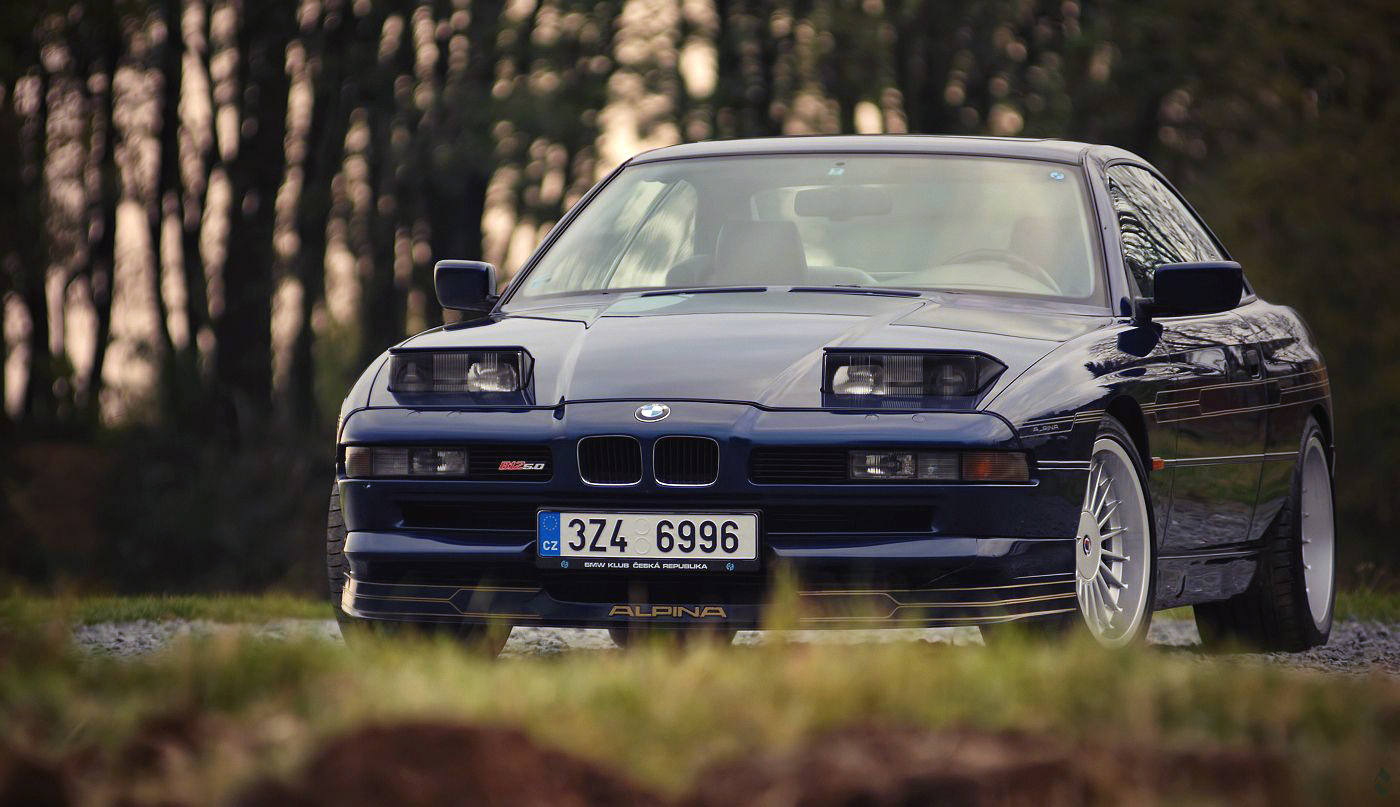
One of the fastest cars to wear an Alpina badge was the B12 – and in fact, there were two different cars carrying the same name. There was the Alpina B12 based on the four-door BMW 7 Series sedan, and there was the Alpina B12 Coupe built on the 8 Series. The B12 Coupe was a proper upper-class GT. Fast, comfortable… with a touch of luxury. It was created to satisfy customers for whom an ordinary BMW simply wasn’t enough. By turning to Alpina, they could feel a certain sense of exclusivity, while still retaining the advanced engineering of these German machines and their remarkable driving characteristics – AND they could even feel an improvement over the standard 8 Series.
The 8 Series was introduced in 1990 as the successor to the BMW E24 6 Series. It was not a pure sports car, but rather a large GT powered by either a V8 or a V12. The 850i served as the basis for the Alpina B12 5.0, but when BMW Motorsport unveiled its 850CSi, it turned out to be so good that Alpina chose that very car as the foundation for building the B12 5.7 Coupe.
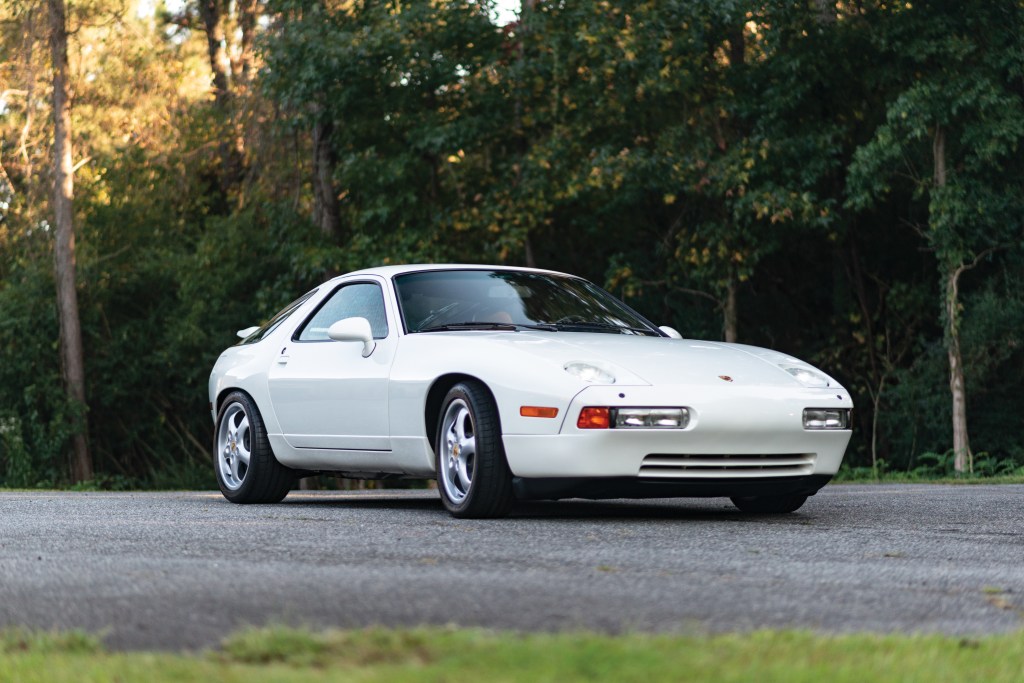
The Alpina Coupe was available exclusively as a V12, and it had an incredibly difficult task ahead of it, as very serious competition was waiting both on a domestic market and abroad. It had to exist in the world where there was the Porsche 928 – and from 1992 onward, also in GTS form, with a larger V8 smoothly delivering at least 350 cheerful horses. 5.5 seconds to 100 km/h was still slower than I take my whiskey, but already dangerously close to the Testarossa of that era (the 512 TR did it in 5.0 seconds). And Porsche, after all, was a 2+2 GT – not a supercar. So in terms of performance, the rivalry was fierce.
And when it comes to prestige… there was also something like the Mercedes 600 SEC roaming the German autobahns. This was the coupe variant of the S-Klasse – of the third generation, coded W140 (C140 for the Coupe) – and by that point it already had a 6.0-liter V12 making 400 horsepower (or nearly 400, depending on the facelift). So the driver of something like that really had no right to complain about mid-range acceleration. And when it comes to ride comfort and equipment, I only have two words to say: S-Class. Thank you for your time. Any questions?
Main rivals to Alpina – Porsche 928 GTS from that period, the Mercedes SEC and a Jaguar XJR-S
You could say that Gran Turismo is a very tightly defined niche, but even on that shelf there is plenty of room for reshuffling. The competition was highly varied: the performance-focused Porsche, the luxurious Mercedes, and the well-balanced Jaguar. Each of them was a natural rival to BMW, and Alpina had to be better than ALL OF THEM. That is why it introduced its own alternative to the 8 Series – more exclusive, and loaded enough to provide the driver with sensations unmatched by any competition.
Alpina made changes to the car’s aesthetics, but also carried out mechanical modifications to underline its dominance in performance. The architecture of the E31 8 Series was a very good base to work with. The BMW 850i was an exceptionally well-thought-out car (and I will likely show it myself before long), which meant Alpina already had a lot to gain from the very start.
It certainly looked the part, because BMW had given it sleek, aerodynamic lines, though naturally it did not go without Alpina touches both outside and inside the car. The E31 was fitted with some clever suspension with Bilstein dampers and Eibach springs. So at that point it had both the comfort and the driving dynamics, because the E31 delivered the ideal balance – while also leaving its rivals behind in that regard.
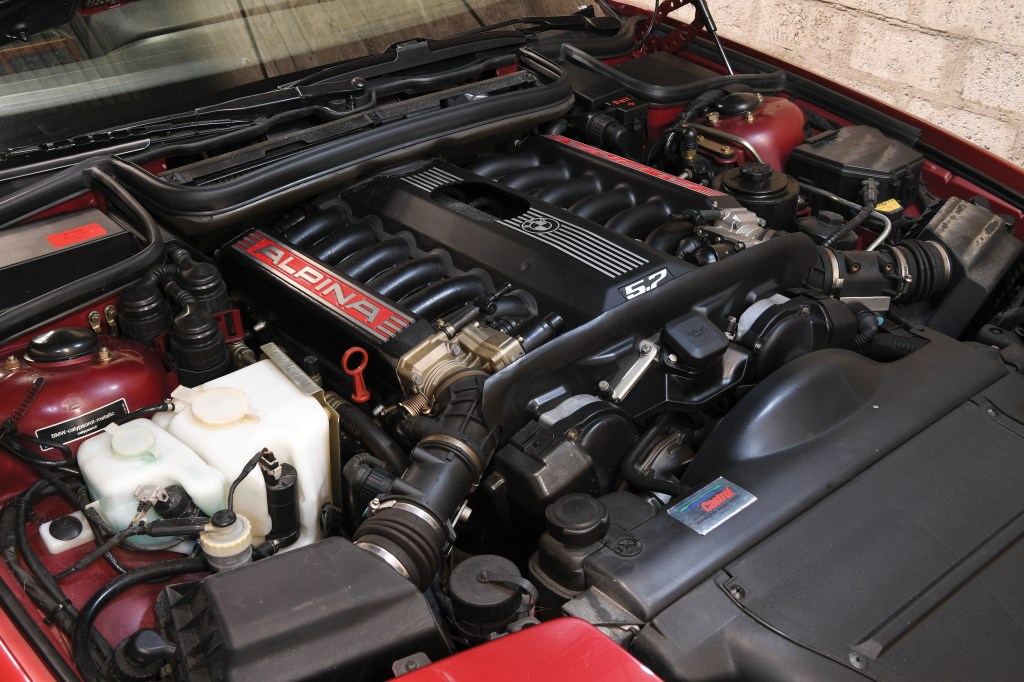
It had to be powered somehow, too – and what sat at the base was BMW’s 5.0-liter V12. It had an aluminum-alloy block and made somewhere in the region of 300 horsepower. Alpina made their changes first raising the output to 350 horsepower, and later increasing displacement to 5.7 liters (410 hp).
It was essentially a ‚double straight-six,’ as it had two distributors, a set of ignition leads for each bank of six cylinders, and a twin air-filter setup of the kind you would normally associate with that layout. The crankcase had been designed specifically with a V12 in mind, but the block itself, the crankshaft, the connecting rods, and all the manifolds remained unchanged. The pistons were thrown out and replaced with ones of higher compression, enlarged intake valves were fitted – they lifted higher and with more aggressive timing – and Bosch ECU control was added as well. Aside from the manifolds, the entire stainless-steel exhaust system was completely new.
The gearbox remained the same 4-speed automatic as in the 5.0-liter BMW, but Alpina reworked its programming so it could fully exploit the car’s new capabilities. Later on (for the 5.7), there was a 6-speed manual Getrag, as well as ShiftTronic with an electronically controlled clutch. This is the only Alpina ever offered with such system.
Inside, there were bespoke made-to-order elements, special color options, and unique upholstery – beyond everything you could already get in the most expensive BMW E31s. Alpina drivers had their own seats and different interior trim than in a standard BMW. From the outside, the car differed only in the details.
Depending on the version, the car could accelerate from 0 to 60 in 5.5 to 6.4 seconds and reach as much as 174-186 mph. Even the 5.0-liter V12 variant was one of the fastest GT cars of its time. The B12 was something magnificent. It combined colossal, supercar-worthy power – but delivered it in a smooth manner – with the refinement of a luxury limousine.
The suspension modifications ensured excellent handling, while the might of the V12 delivered effortless acceleration and exciting sound sensations coming from the exhaust. The regular BMW 8 Series was already a magnificent GT, but the B12 stood above all of them in terms of technology and class equipment. The car remained stable at any speed, inspired confidence in the corners, and braked hard. All of that had to amplify the sense of certainty behind the wheel.
It was a strong entry into the fast GT market. The press fell in love with the car immediately. It hardly had any flaws, while the list of advantages seemed endless. It was a serious contender in this segment right from the start, because it combined Alpina’s craftsmanship with BMW’s underlying architecture.
Machine was prime and price for it was prime – but there was never a shortage of buyers for this car. Even its rivals had to give the Germans their due. People began to recognize the strength of this market segment, and before long, new large coupes would appear, all competing in performance, refinement, and exclusivity. In a way, Alpina opened everyone’s eyes to the true value of this corner of the industry.
The Alpina B12 E31 Coupe is now a true icon of the 1990s, and one of the better – yet also rarer – classics of the era. It stands as a symbol of Alpina’s peak achievements and of their collaboration with BMW. The finest blend of comfort and luxury with performance and emotion – sharpened with a touch of exclusivity. In seven years, fewer than 200 examples of both versions of this model were built. Today, it is a real prize for collectors, available only for very serious money.
Krzysztof Wilk All sources: it was a text retrieved from my lost webpage – sources will need to be filled later
Jednym z najszybszych aut ze znaczkiem Alpiny było B12 – i tak naprawdę istnieją dwa auta o tej samej nazwie. Alpina B12 w czterodrzwiowym sedanie na bazie BMW Serii 7, oraz Alpina B12 Coupe z Serią 8 u podstaw. B12 Coupe to typowe GT z górnej półki. Szybkie, wygodne… z odrobiną luksusu. Powstała po to aby zadowolić klientów, dla których zwykłe BMW to za mało. Zwracając się w stronę Alpiny, mogli oni czuć się w pewien sposób ekskluzywnie, wciąż zachowując zaawansowaną inżynierię tych niemieckich pojazdów i niebanalne właściwości jezdne – a nawet mogli czuć poprawę względem zwykłej Serii 8.
Serię 8 zaprezentowano w 1990 roku jako następcę BMW Serii 6 E24. To nie było auto czysto sportowe, ale właśnie duże GT z V8 bądź V12. 850i stanowiło bazę dla Alpiny B12 5.0, ale kiedy BMW Motorsport przedstawiło swoje 850CSi to było tak dobre, że wtedy Alpina właśnie na nim dokonywała zmian budując B12 5.7 Coupe.
Coupe Alpiny dosępne było wyłącznie jako V12 i miało niesamowicie trudne zadanie, bo czekała na nie solidna konkurencja zarówno z kraju, jak i zagranicy. Na rynku obecne było Porsche 928 – od 1992 roku jeszcze w wersji GTS z większym V8 jedwabiście zapodającym 350 wesołych koników co najmniej. 5.5 sekundy do setki, to wciąż wolniej jak Kwaśniewski, ale już niebezpiecznie blisko Testarossy tamtych czasów (512TR robiło 5.0s). A przecież Porsche to GT 2+2 a nie supersamochód. Dlatego pod względem osiągów rywalizacja była zaciekła.
A jeśli chodzi o prestiż… Po niemieckich autobahnach jeździło również coś takiego jak Mercedes 600 SEC. To była S-Klasa w wersji Coupe – 3 generacja o kodzie W140 (C140 dla Coupe) i to tam już było 6 litrowe V12 o mocy 400 koni (bądź prawie 400 – w zależności od wersji liftu). No to kierowca takiego czegoś nie miał prawa narzekać na elastyczność swego pojazdu. A przechodząc do komfortu jazdy i wyposażenia, no to mam dwa słowa do powiedzenia: S Klasa. Dziękuję za uwagę. Jakieś pytania?
Główni rywale Alpiny – Porsche 928 GTS z tamtych czasów, Mercedes SEC i Jaguar XJR-S
Można powiedzieć, że Gran Turismo to bardzo sztywno określona nisza, ale i na tej półce jest sporo miejsca do przetasowań. Konkurencja była bardzo różnorodna: nastawione na osiągi Porsche, luksusowy Mercedes oraz zrównoważony Jaguar. Każdy był naturalnym rywalem dla BMW, a Alpina musiała być lepsza od nich wszystkich. Dlatego wprowadziła do oferty ich alternatywę dla Serii 8 – bardziej ekskluzywną i dopakowaną na tyle, żeby zapewnić kierowcy wrażenia nieporównywalne do aut konkurencji.
Alpina dokonała zmian w estetyce pojazdu, ale i mechanicznych modyfikacji dla podkreślenia dominacji w osiągach. Architektura Serii 8 E31 to dobra baza do manipulacji. BMW 850i było bardzo przemyślanym autem (ja o nim zapewne niedługo też opowiem), dzięki czemu Alpina sporo zyskała już na starcie. Na pewno dobrze wyglądała, bo BMW miało smukłe aerodynamiczne linie, ale nie obyło się bez wstawek Alpiny tak na zewnątrz, jak i wewnątrz pojazdu. Do E31 dołożono kurwa sprytne zawieszenie z amortyzatorami Bilstein i sprężynami Eibach. To już wiemy, że ani o komfort, ani dynamikę jazdy nie ma co się obawiać, bo E31 stanowiło idealny balans – przy okazji dystansując rywali w tym temacie.
Coś musi go też napędzać – a jest to motor z 5-litrowym V12 BMW u podstaw. Miał blok ze stopów aluminium i moc w granicach 300 koni mechanicznych. Alpina przypudrowała nosek i temu misiu, podnosząc power do 350 koni, a potem litraż do 5.7L (410 hp).
To właściwie „podwójna szóstka”, bo ma dwa rozdzielacze, parę przewodów zapłonowych dla sześciu cylindrów i podwójny filtr powietrza z tego typu silników. Skrzynia korbowa była projektowana z myślą specjalnie o V12, ale sam blok, wał korbowy, korbowody i wszystkie kolektory – były niezmienione. Tłoki wyjebano i wstawiono takie o wyższym stopniu sprężania, dano powiększone zawory w dolocie – wyżej się podnosiły i miały agresywny timing – oraz sterownik ECU Boscha. Oprócz kolektora – układ wydechowy ze stali nierdzewnej cały był w ogóle nowy.
Skrzynia biegów pozostała tym samym 4-biegowym automatem co w 5-litrowym BMW, ale Alpina pozmieniała w niej oprogramowanie, żeby dała radę wykorzystać w pełni nowe możliwości pojazdu. Później (dla 5.7) wszedł nawet 6-biegowy manualny Getrag, jak i ShiftTronic z elektronicznym sprzęgłem. To jest jedyna Alpina kiedykolwiek oferowana z tym systemem.
We wnętrzu dostępne były elementy na życzenie, specjalne opcje kolorystyczne i unikalna tapicerka – już poza wszystkim co można dostać w najdroższych BMW E31. Kierowcy Alpiny mieli własne siedzenia i inne obicia wnętrza niż w BMW. Z zewnątrz auto różniło się tylko detalami.
Pojazd w zależności od wersji potrafił przyspieszać od 0 do 100 w 5.5s – 6.4s i osiągać do 280-300 km/h. Nawet wariant z 5-litrowym V12 był jednym z najszybszych GT swoich czasów. B12 było czymś wspaniałym. To połączenie kolosalnej mocy godnej supersamochodu – ale podanej w płynny sposób – z wyrafinowaniem luksusowej limuzyny.
Modyfikacje zawieszenia zapewniały doskonałe prowadzenie, a potęga V12 dostarczała bezwysiłkowe przyspieszenie i ekscytujące wrażenia dźwiękowe dochodzące od strony wydechu. Zwykłe BMW Serii 8 było wspaniałym GT, ale B12 to już nad każdym górowało technologią i klasowym wyposażeniem. Auto jest stabilne przy każdej prędkości, prowadzi się pewnie i mocno hamuje. To wszystko musi wzmagać pewność za kierownicą.
To było dobre wejście na rynek szybkich GT. Prasa od razu pokochała to auto. Właściwie nie miało żadnych wad a lista zalet się ciągnęła w nieskończoność. Mocny konkurent w tym segmencie już od początku, bo łączył w sobie rzemiosło Alpiny i architekturę BMW.
Cena była niemała – ale chętnych na to auto nie brakowało. Nawet rywale musieli oddać Niemcom, co należne. Dostrzeżono siłę w tym segmencie rynku i wkrótce pojawią się nowe modele dużych coupe prześcigających się osiągami, wyrafinowaniem i ekskluzywnością. Alpina w pewnym sensie otworzyła wszystkim oczy na rzeczywistą wartość tego rynku.
Alpina B12 E31 Coupe to już kultowe auto lat ’90-tych i jeden z lepszych – a zarazem rzadszych klasyków. Symbol szczytowych osiągnięć Alpiny i ich współpracy z BMW. Najlepsze połączenie komfortu i luksusu, z osiągami i emocjami – podrasowane szczyptą wyjątkowości. W 7 lat zbudowano niecałe 200 sztuk obu wersji tego modelu. Dziś jest kąskiem dla kolekcjonerów do dostania tylko za grube szekle.
Krzysztof Wilk Żródła: to odzyskany tekst z utraconej witryny – źródła są do uzupełnienia
In the early 1980s, the new DTM format replaced the old Deutsche Rennsport Meisterschaft races. DRM was initially popular, but over time it grew increasingly monotonous. The format allowed cars homologated under Group 2 and Group 4 regulations, which competed in races split into two separate divisions. Division 1 was designated for models with engine displacements of 2 liters and above, while Division 2 was reserved for cars with engines under 2 liters.
In the 1977 season (roughly halfway through the format’s lifespan), cars homologated under Group 5 were allowed into the competition. These were spectacular machines to watch, but in practice, the category lacked serious rivals. This so-called Super Silhouette class featured extremely expensive, turbocharged cars with advanced aerodynamics. Not everyone had the capability to build such a car—let alone fund and maintain a racing program of that caliber. As a result, while they were crowd-pleasers, they rarely made appearances on race tracks.
DRM was known for Group 5 Supercar racing | autonatives.de
The Super Silhouette era, however, was only the latter half of the DRM. The series began in 1972 as a battleground for touring cars (Group 2) and GT cars (Group 4). Division 2 provided an entry point for less experienced manufacturers, but the main attraction was Division 1, featuring large-displacement engines. The grid included cars like the Porsche 911 and Ford Capri, as well as entries from Autodelta, De Tomaso (5.8 liters), the 7.0-liter Camaro, and various BMW models.
DRM Golden Era
Although the races were primarily domestic, they were anything but dull. Generous prize money began to attract more international drivers, and teams started employing increasingly advanced strategies. As a result, the DRM evolved from a purely German championship into a prestigious international motorsport series. It was there that drivers like Hans-Joachim Stuck, Hans Heyer, and Klaus Ludwig honed their careers. DRM also played a key role in the development of legendary models like the Carrera RSR, Escort II, and BMW 3.0 CSL, while helping establish powerhouse teams such as Schnitzer, Zakspeed, and AMG.
Zakspeed Capri
The problem was that, in later years, naturally aspirated cars stood no real chance of fighting for victory. This applied to nearly all entries, but especially to the smaller cars in Division 2, which were completely outclassed. 1977 marked the first season under Group 5 rules. These races carried more prestige than even the World Championship at times — but often there just weren’t enough of these machines to fill the grid.
Porsche 935
We’re talking about cars like the Porsche 935, Celica Turbo Group 5, BMW 2002 Turbo, and Escort RS 1800. All of them struggled with early development issues. The cars often broke down, and teams, short on funds, would drop out mid-season. Some of these machines only showed up once or twice the whole year. Very few could run a full campaign with one of these beasts — let alone do it successfully.
Team Schnitzer Celica Turbo
DRM – What went wrong?
The minimum number of cars required to run a race was 10 — and for Group 5, that was often a struggle. Vehicle preparation was hit-or-miss, and new models meant to replace the old ones didn’t always live up to expectations. These cars cost a fortune, yet couldn’t be relied on at all — often turning out to be a very expensive gamble. Lancia joined the fight with the Beta Montecarlo, and BMW brought in the M1, but it was Porsche that dominated with the 935, especially the K3 version.
Lancia Beta Montecarlo
The DRM series gradually lost its competitive edge. It became a shadow of its former self — a far cry from the wild, barely regulated Group 5 monsters of the 1970s. By the end, the grids were mostly made up of BMW teams, Ford Capris, and Porsche 935s. Porsche had no real rivals for years, and the format stopped generating excitement. Eventually, organizers decided to completely overhaul the series, shifting to a single-division format under Group C regulations. That’s when everything changed. Supercars like the Porsche 956 and Ford C100 entered the fight — and Internationale Deutsche Rennsport Meisterschaft (IDRM) was born.
There was no longer a place for touring cars in this new format. For two years, they were pushed aside to race in the Rennsport Trophäe, waiting for 1984 and the debut of what we now know as the DTM.
BMW M1
DTM 1984 Rounds 1-3
DTM – What exactly is that…
The new format didn’t initially carry the name we know today. For its first two seasons, the series ran as the Deutschen Produktionswagen Meisterschaft (DPM). It wasn’t until the third edition that it officially became the Deutsche Tourenwagen Meisterschaft — the German Touring Car Championship (DTM — and for simplicity, I’ll stick with that name from here on out).
DTM quickly established itself as the premier racing series in Germany. It’s worth remembering that Super Silhouette was introduced to DRM to boost excitement, but DTM ended up outshining the Group C races in no time. That just proved that touring car racing had the greater potential.
Harald Grohs – the victor of the first DTM event – behind the wheel of his BMW 635 CSi | netzwerkereins.com
IDRM inherited the high costs of DRM, which was already a major issue from the get go. DTM, on the other hand, was much cheaper to run and take part in. The races followed Group A regulations — maybe not the most flexible in terms of modifications, but perfect for keeping costs down and lowering the entry barrier. That’s a big plus when you’re building a series from the ground up.
It also helped attract a wide range of participants. And over time, the rules could be tightened or expanded to boost the spectacle — which is exactly what happened.
… and why is it so good?
There’s no other branch of motorsport where the competition is this tight. Outside of spec series — where everyone drives the same car, like PROCAR — or American-style oval racing like NASCAR, DTM really stands out. It’s hard to pick consistent favorites, because even older, well-sorted machines can hold their own.
In any given race, there might be 15 drivers realistically fighting for the win. Sometimes, a 2- or 3-year-old car can still take on the latest machines and end up at the top of the season standings. In its very first year, drivers behind the wheel of seven different car models fought till very late phase of the season with everyone holding good chance for the title.
DTM rounds quickly went from being warm-ups before Formula 3 weekends to becoming the main event. It earned the nickname: “Formula 1 of touring cars.”
Volvo 240 Turbo | wheelsage.org
The format turned out to be a perfect hit, as it allowed organizers to keep the racing extremely competitive. Cars were regulated in terms of minimum weight and tire width. A ballast system was introduced — dominant vehicles could receive up to 120 kg of extra weight, while engines with three or more valves per cylinder started off with a 70 kg penalty. Meanwhile, underperforming teams were allowed to lighten their cars, which encouraged less experienced drivers to join the grid.
As a result, a single race could see up to 40 cars on the starting grid, with championship points awarded to the top 18 drivers. Many teams entered the competition completely from scratch. Not all drivers were professionals, and the field featured cars based on 16 different production models — a level of variety unmatched anywhere else. Opels and BMWs alone could be seen in at least three different variants during a single race.
Round 1 – Zolder – Have you been to the opening?
Zolder – what is it?
The season kicked off on March 11 with a race at the Zolder circuit. Over 3,000 spectators turned out to watch the action. The race consisted of 24 laps on the 4.3 km track, totaling roughly 102 kilometers at an average speed of 125 km/h. Drivers behind the wheels of Rovers and BMWs were considered the favorites going into the event.
Zolder layout | racingcircuits.info
The Belgian circuit hosted the season opener in March, and conditions were brutal — drivers had to brace for both rain and snow. The weather caught many off guard, with some cars proving unfit for competition altogether. A few entrants were even excluded by the organizers; for example, Alfa Romeo teams had to replace their exhaust systems just to meet the decibel limits. In the end, 24 drivers lined up on the grid, and 18 made it to the finish — meaning every finisher walked away with points.
The start of the first DTM event | snaplap.net
24 cars on the grid was a strong showing — especially considering this was an entirely new racing series. The most common sight? BMWs. German teams had already been running the E24 635 CSi in the ETCC, and the proven platform seemed like the perfect fit for the national championship.
But BMW wasn’t alone. It now had proper rivals in the form of the Rover SD1 and American Muscle like the Ford Mustang and Chevrolet Camaro. Alfa Romeo showed up too, but — like a few other smaller contenders — just didn’t have the cylinder count or engine capacity to properly challenge the Bavarians.
Belgium Race
Rover had a V8 under the hood, and both Jörg van Ommen and Olaf Manthey secured strong qualifying spots – first and third on the grid. Splitting them was Hans-Joachim Stuck in a BMW, who dominated most of the race from the start. But just two laps before the finish, disaster struck: he lost a wheel. That opened the door for Grohs, who swept past and cruised to victory with nearly a 30-second lead.
Rover’s troubles kicked in early – likely due to poorly chosen tires. They wore out too quickly, but with that unpredictable weather, it was a total gamble. Some teams hand-cut treads into slicks, others gambled on full rain tires. It was chaos. Meanwhile, Alfa took a serious power hit from their hastily zip-tied exhaust replacements. As for Rover, they also struggled with power in this first round and couldn’t crack the top five. BMW swept the podium with Grohs, Schneider, and Strycek taking the honors.
Round 2 – Hockenheim – And the winner is…
Hockenheimring Baden-Württemberg
April 8 brought the Jim Clark Rennen – a DTM round held at the Hockenheim Motodrom. Compared to the Belgian opener, this was a much faster and longer circuit. At the time, it stretched 6.8 km per lap, with average speeds around 157 km/h. Drivers had to complete 15 laps, which again meant just over 100 kilometers at serious pace. It was also the first real opportunity for the Foxbody Mustang to bare its teeth.
Hockenheimring layout from 1984 – you can see long straights favouring fast cars | wikipedia.org
How did it go?
In the April race, 33 drivers lined up at the start, and the action was way more intense than in Belgium. Van Ommen once again secured pole position, with Olaf Manthey lining up beside him in the second Rover. Grohs, piloting the E24 BMW, started just behind them. Early on, five drivers broke away from the pack while further back, Jürgen Fritsche struggled with brake issues – his Kadett GT/E clipped two other cars entering the chicane and didn’t finish the race. The Foxbody showed promise with the fastest sector times but ended up heading home early too, plagued by both ignition problems and tire trouble. Just brutal luck.
Race two: SD1 Rovers take on a BMW 635 | YT: KhS Ralf Schmitz
Despite the best efforts of the Rover SD1 drivers, it was Grohs in the BMW who crossed the finish line first. Behind him came Volker Strycek in another BMW 635 CSi, followed by Peter Oberndorfer in the Alfa Romeo GTV/6. But the drama didn’t end there – Grohs’ CSi was found to have illegal valve lift on at least two cylinders, leading to his disqualification!
What made it especially controversial was that the engine came straight from the factory – identical to what other BMW drivers were using. Still, only Grohs’ result was scrapped; the rest of the standings were left untouched. As a result, no one was moved up to claim victory. The race officially ended with a second and third place… but no winner. Fans saw 23 cars cross the finish line – and not a single one take the win.
Runda 3 – Avus – Buy one get one free
Autobahn racing? Shut up and take my money!
Berlin, May 13. Five thousand spectators followed the action as 27 crews lined up for the third round of the DTM, run over two heats. One lap was a long sprint covering 8.1 km. The Automobil-Verkehrs- und Übungs-Straße was, in essence, a historic racetrack (in the sense that it’s no longer in use), built along a stretch of highway running through Berlin. It consisted of two long straights ending in loops. Straight, hairpin, straight, hairpin – and that was it.
Ever simple AVUS racetrack was an Autobahn race in the essence | racingcircuits.info
A very distinctive track. It was built in 1921, and back then the full layout was nearly 20 kilometers long. I mean… that’s a really long straight. After the war, it was shortened to around 8 km, but it still remained one of the fastest circuits out there, with average race speeds hitting 180 km/h. Naturally, in a race like this, everyone bets on the big American muscle cars with massive engines. BMWs and Rovers have to play catch-up, while the Alfa Romeos and Kadetts can only really hope to grab a few points at the back of the grid.
AVUS round was a chance for Mustang 5.0 | netzwerkeins.com
Race results
27 cars lined up for the event, but the race format was a bit different this time – two heats of 7 laps each, with half-points awarded per race. Van Ommen started from the pole for the third time in a row and fought hard right up until the final lap, where a late braking move cost him dearly. He damaged his Rover, smashing the oil pan and steering rack – though he still managed to finish second. Unfortunately, the car wasn’t fit for the second race.
The Mustang, with its 5-liter V8, was right at home on this fast and wide circuit. Manfred Trint made perfect use of that power and dominated the first heat, finishing more than 4 seconds ahead of anyone else. Third place went to another muscle car — a 5.7-liter Chevrolet Camaro Z28. Driver Peter John had started way down the grid but climbed his way to the podium through consistent, smart driving.
The second heat was even more dramatic. Trint’s Mustang took the lead early, but then blew out both front tires and had to limp back. That opened the door for six drivers to battle it out for the win. The brakes on the Camaro gave out completely – and it slammed straight into Grohs’ BMW, ending the race for both of them.
That left four cars fighting it out to the line – and they finished practically on top of each other, with less than a second separating first from fourth. The Rover finally earned its moment, picking up half-points for the win. Von Bayern and Strycek followed close behind in their BMWs.
Epilogue – BMW and Rovers: old but still fierce
BMW E24 635 CSi
The new DTM series (then called DPM) was packed with adrenaline right from the start. The first race didn’t go exactly as everyone hoped, but each following event brought more excitement and variety. It quickly became clear that to win, you needed at least 3 liters of engine capacity. Rovers and BMW CSi ruled the field with their 3.5-liter engines – whether inline sixes or V8s – no matter the configuration.
BMW 635 CSi was the strongest contender in early DTM | wheelsage.org
Despite the presence of newer models, the BMW 635 CSi was one of the best cars of the 1980s and enjoyed the greatest trust from drivers. It’s no surprise – this car produced nearly 300 horsepower, was lighter than its American competitors, and despite its considerable size, it proved itself three times over in European ETCC races. And in the DTM, it had to carry extra ballast! Yet, full factory support and a refined design gave it the edge it needed.
Rover SD1 (3500/Vitesse)
The Rover Vitesse also got off to a strong start. Van Ommen may not have won, but he started at the front in three races. Like the BMW drivers, he relied on a proven design. The Rover Vitesse had the same advantage in engine displacement and similar power output. In fact, both models competed directly against each other in the same market segment.
Rover was very simple, but it was a well designed machine | wheelsage.org
Rover, however, had a serious ace up its sleeve – one that, if used right, could really shake things up. On paper, the car seems too big and heavy to be a serious race contender. The thing is, the SD1 model is a perfect mix of simplicity and modernity, and the Vitesse variant holds huge potential. These cars still run with a solid rear axle, but their V8 engines featured fuel injection, which meant drivers of these models would continue to show strong performances for quite a while. You just wait.
The early rounds of the Deutsche Tourenwagen Meisterschaft already gave us a taste of what these cars and their drivers were capable of. After three races, the overall standings looked like this:
Points
Driver
Car
42
Volker Strycek
BMW 635 CSi
24
Leopold von Bayern
BMW 635 CSi
22
Jörg van Ommen
Rover Vitesse
20
Harald Grohs
BMW 635 CSi
18
Udo Schneider
BMW 635 CSi
Krzysiek Wilk — — — Credit to all the sources used in creation of this text: T Voight – DTM: The Story – the official DTM book | M Buckley – The Complete Illustrated Encyclopedia of Classic Cars | D Lillywhite – The Encyclopedia of Classic Cars | The Kingfisher Motorsports Encyclopedia | R Nicholls – Supercars | ultimatecarpage.com | touringcarracing.net | wheelsage.org | wikipedia.org | autozine.org | carandclassic.com | supercars.net | silodrome.com | autonatives.de | FB: EasternBMW | snaplap.net | YT: KhS Ralf Schmitz | netzwerkeins.com | racingcircuits.info and likely I forgot about someone as well…








 SRT
SRT 