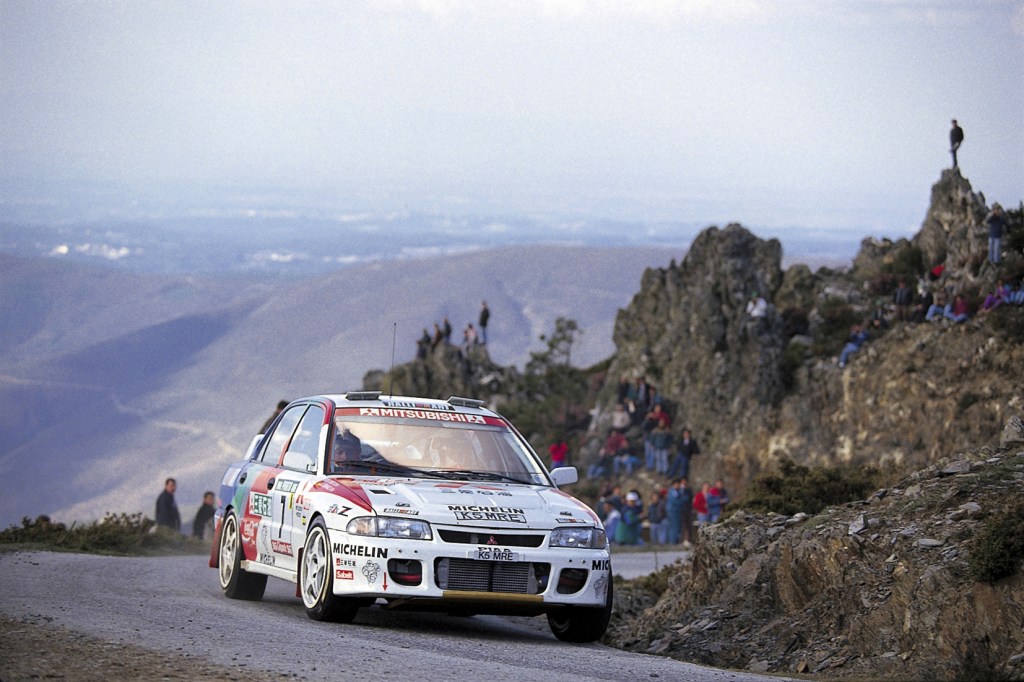
| Engine | Displacement | Power | Acceleration | Top Speed |
| Straight 4 Turbocharged | 2.0 L | 300 BHP | 5.1s | 230 km/h 143 mph |
This model hit the market in 1992, featuring a two-liter engine and permanent all-wheel drive. Awesome stuff, but it was easy to get duped because the Lan-Evo was built with the same body as regular Lancers. Plenty of folks parted with their cash, thinking they’d snagged a beast with rally heritage, only to find out they’d been sold a family-friendly Mitsubishi with a 1.8 under the hood. Well, at least they got the four-wheel drive. The bodies also found use in Malaysia, where the Proton Wira shared bodywork with the first Evo. Some Protons were even sold as legit RS Evolutions. If that’s your dream car to buy – watch out for scams.
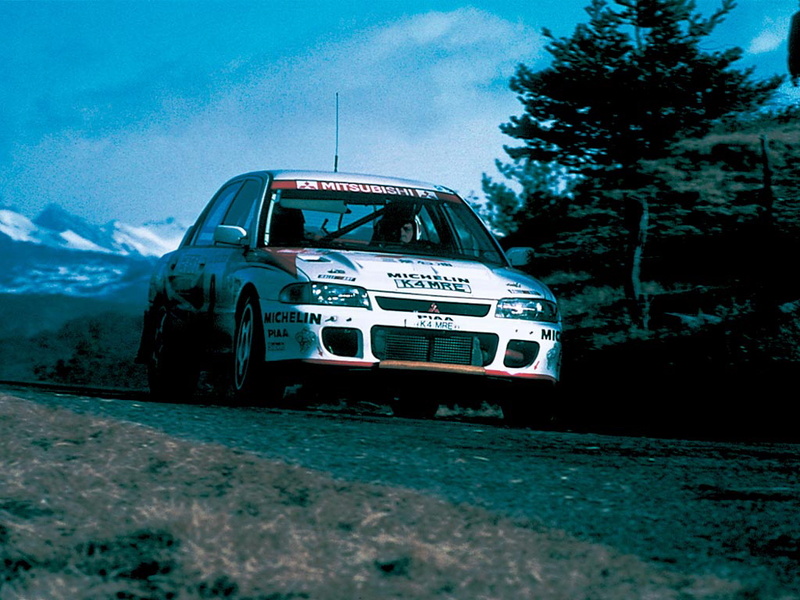
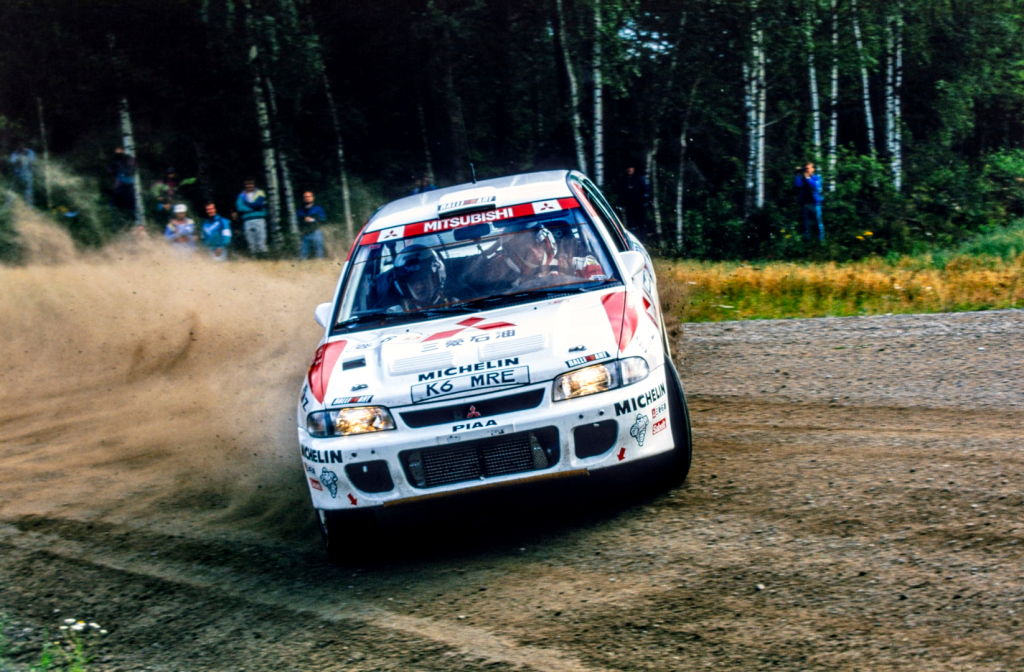
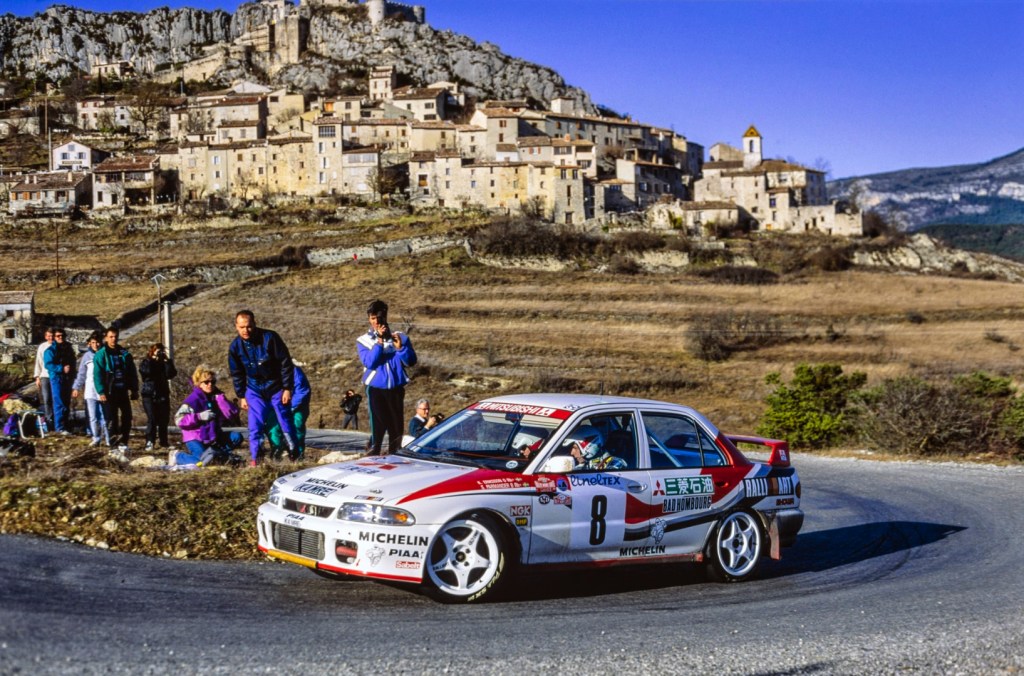
We will focus on two versions: the GSR and the RS. What’s the difference? Well, the GSR is the fully road-ready version with all the comforts: power windows, air conditioning, Recaro seats, and alloy wheels. In short – it’s packed. The Lancer RS, on the other hand, was designed as a base for Group A rally variants. It had nothing fancy inside: no frills, no air conditioning – even were steel and the seats were basic shit to be the first thing swapped out for rally equipment anyway. Standard as it gets, the car came a whole 70 kilograms lighter than the sporty GSR. Both versions were part of the homologation process, but the GSR was outfitted for civilian customers. They shared the same short-ratio gearbox. GSRs came in five different color options, while the Evo RS was only available in white or silver. The easiest way to tell an RS from a GSR is to look inside. No RS ever came with ABS – ever – so, if someone claims to have a Lancer RS „but this one has ABS” – it’s not an RS. The GSR also came with air conditioning and a rear wiper. If someone tries to tell you it broke off, or the rear glass was replaced #truestorybro… the buttons for controlling those features should still be there. If they’re not – it’s not a GSR. Just a heads-up if you’re in the market or have a buddy bragging about their Evo Lancer!
But if someone for real owns a Lan-Evo, hats off to them. That’s not just a car – it’s a goddamn demonic monstrosity! During the ’80s and ’90s, rallying became a much tougher sport – grueling and demanding. A heavyweight like the Galant VR-4 quickly hit a wall, limited by its sheer size. So, it passed the torch, along with all its experience and tech, to the smaller, more agile Lancer. And that’s how the Lancer Evolution was born.
Its engine delivered 247 horsepower – the legendary Sirius 4G63T paired with a 5-speed manual transmission. This setup powered all four wheels. Homologation required 2,500 units, which sold out within three days of launch. In less than two years, more than twice that number were produced. Every single one came equipped with limited-slip differentials at the front, rear, and center. The engine, shared with models like Galant and the Eclipse, had an increased compression ratio… and every car was right-hand drive. All of them were exclusively sold to the Japanese market.
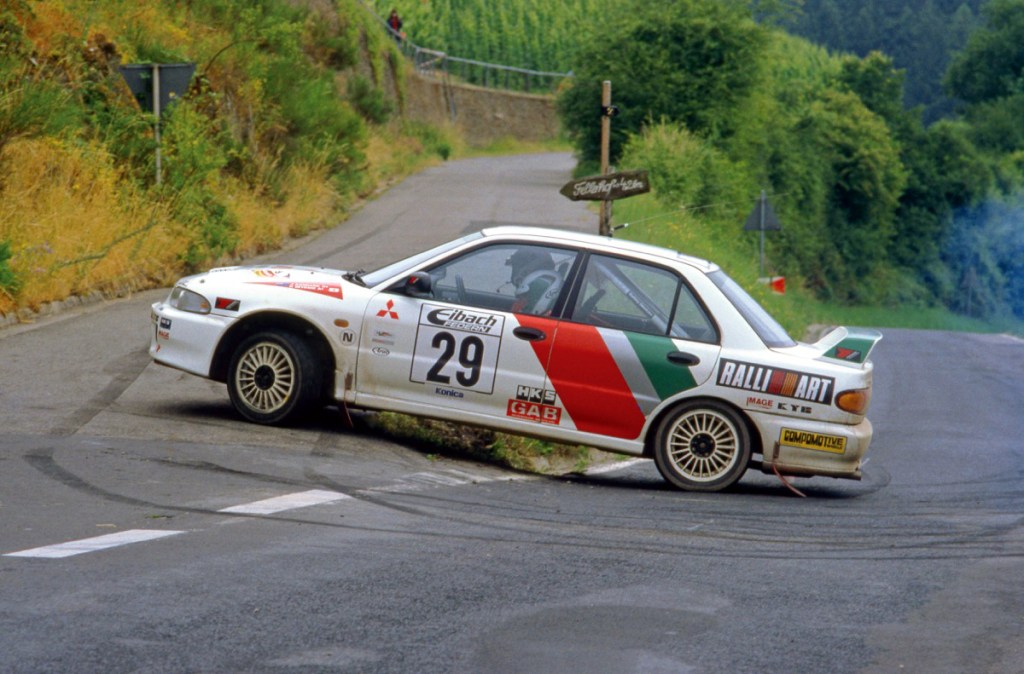
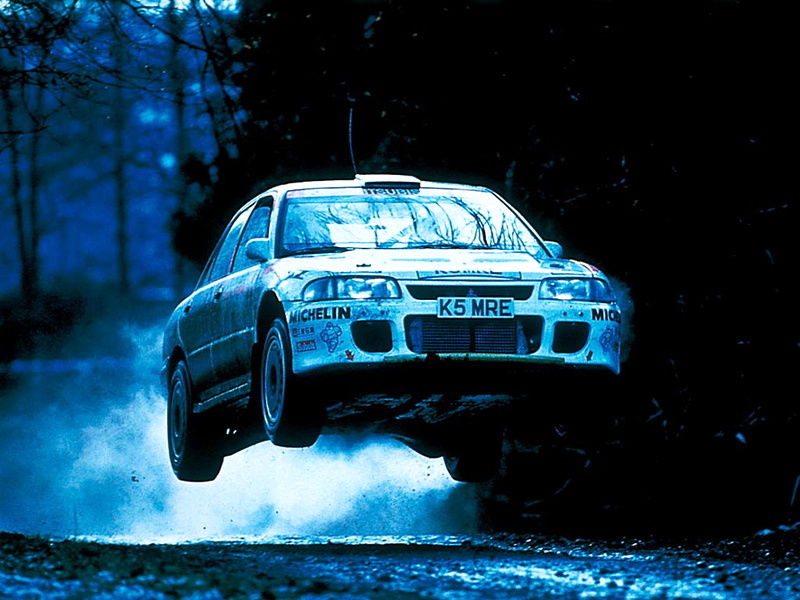
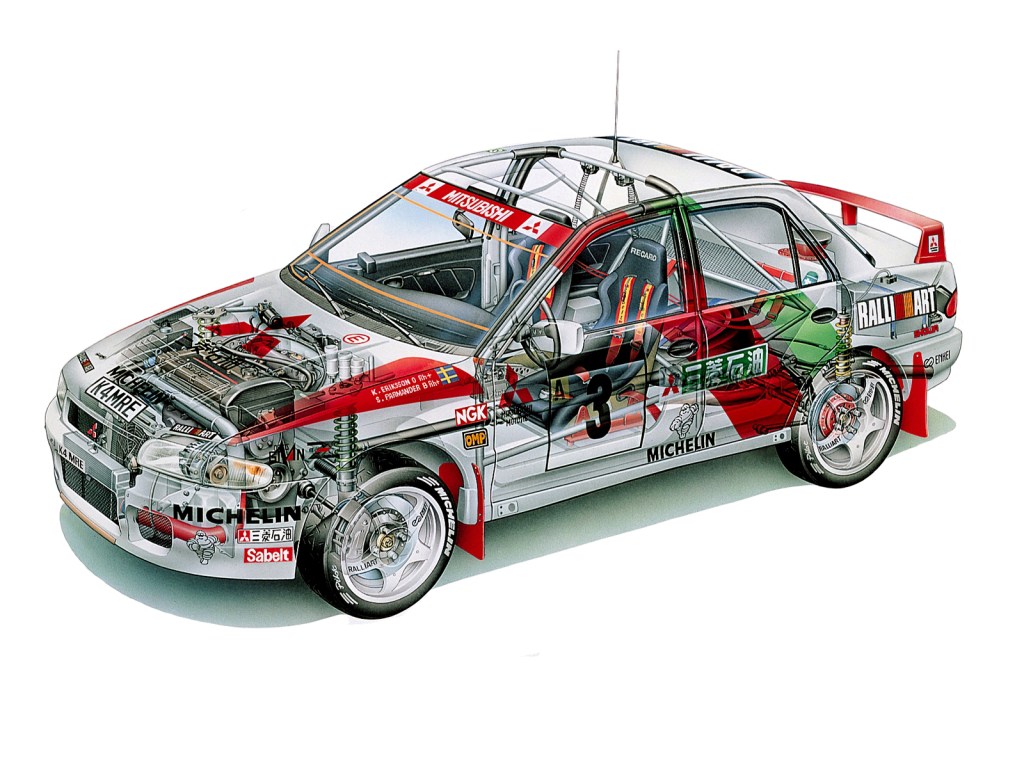
The model entered the rally scene in 1993, competing for two years. Unfortunately, this was during the reign of the Lancia Delta Integrale, so despite its potential, it couldn’t make a significant impact. It was always a threat, though never quite the best. In the 1993 season, it secured podium finishes in Greece and Great Britain, while Monte Carlo, Finland, Portugal, and Australia ended with positions just off the podium. The following year saw only four entries, with a notable second place at the Safari Rally. However, the season was cut short as Mitsubishi Ralliart shifted focus to the upgraded Evo II.
Krzysztof Wilk
All sources: rallygroupbshrine.org | lancerregister.com | wikipedia.org | wheelsage.org
 SRT
SRT 