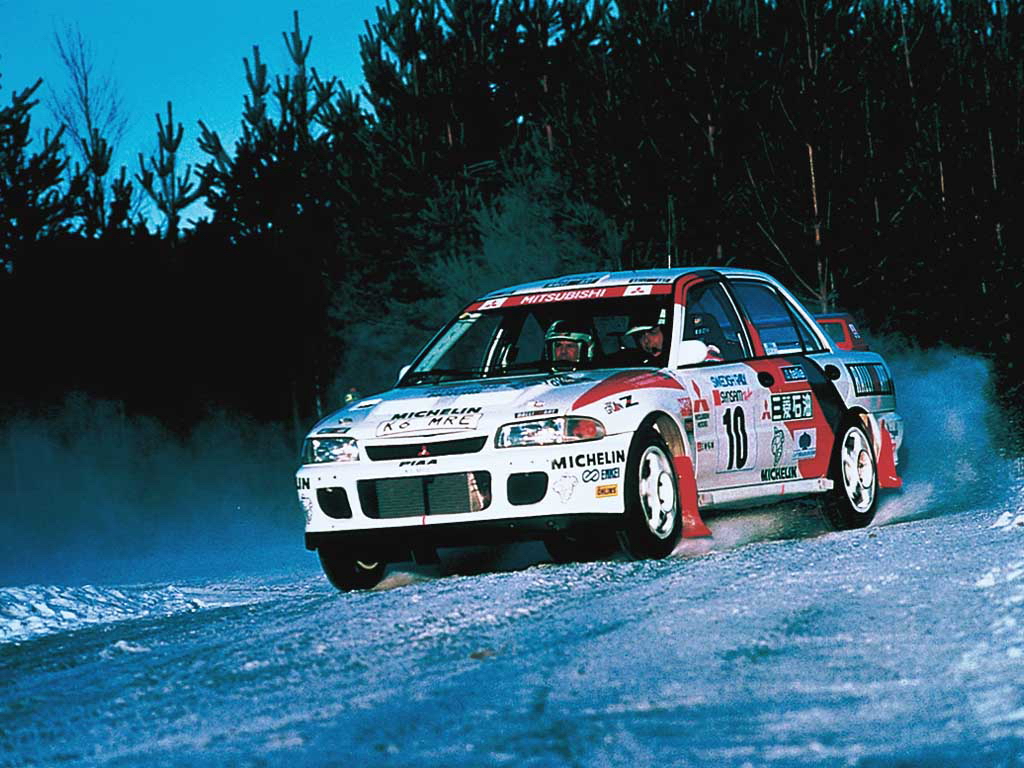
| Engine | Displacement | Power | Acceleration | Top Speed |
| Straight 4 Turbocharged | 2.0 L | 300 BHP | 5.1s | 229 km/h 142 mph |
The Lancer was essentially a practical family sedan, designed with comfort and fuel efficiency in mind. The Lancer Evolution model shared only the shell with the regular Lancer – inside, everything was different from the ground up. It carried technology rooted in Group B rallying and the Starion prototype. That’s why the Evo is not just a sporty version of the Lancer – it’s treated as an entirely separate model. The Evo RS was a successful project, packed with advanced technology specifically engineered to take on Subaru. But one year in, time had come to do first revisions.
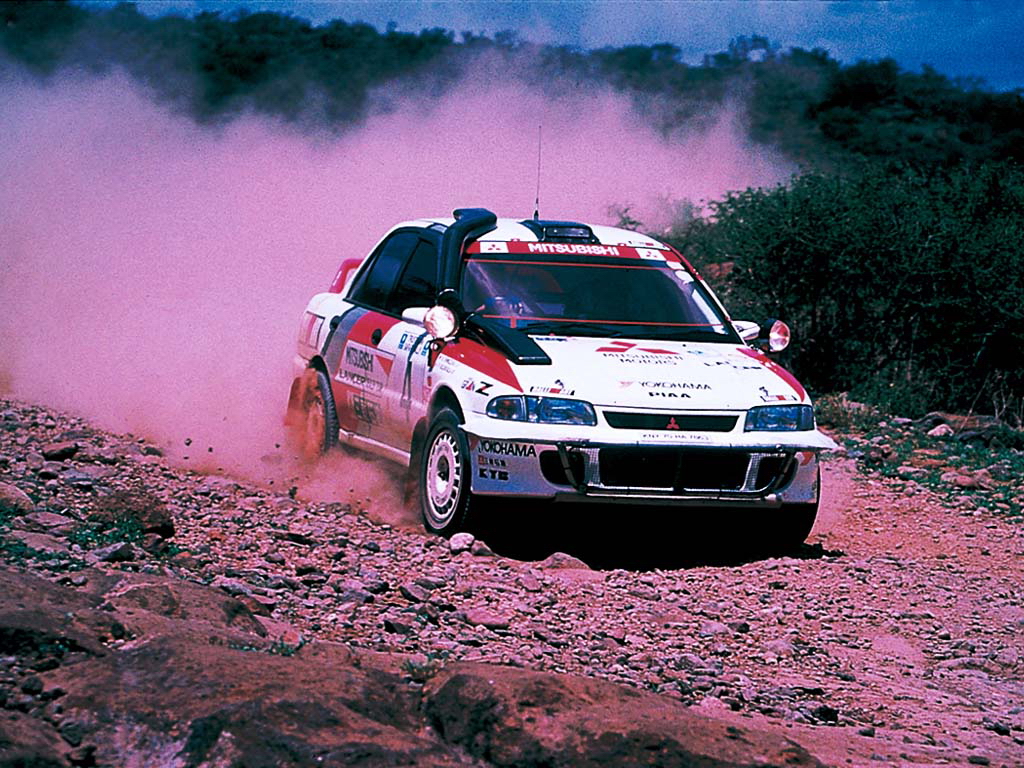
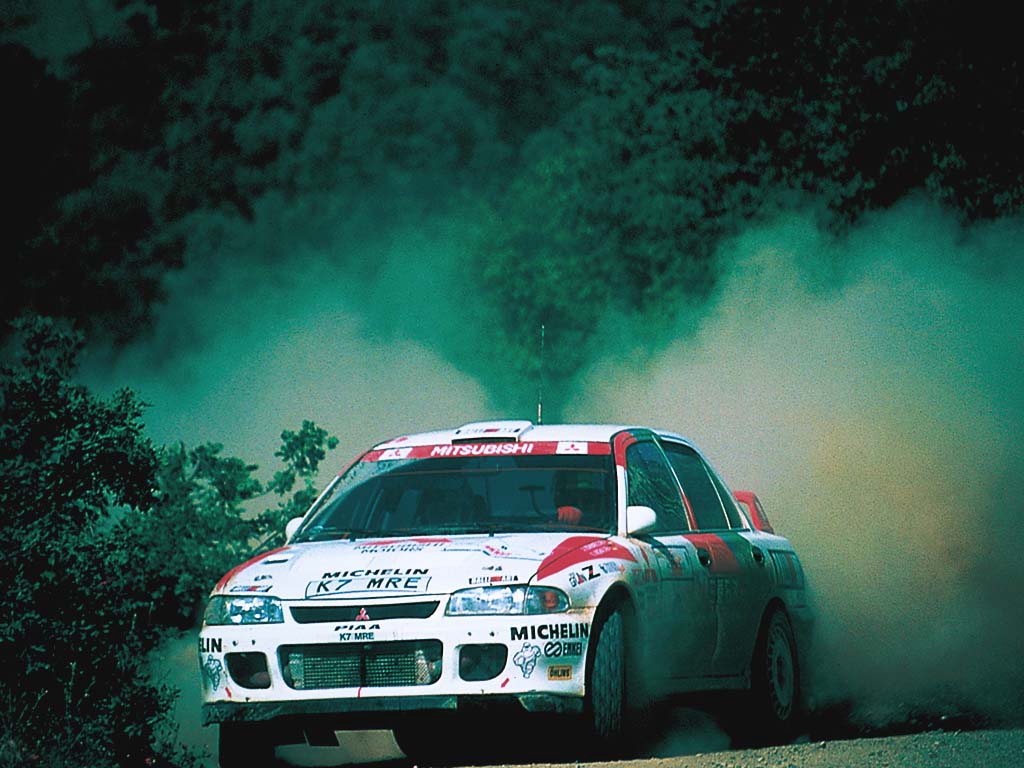
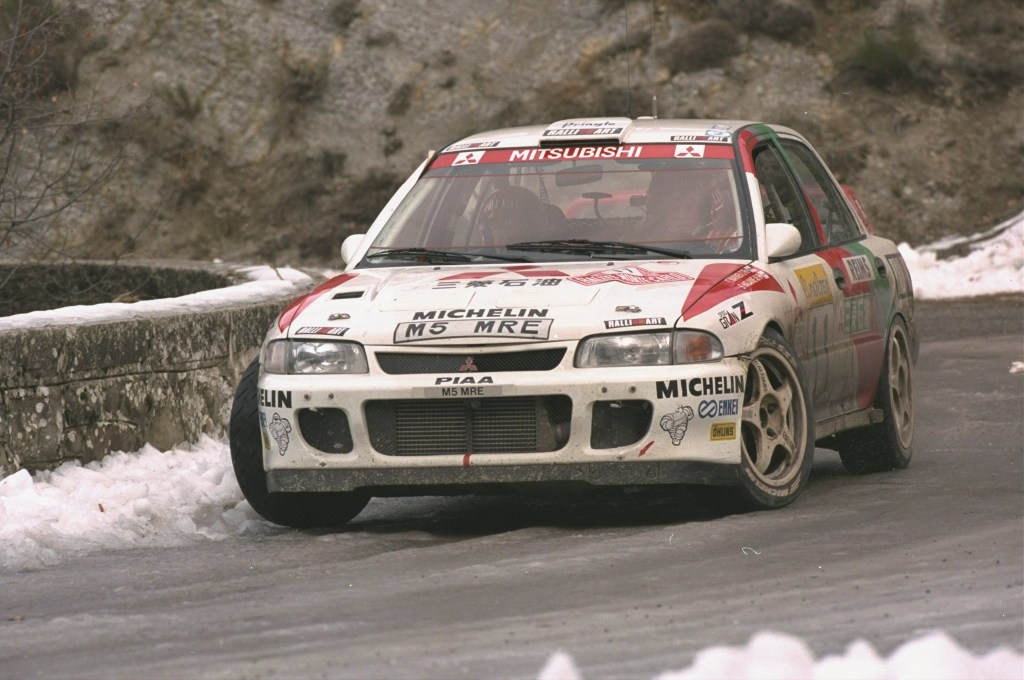
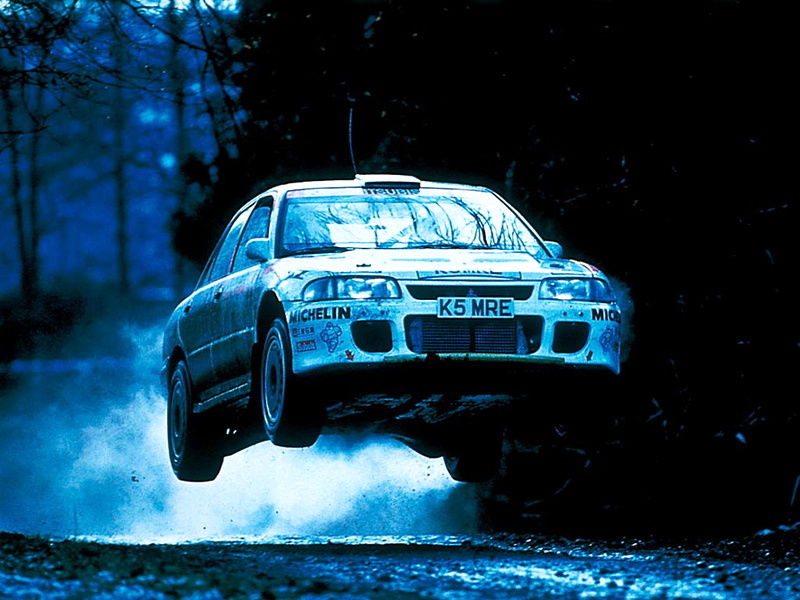
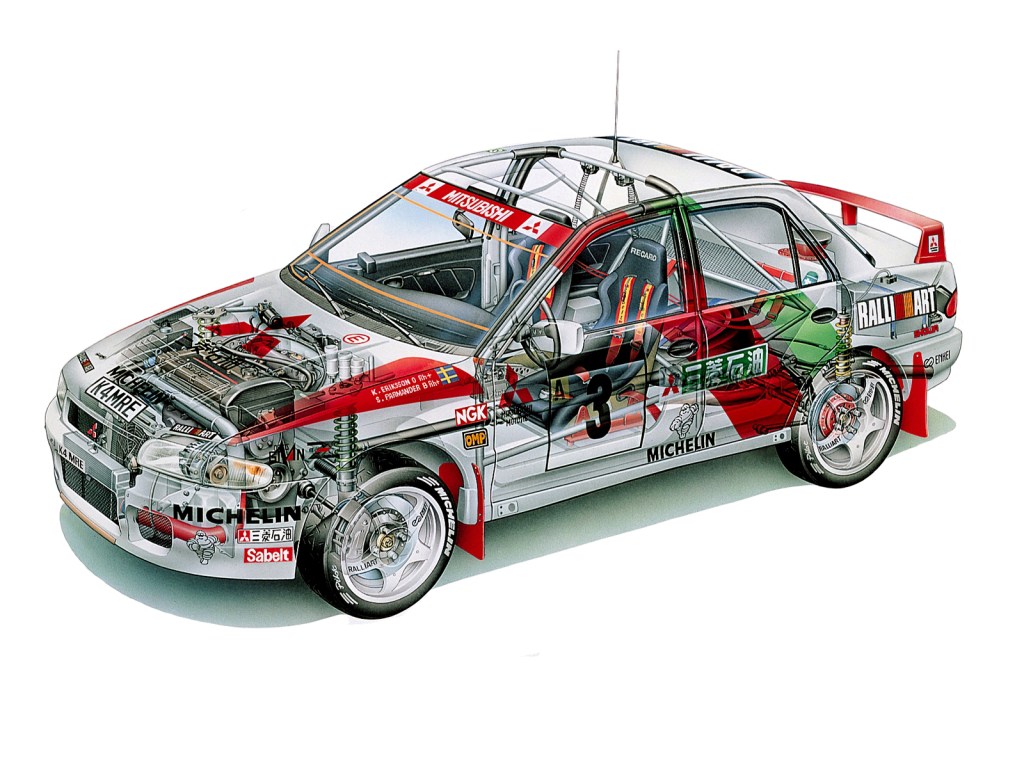
Evolution II – it sounds proud, but the car was essentially the same, so does „II” signify a new generation? Not really. It’s more like a facelift – an evolution, to use rally terminology. However, the car did get wider tires, a wheel track that was 1.5-2.2 cm broader, and a wheelbase stretched by 1 cm, which required new homologation. Just like the Evo I, it sold in double the amount required, and the car was also exclusively intended for the Japanese market. The new model featured better stabilizers and 9 more horsepower. It was 10 kilos heavier, but here’s the thing: steering characteristics improved by a solid 30%. The aerodynamics saw a slight boost with adjusted front intakes and a support to the rear spoiler. From this point onward, every subsequent Evo would become more powerful. The Evolution II had increased boost pressure and upgraded cam lift – with a longer range of movement, which gave the car that extra punch. Minor changes were also made to the exhaust system. The car sat on a slightly altered chassis – technically another variation of the same one. That’s why this „generation” is called Lancer CE compared to the Evo I’s CD9A designation.
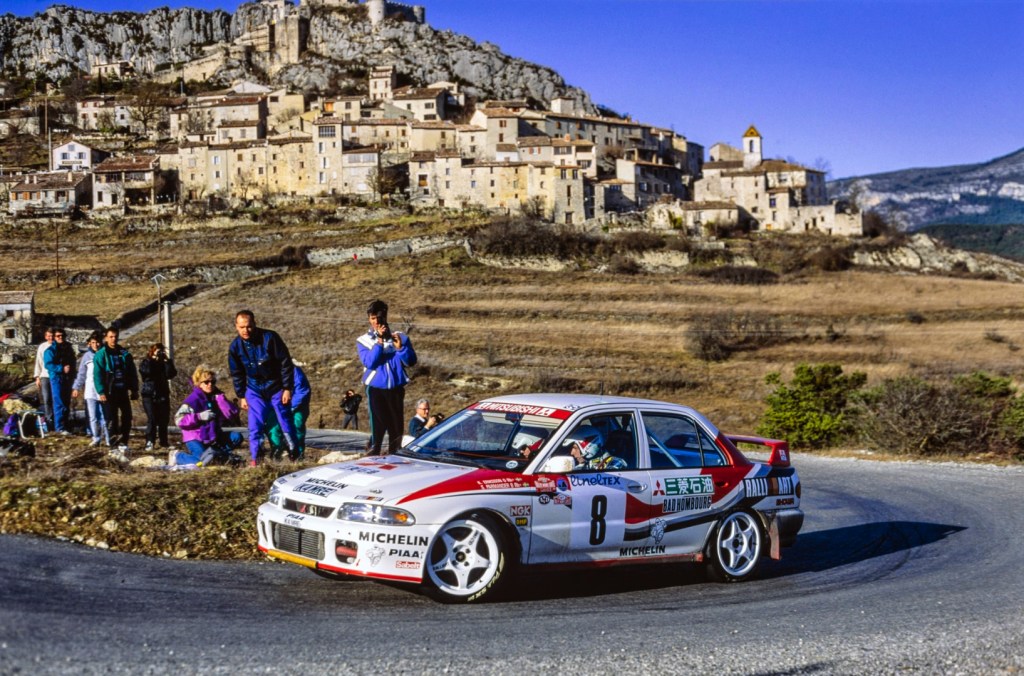
Visually, the Evo I and Evo II were almost identical, but you could tell them apart by the front spoiler – Evo II featured rubber accents on the bumper. The rear spoiler also got subtle reinforcements for added stability. Another small update was the option to replace front reflectors with fog lights. As for the Evolution RS, unlike the GSR version, it came in only one color: white.
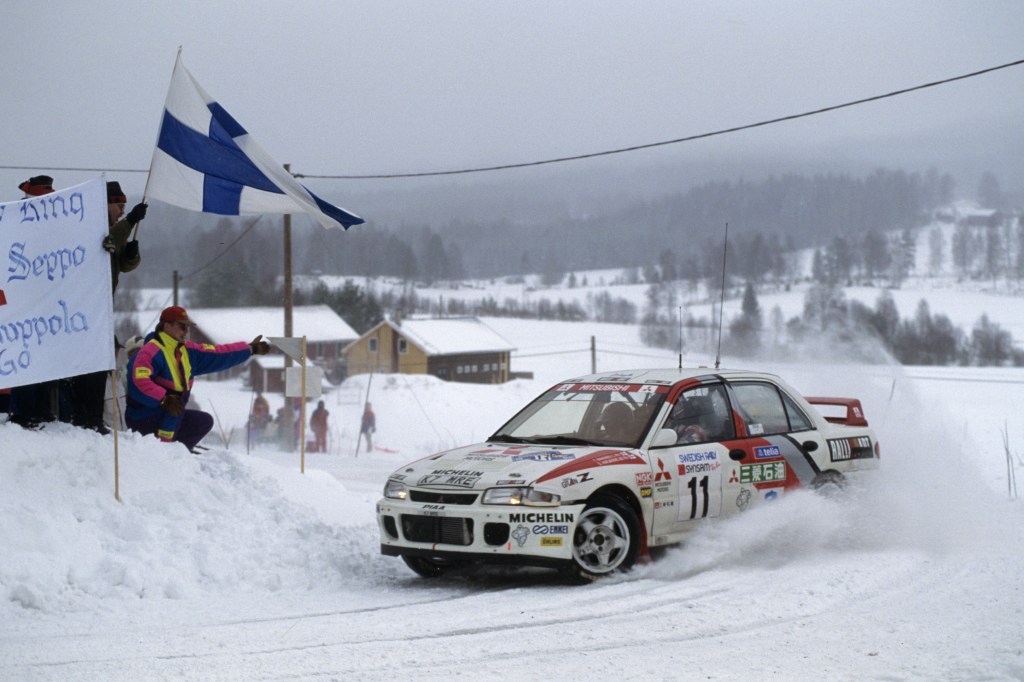
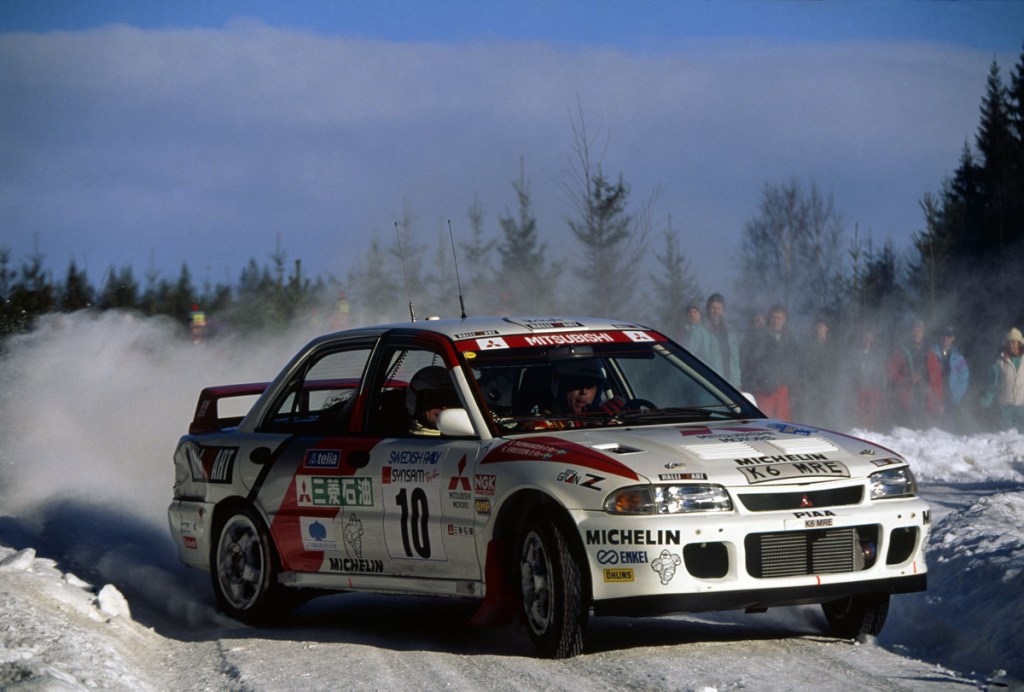
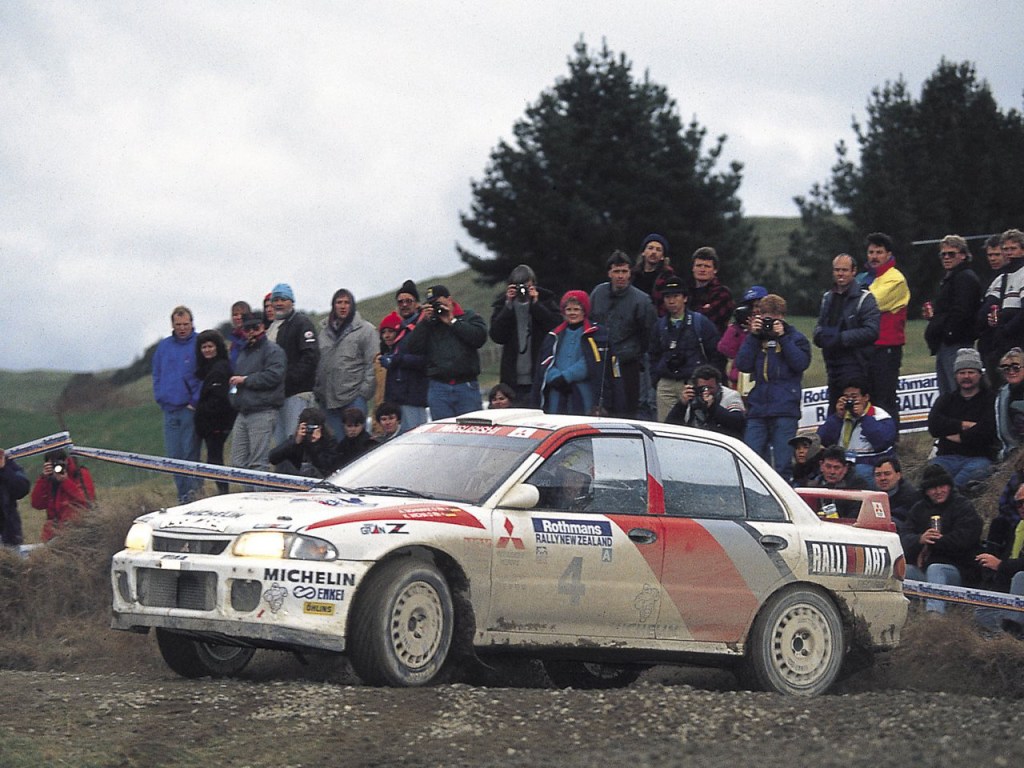
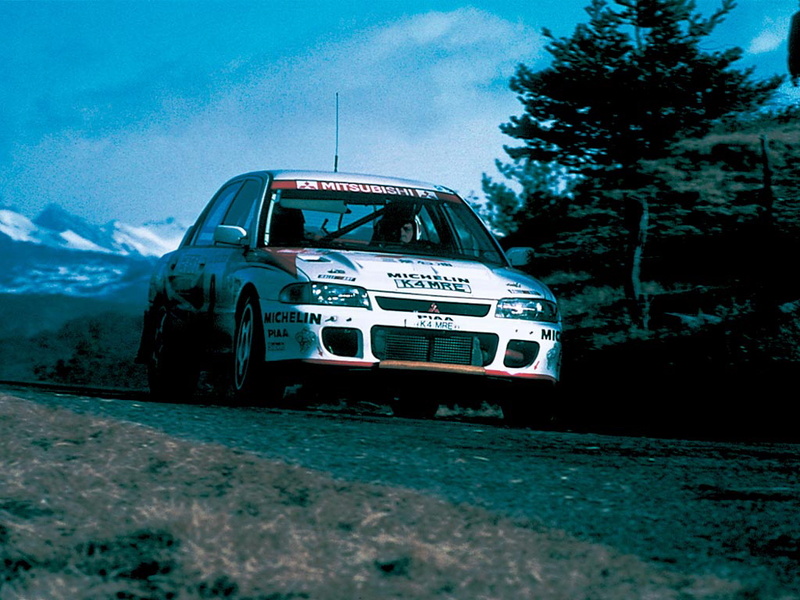
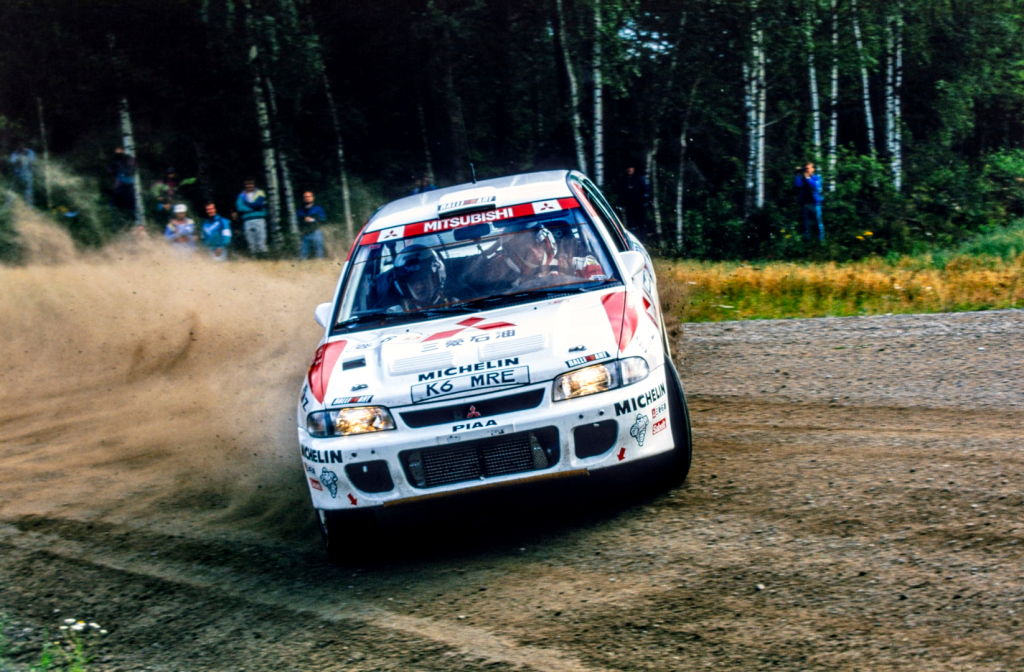
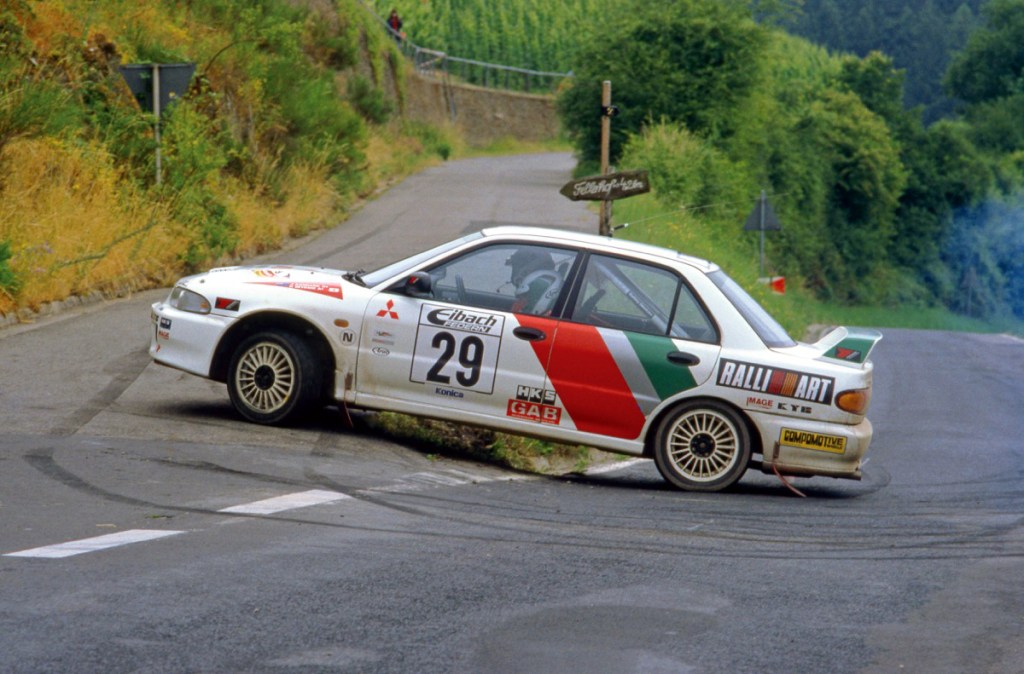
The Evo I competed during the twilight years of the Integrale, but the Evo II faced no less of a challenge. By then, Subaru had stepped up with the 555, and legends like Colin McRae and Carlos Sainz were handing out beatdowns left and right. In 1994 alone, Subaru clinched 4 event wins and added another 5 podium finishes to their tally. Things didn’t get any easier in 1995. The 555 was a force to be reckoned with – if it wasn’t winning, it was landing on the podium. That kind of consistency was their trademark all the way through to 1997, when a new version of the Impreza debuted. Mitsubishi’s roster included Kenneth Eriksson, Armin Schwarz, and Tommi Mäkinen. The trio managed to secure 3 podiums across 4 events in 1994 (they burnt the car in the fourth, Sanremo). In the 1995 season, Mitsubishi built on that performance, and – most importantly – secured their first win. Before unveiling further upgrades at Safari, Eriksson and Mäkinen dominated in Sweden, claiming 1st and 2nd place, respectively, behind the wheel of the Evo II.
Krzysztof Wilk
All sources: lancerregister.com | wikipedia.org | autoweek.com | YT: Donut Media | topspeed.com | autocar.co.uk | caranddriver.com | wheelsage.org
 SRT
SRT 