DTM Story: Season 1984 part 1

Why simple racing?

What was Rennsport Meisterschaft?

In the early 1980s, the new DTM format replaced the old Deutsche Rennsport Meisterschaft races. DRM was initially popular, but over time it grew increasingly monotonous. The format allowed cars homologated under Group 2 and Group 4 regulations, which competed in races split into two separate divisions. Division 1 was designated for models with engine displacements of 2 liters and above, while Division 2 was reserved for cars with engines under 2 liters.

In the 1977 season (roughly halfway through the format’s lifespan), cars homologated under Group 5 were allowed into the competition. These were spectacular machines to watch, but in practice, the category lacked serious rivals. This so-called Super Silhouette class featured extremely expensive, turbocharged cars with advanced aerodynamics. Not everyone had the capability to build such a car—let alone fund and maintain a racing program of that caliber. As a result, while they were crowd-pleasers, they rarely made appearances on race tracks.

DRM was known for Group 5 Supercar racing | autonatives.de

The Super Silhouette era, however, was only the latter half of the DRM. The series began in 1972 as a battleground for touring cars (Group 2) and GT cars (Group 4). Division 2 provided an entry point for less experienced manufacturers, but the main attraction was Division 1, featuring large-displacement engines. The grid included cars like the Porsche 911 and Ford Capri, as well as entries from Autodelta, De Tomaso (5.8 liters), the 7.0-liter Camaro, and various BMW models.

DRM Golden Era

Although the races were primarily domestic, they were anything but dull. Generous prize money began to attract more international drivers, and teams started employing increasingly advanced strategies. As a result, the DRM evolved from a purely German championship into a prestigious international motorsport series. It was there that drivers like Hans-Joachim Stuck, Hans Heyer, and Klaus Ludwig honed their careers. DRM also played a key role in the development of legendary models like the Carrera RSR, Escort II, and BMW 3.0 CSL, while helping establish powerhouse teams such as Schnitzer, Zakspeed, and AMG.

Zakspeed Capri

The problem was that, in later years, naturally aspirated cars stood no real chance of fighting for victory. This applied to nearly all entries, but especially to the smaller cars in Division 2, which were completely outclassed. 1977 marked the first season under Group 5 rules. These races carried more prestige than even the World Championship at times — but often there just weren’t enough of these machines to fill the grid.

Porsche 935

We’re talking about cars like the Porsche 935, Celica Turbo Group 5, BMW 2002 Turbo, and Escort RS 1800. All of them struggled with early development issues. The cars often broke down, and teams, short on funds, would drop out mid-season. Some of these machines only showed up once or twice the whole year. Very few could run a full campaign with one of these beasts — let alone do it successfully.

Team Schnitzer Celica Turbo

DRM – What went wrong?

The minimum number of cars required to run a race was 10 — and for Group 5, that was often a struggle. Vehicle preparation was hit-or-miss, and new models meant to replace the old ones didn’t always live up to expectations. These cars cost a fortune, yet couldn’t be relied on at all — often turning out to be a very expensive gamble. Lancia joined the fight with the Beta Montecarlo, and BMW brought in the M1, but it was Porsche that dominated with the 935, especially the K3 version.

Lancia Beta Montecarlo

The DRM series gradually lost its competitive edge. It became a shadow of its former self — a far cry from the wild, barely regulated Group 5 monsters of the 1970s. By the end, the grids were mostly made up of BMW teams, Ford Capris, and Porsche 935s. Porsche had no real rivals for years, and the format stopped generating excitement. Eventually, organizers decided to completely overhaul the series, shifting to a single-division format under Group C regulations. That’s when everything changed. Supercars like the Porsche 956 and Ford C100 entered the fight — and Internationale Deutsche Rennsport Meisterschaft (IDRM) was born.

There was no longer a place for touring cars in this new format. For two years, they were pushed aside to race in the Rennsport Trophäe, waiting for 1984 and the debut of what we now know as the DTM.

BMW M1

DTM 1984 Rounds 1-3

DTM – What exactly is that…

The new format didn’t initially carry the name we know today. For its first two seasons, the series ran as the Deutschen Produktionswagen Meisterschaft (DPM). It wasn’t until the third edition that it officially became the Deutsche Tourenwagen Meisterschaft — the German Touring Car Championship (DTM — and for simplicity, I’ll stick with that name from here on out).

DTM quickly established itself as the premier racing series in Germany. It’s worth remembering that Super Silhouette was introduced to DRM to boost excitement, but DTM ended up outshining the Group C races in no time. That just proved that touring car racing had the greater potential.

Harald Grohs – the victor of the first DTM event – behind the wheel of his BMW 635 CSi | netzwerkereins.com

IDRM inherited the high costs of DRM, which was already a major issue from the get go. DTM, on the other hand, was much cheaper to run and take part in. The races followed Group A regulations — maybe not the most flexible in terms of modifications, but perfect for keeping costs down and lowering the entry barrier. That’s a big plus when you’re building a series from the ground up.

It also helped attract a wide range of participants. And over time, the rules could be tightened or expanded to boost the spectacle — which is exactly what happened.

… and why is it so good?

There’s no other branch of motorsport where the competition is this tight. Outside of spec series — where everyone drives the same car, like PROCAR — or American-style oval racing like NASCAR, DTM really stands out. It’s hard to pick consistent favorites, because even older, well-sorted machines can hold their own.

In any given race, there might be 15 drivers realistically fighting for the win. Sometimes, a 2- or 3-year-old car can still take on the latest machines and end up at the top of the season standings. In its very first year, drivers behind the wheel of seven different car models fought till very late phase of the season with everyone holding good chance for the title.

DTM rounds quickly went from being warm-ups before Formula 3 weekends to becoming the main event. It earned the nickname: “Formula 1 of touring cars.”

Volvo 240 Turbo | wheelsage.org

The format turned out to be a perfect hit, as it allowed organizers to keep the racing extremely competitive. Cars were regulated in terms of minimum weight and tire width. A ballast system was introduced — dominant vehicles could receive up to 120 kg of extra weight, while engines with three or more valves per cylinder started off with a 70 kg penalty. Meanwhile, underperforming teams were allowed to lighten their cars, which encouraged less experienced drivers to join the grid.

As a result, a single race could see up to 40 cars on the starting grid, with championship points awarded to the top 18 drivers. Many teams entered the competition completely from scratch. Not all drivers were professionals, and the field featured cars based on 16 different production models — a level of variety unmatched anywhere else. Opels and BMWs alone could be seen in at least three different variants during a single race.

Round 1 – Zolder – Have you been to the opening?

Zolder – what is it?

The season kicked off on March 11 with a race at the Zolder circuit. Over 3,000 spectators turned out to watch the action. The race consisted of 24 laps on the 4.3 km track, totaling roughly 102 kilometers at an average speed of 125 km/h. Drivers behind the wheels of Rovers and BMWs were considered the favorites going into the event.

Zolder layout | racingcircuits.info

The Belgian circuit hosted the season opener in March, and conditions were brutal — drivers had to brace for both rain and snow. The weather caught many off guard, with some cars proving unfit for competition altogether. A few entrants were even excluded by the organizers; for example, Alfa Romeo teams had to replace their exhaust systems just to meet the decibel limits. In the end, 24 drivers lined up on the grid, and 18 made it to the finish — meaning every finisher walked away with points.

The start of the first DTM event | snaplap.net

24 cars on the grid was a strong showing — especially considering this was an entirely new racing series. The most common sight? BMWs. German teams had already been running the E24 635 CSi in the ETCC, and the proven platform seemed like the perfect fit for the national championship.

But BMW wasn’t alone. It now had proper rivals in the form of the Rover SD1 and American Muscle like the Ford Mustang and Chevrolet Camaro. Alfa Romeo showed up too, but — like a few other smaller contenders — just didn’t have the cylinder count or engine capacity to properly challenge the Bavarians.

Belgium Race

Rover had a V8 under the hood, and both Jörg van Ommen and Olaf Manthey secured strong qualifying spots – first and third on the grid. Splitting them was Hans-Joachim Stuck in a BMW, who dominated most of the race from the start. But just two laps before the finish, disaster struck: he lost a wheel. That opened the door for Grohs, who swept past and cruised to victory with nearly a 30-second lead.

Rover’s troubles kicked in early – likely due to poorly chosen tires. They wore out too quickly, but with that unpredictable weather, it was a total gamble. Some teams hand-cut treads into slicks, others gambled on full rain tires. It was chaos. Meanwhile, Alfa took a serious power hit from their hastily zip-tied exhaust replacements. As for Rover, they also struggled with power in this first round and couldn’t crack the top five. BMW swept the podium with Grohs, Schneider, and Strycek taking the honors.

Round 2 – Hockenheim – And the winner is…

Hockenheimring Baden-Württemberg

April 8 brought the Jim Clark Rennen – a DTM round held at the Hockenheim Motodrom. Compared to the Belgian opener, this was a much faster and longer circuit. At the time, it stretched 6.8 km per lap, with average speeds around 157 km/h. Drivers had to complete 15 laps, which again meant just over 100 kilometers at serious pace. It was also the first real opportunity for the Foxbody Mustang to bare its teeth.

Hockenheimring layout from 1984 – you can see long straights favouring fast cars | wikipedia.org

How did it go?

In the April race, 33 drivers lined up at the start, and the action was way more intense than in Belgium. Van Ommen once again secured pole position, with Olaf Manthey lining up beside him in the second Rover. Grohs, piloting the E24 BMW, started just behind them. Early on, five drivers broke away from the pack while further back, Jürgen Fritsche struggled with brake issues – his Kadett GT/E clipped two other cars entering the chicane and didn’t finish the race. The Foxbody showed promise with the fastest sector times but ended up heading home early too, plagued by both ignition problems and tire trouble. Just brutal luck.

Race two: SD1 Rovers take on a BMW 635 | YT: KhS Ralf Schmitz

Despite the best efforts of the Rover SD1 drivers, it was Grohs in the BMW who crossed the finish line first. Behind him came Volker Strycek in another BMW 635 CSi, followed by Peter Oberndorfer in the Alfa Romeo GTV/6. But the drama didn’t end there – Grohs’ CSi was found to have illegal valve lift on at least two cylinders, leading to his disqualification!

What made it especially controversial was that the engine came straight from the factory – identical to what other BMW drivers were using. Still, only Grohs’ result was scrapped; the rest of the standings were left untouched. As a result, no one was moved up to claim victory. The race officially ended with a second and third place… but no winner. Fans saw 23 cars cross the finish line – and not a single one take the win.

Runda 3 – Avus – Buy one get one free

Autobahn racing? Shut up and take my money!

Berlin, May 13. Five thousand spectators followed the action as 27 crews lined up for the third round of the DTM, run over two heats. One lap was a long sprint covering 8.1 km. The Automobil-Verkehrs- und Übungs-Straße was, in essence, a historic racetrack (in the sense that it’s no longer in use), built along a stretch of highway running through Berlin. It consisted of two long straights ending in loops. Straight, hairpin, straight, hairpin – and that was it.

Ever simple AVUS racetrack was an Autobahn race in the essence | racingcircuits.info

A very distinctive track. It was built in 1921, and back then the full layout was nearly 20 kilometers long. I mean… that’s a really long straight. After the war, it was shortened to around 8 km, but it still remained one of the fastest circuits out there, with average race speeds hitting 180 km/h. Naturally, in a race like this, everyone bets on the big American muscle cars with massive engines. BMWs and Rovers have to play catch-up, while the Alfa Romeos and Kadetts can only really hope to grab a few points at the back of the grid.

AVUS round was a chance for Mustang 5.0 | netzwerkeins.com

Race results

27 cars lined up for the event, but the race format was a bit different this time – two heats of 7 laps each, with half-points awarded per race. Van Ommen started from the pole for the third time in a row and fought hard right up until the final lap, where a late braking move cost him dearly. He damaged his Rover, smashing the oil pan and steering rack – though he still managed to finish second. Unfortunately, the car wasn’t fit for the second race.

The Mustang, with its 5-liter V8, was right at home on this fast and wide circuit. Manfred Trint made perfect use of that power and dominated the first heat, finishing more than 4 seconds ahead of anyone else. Third place went to another muscle car — a 5.7-liter Chevrolet Camaro Z28. Driver Peter John had started way down the grid but climbed his way to the podium through consistent, smart driving.

The second heat was even more dramatic. Trint’s Mustang took the lead early, but then blew out both front tires and had to limp back. That opened the door for six drivers to battle it out for the win. The brakes on the Camaro gave out completely – and it slammed straight into Grohs’ BMW, ending the race for both of them.

That left four cars fighting it out to the line – and they finished practically on top of each other, with less than a second separating first from fourth. The Rover finally earned its moment, picking up half-points for the win. Von Bayern and Strycek followed close behind in their BMWs.

Epilogue – BMW and Rovers: old but still fierce

BMW E24 635 CSi

The new DTM series (then called DPM) was packed with adrenaline right from the start. The first race didn’t go exactly as everyone hoped, but each following event brought more excitement and variety. It quickly became clear that to win, you needed at least 3 liters of engine capacity. Rovers and BMW CSi ruled the field with their 3.5-liter engines – whether inline sixes or V8s – no matter the configuration.

BMW 635 CSi was the strongest contender in early DTM | wheelsage.org

Despite the presence of newer models, the BMW 635 CSi was one of the best cars of the 1980s and enjoyed the greatest trust from drivers. It’s no surprise – this car produced nearly 300 horsepower, was lighter than its American competitors, and despite its considerable size, it proved itself three times over in European ETCC races. And in the DTM, it had to carry extra ballast! Yet, full factory support and a refined design gave it the edge it needed.

Rover SD1 (3500/Vitesse)

The Rover Vitesse also got off to a strong start. Van Ommen may not have won, but he started at the front in three races. Like the BMW drivers, he relied on a proven design. The Rover Vitesse had the same advantage in engine displacement and similar power output. In fact, both models competed directly against each other in the same market segment.

Rover was very simple, but it was a well designed machine | wheelsage.org

Rover, however, had a serious ace up its sleeve – one that, if used right, could really shake things up. On paper, the car seems too big and heavy to be a serious race contender. The thing is, the SD1 model is a perfect mix of simplicity and modernity, and the Vitesse variant holds huge potential. These cars still run with a solid rear axle, but their V8 engines featured fuel injection, which meant drivers of these models would continue to show strong performances for quite a while. You just wait.

The early rounds of the Deutsche Tourenwagen Meisterschaft already gave us a taste of what these cars and their drivers were capable of. After three races, the overall standings looked like this:

PointsDriverCar
42Volker Strycek BMW 635 CSi
24Leopold von BayernBMW 635 CSi
22Jörg van OmmenRover Vitesse
20 Harald GrohsBMW 635 CSi
18Udo SchneiderBMW 635 CSi


Krzysiek Wilk
— — —
Credit to all the sources used in creation of this text:
T Voight – DTM: The Story – the official DTM book | M Buckley – The Complete Illustrated Encyclopedia of Classic Cars | D Lillywhite – The Encyclopedia of Classic Cars | The Kingfisher Motorsports Encyclopedia | R Nicholls – Supercars | ultimatecarpage.com | touringcarracing.net | wheelsage.org | wikipedia.org | autozine.org | carandclassic.com | supercars.net | silodrome.com | autonatives.de | FB: EasternBMW | snaplap.net | YT: KhS Ralf Schmitz | netzwerkeins.com | racingcircuits.info
and likely I forgot about someone as well…

1981 – BMW M1 E26 Rallye

M1 was a BMW’s halo car between 1978-1981, and even though it had some production issues, enough examples were made for Germans never to worry about the Group 4 homologation. BMW then tried to rival the Group 5 Porsches, but the fact was – the M1 was never designed as a Motorsport vehicle, be it race or rally car. Late ’70s though, rally racing got really popular everywhere in Europe – including France – and France housed numerous tarmac events. A local BMW division decided to up their image by launching the brand’s flagship sportscar’s rallying program. Oreca Team was signed and that was the most fruitful privateer cooperation then.

The M1 Group 4 Rallye was a platform for many high-performance systems from the – now defunct – Procar examples. That’s why the two configurations didn’t really differ that much in specification or performance. The road-going M1 was already a big and wide car, but for the rallying it gained additional 10 cm. New were the fiberglass spoilers and wheel-arches. When they had to, BMW sold their actual Procar M1s as road-legal homologation specials. The M88-series Straight 6 generating 277 bhp from factory, now in rally trim was capable of 430 figure. None had such power as the BMW. All of it was sent to the rear via the close-ratio 5-speed. Its brakes had enlarged aluminum calipers. The French started racing this thing in 1981. Bernard Darniche – 5 times the French Champion, twice the European. The man who won every event on the French soil since 1975 – he drove an HF Stratos then – now in a Group 4 M1 he doesn’t finish the race. The car’s suspension doesn’t make it. It’s a bad sign…

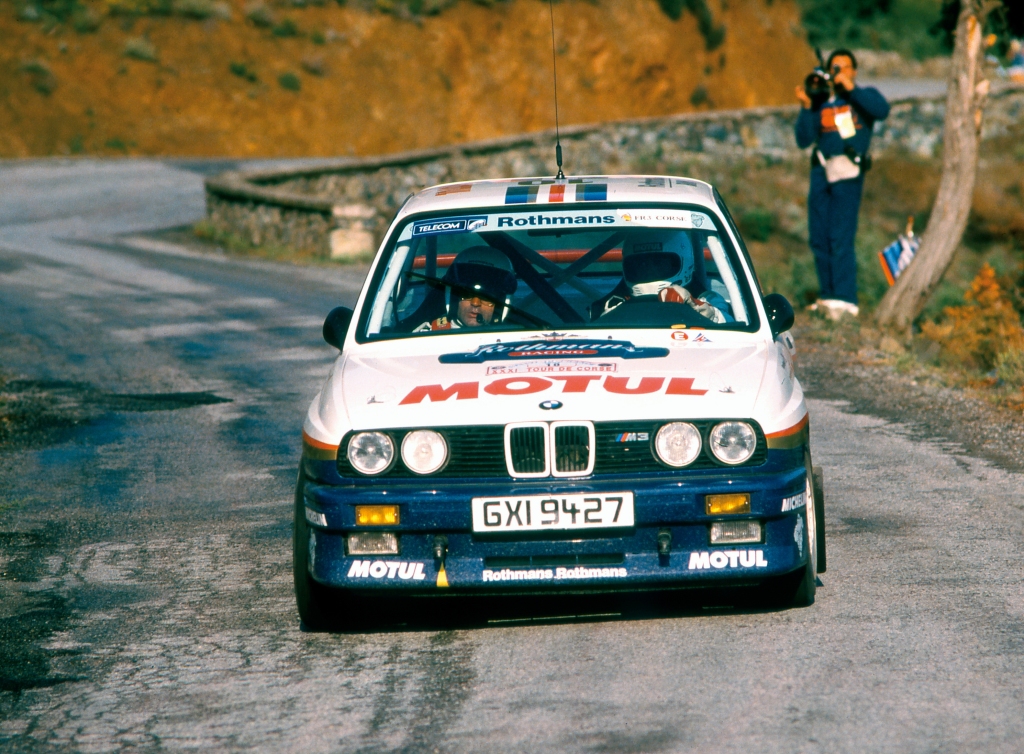
Oreca Team got a new sponsor for the year 1982. The cars with Motul stickers are preparing for Tour de Corse and… well, Corsica is known for numerous narrow corners – often tight or very tight. The BMW was big, with huge power and a tiny handbrake that could do fuck all. Darniche tried his best but the oil pump failed this time. And the whole season was like this. ONCE they make it to the finish line – they make 9th place in German ADAC Rallye Vorderpfalz. Fritzinger Klas drove a similar M1 variant then and even managed 2nd.
Darniche had a flawless sports career… until he sat behind the wheel of that M1. At the end of 1982 he said “fuck it – I care not!” – and BMW was forced to find another victim in his place. France had one more motorsport legend – Bernard Beguin – thrice the France Champion and once for the EuroReich. He was also a 911 veteran, for his SC/RS campaign. With the year 1983, all Group 4 cars transferred to Group B and so did the rally M1, but the car itself didn’t suffer any changes. All they did was, they offered the Procar parts as Evo and that was it. The M1 Evo never came to be, cause that would require another 20 examples physically built to the new standard and the Germans said – “why, absolutely!” – and they redirected their funds elsewhere.

Bernard Beguin made his starts in 1983’s edition of Rally Corsica and… what this time? The engine, of course. The car, again, failed to deliver and it could not finish a single event that year. On a plus side: Beguin managed to complete clean runs – never crashed even though the size of car itself was massive. If only it could last till the end – you could clinch some points with that thing. But the 1983 season… Jesus Christ, don’t even make me start… BMW prepared special upgrades for brakes. A new VO system – dedicated for tight handbrake corners. Spoiler alert – didn’t help shit, because the car still kept retiring early from events. In the final – Rallye d’Antibes, M1 got just 33s behind a Lancia 037.

All in all, BMW was too big for rallying – even dry tarmac. Too heavy, unreliable and generally expensive to run. The rally world was quickly flooded with Group B supercars – highly advanced off-road beasts – and the Germans could pack their shit and go home. Oreca Team surrendered without even trying to address the new rivalry and Beguin returned to Porsche, successfully restarting his 911 campaign. He even managed to win some wins for the BMW in a Group A M3 between ‘87-’89. And the M1? Its papers expired in 1986, so till that moment, it still fought in private hands. There was a time when BMW was the most powerful rally car in the world. Too bad – that’s only numbers in the Excel. And in reality? Not as competitive.

Krzysztof Wilk
All sources: favcars.com | wheelsage.org | wikipedia.org | ultimatecarpage.com | Top Gear: The Cool 500 – The Coolest Cars Ever Made | M Buckley – The Complete Illustrated Encyclopedia Of Classic Cars | autozine.org | rallygroupbshrine.org | carthrottle.com |

1975 – BMW E9 3.0 CSL IMSA Group 2

The touring car championships started in the early ’60s and the format quickly grasp the hearts of both the fans and manufacturers. It was a chance to show your muscles on a racetrack – and the audience could see the drivers fight head-to-head. The early stars were Alfa Romeo Giulia and Ford Cortina, but the rules were often changed, so the 2-door Alfa GTA or BMW 2002 could be allowed. All you had to do was to sell 1000 examples to get the paper. End of the ’60s, Alfa Romeo was the largest player in ETCC, but in their shadow others emerged. Ford and BMW grew strong enough to engage in such an epic battle, that it will shape this format for years to come.

Let’s start with defining what a touring car is. At the time Porsche tried to make their 911 legal, but it’s backseats were too small to ever consider it. Giulia GTA though, or a BMW 2800 CS were almost as tight in the back, yet they could race. 911 drivers then had to be happy with a GT championships, and bigger coupes with a specified passenger space and manufactured in certain volume – they could be raced in ‚touring’ series. A few categories of those were devised for fair competition, and smaller cars could compete side by side with the bigger and more powerful vehicles in one event, as everyone was matched against similar rivals based on their gross weight. Year and year the rules had been polished, and one of the more important changes was allowing more extreme car upgrades after a given part was released in 100 examples.

The touring sport starts off and the BMW quickly change their focus from big 8-cylinder sedans that are expensive to make, and they start building more smaller and cheaper – well, relatively at least – 6-cylinder cars that would attract new niche. The new motors were also far better for racing, so much so, that as soon as in 1964 the Germans could successfully enter their machines in ETCC. And along with their sport campaign, they managed construction of the very same motors for single seater and sports prototype purposes. At some point BMW had a chance to show their support to one of the local marques – Alpina – and help them enter their own racing team in same format, right next to Works BMW racing program. And the ’50s were shit, but later BMWs started actually winning and for some time you couldn’t see any end to the mayhem those cars were bringing on European tracks.

European Ford sent the very new Capri Coupe to fight the German flood, and it entered ETCC in 1970. It was both light AND with a powerful 6-cylinder engine. When Alpina guys saw this shit, they decided to devise a proper racing 2800 CS iteration. 3 enormous Weber carburetors, 3-litre V6 screaming out 300 bhp – and that was not enough to catch up with the Ford! The Germans then made such far going modifications that their car had to undergo another homologation process. They made it lighter, changed the carburetors to a Kugelfischer fuel injection – that alone upped the power to 335 bhp. And Alpina could do a lot, but making 1000 examples for the common folk was too much. In order to get their cars homologated, it was the BMW who took that responsibility upon themselves – otherwise they wouldn’t be allowed to race the Ford at all.

To minimise the risks, the BMW hired the Ford Motorsport Director Jochen Neerpasch, an icon that put the grounds for what we will later know as BMW Motorsport. They made huge modifications on the latest 3.0 CSi – that is how under BMW Motorsport Department’s wings – the 3.0 CSL was born. Its name meant Coupe Sport Leicht (Lightweight Sport Coupe) and the Germans removed everything from it. The bonnet, boot and the doors were all aluminium. The poor people could buy a 180 bhp variant of a 3-litre sport coupe, but starting in 1973 the CSL could be obtained with a more powerful 3.2-litre motor. Now we think of it as a flamboyant batmobile-looking vehicle, but truth be told, none of the road cars ever stood next to those spoilers. They were necessary and very purposeful on a racetrack, but very much illegal in public. However… if you managed to purchase one of such cars in a dealership and took it home, you could then open the boot and find a nice surprise the Germans had a fancy leaving there in form of an 8-step instruction on how to transform your generic BMW road car in a fucking batmobile!

Racing CSLs were ready to fight in 1973, and after the season started they had their displacement increased from 3.2 to 3.5-litre, as well as a new 5-speed Getrag transmission in place of the previous 4-speed gearbox. All in all, the new car was over 150kg (330lbs) lighter than Alpina’s initial car and 75 bhp more powerful. Such cars in BMW Works liveries, the M-Sport colors we know all too well, as well as Alpina and Schnitzer paints – they took the challenge of facing the mighty Ford. At the end of the season, it was Toine Hezemans in his 3.0 CSL who took the first prize, and BMW could live in glory as the new manufacturers champions.

Winter passed and both Ford and BMW used that time for their preparations. All changes were made by the book and with the 100 examples for public use to fulfill homologation requirements. Both sides had Double Overhead Camshaft, 4 valves per cylinder and their power increased to 400 bhp with eyes-fucking-closed. Ford changed their aero, so that it could stand a chance against BMW’s extreme downforce. Bad news – global scale oil crisis reached another level and it took its toll in motor racing. Both the Ford and the BMW were absent for the first round of the season, but they could compare their dick size in the second race – and with the machines in their strongest variants. The Ford chose to sacrifice some reliability for more performance, but the BMW was the hit! 10 out of 10 CSLs that entered the Nurburgring race – never crossed the finish line. Zakspeed team Escort had no rival for the first place run. After such display, the Germans said ‚Auf Wiedersehen you fuckin-…’, well you know… and they retired from that format. Hans Heyer was the best that year and he drove an Escort.

Ford followed the BMW eventually, and they quit with the end of the season. Year 1975 was left to the private teams – 24-valve CSLs still raced in Schnitzer or Alpina’s colors. The latter did even win the driver’s title. Nonetheless, year 1975 shows how quickly the whole format can go to shit. First they changed the homologation rules to cut the costs for following season and suddenly 4 valves per cylinder are a no-no, same with the huge spoilers. Can’t have anything anymore. The last CSLs with 3.2-litre motors and 4-speed transmissions stood strong till very late – successfully fighting off even the new racecars. People even took some 24V variants overseas to enter IMSA GTO format in America and win points in Groups 4 and 5.

Krzysztof Wilk
Na podstawie: favcars.com | wheelsage.org | ultimatecarpage.com

1981 – BMW M1 E26 Rallye

M1 Produkowano od 1978 do 1981 roku jako pokaz technologii BMW. Były jakieś drobniejsze problemy z produkcją, ale powstało ich tyle, że o homologację do Grupy 4 nie trzeba było się martwić. Chciano natomiast włączyć się do walki w Grupie 5 i rywalizacji z Porsche. Ten pojazd nie był projektowany do rajdów i nigdy nie był zamysłem jego twórców udział w szutrowych wyścigach. Pod koniec lat ’70-tych WRC stało się popularne – również we Francji, gdzie większość eventów była asfaltowych. Francuska sekcja BMW chciała podbudować wizerunek marki wystawiając do rywalizacji swój flagowy model – M1. Podpisano kontrakt z Teamem Oreca i była to najbardziej udana współpraca z prywatnym teamem.

W M1 Rallye znalazło się wiele części z rozebranych już M1 Procar, przez co samochody nie różniły się bardzo specyfikacjami. Seryjne M1 już było długie i szerokie a do rajdów zostało jeszcze powiększone o 10cm. Dodano błotniki i spojler z włókna szklanego. Gdzie trzeba było – użyto starych wersji Procar i oddano je jako auta drogowe. 277-konny początkowo silnik M88, to wolnossąca rzędowa szóstka, której moc podniesiono do 430. Nikt nie miał tyle poweru co BMW. Wszystko szło na tył dzięki 5-biegowej skrzyni z krótkimi przełożeniami. Koła były mocowane centralnie i można je było szybko wymieniać, a większe hamulce miały aluminiowe zaciski. Francuzi wyjechali tym po raz pierwszy w 1981 podczas Rallye du Var. Za kierownicą zasiadł weteran Bernard Darniche – 5-krotny Mistrz Francji, 2-krotny Europy. Wygrał prawie każdy event na francuskiej ziemi od 1975 roku (jeździł wtedy Stratosem HF). Niestety, zawieszenie wypadło. Zły znak…

Na sezon 1982 Oreca Team dostał nowego sponsora – Motul. Rozpoczęły się przymiarki do Rajdu Korsyki i… Korsyka jest znana z tego, że zakrętów jest tam w chuj i jeszcze więcej – często bardzo ciasnych. BMW było duże, miało od kurwy mocy i malutki hamulec ręczny, który można było sobie co najwyżej w dupę wsadzić. Darniche robił, co mógł, ale tym razem pompa oleju dała o sobie znać. I tak, kurwa, do zajebania. Przez cały sezon podobne historie. Raz tylko udało się dojechać do końca, podczas ADAC Rallye Vorderpfalz w Niemczech zdołano przejechać metę na 9 pozycji. Podobnym BMW M1 jechał wtedy też Fritzinger Klas i zajął nawet 2 miejsce.

Darniche miał wspaniałą karierę aż wsiadł do BMW. Po zakończeniu sezonu ’82 powiedział, że on to w dupie ma i musiano szukać kolejnej ofiary. Padło na inną legendę francuskiego motorsportu, Bernarda Beguina – 3 Mistrzostwa Francji i 1 Eurokołchozu. Przed przesiadką do BMW, Beguin zdrowo śmigał w Porsche 911 SC. W 1983 wszystkie auta z Grupy 4 dostały transfer do Grupy B, jeśli producent sobie tego zażyczył. Tak stało się z BMW M1, ale sam pojazd nie uległ zmianie. Wystarczyło tylko odpalić wszystkie części do Procar jako wersje evo i było git. Same M1 Rallye Evo nigdy nie powstało, bo BMW Motorsport musiałoby fizycznie wykonać 20 kolejnych pojazdów, więc Niemcy stwierdzili, że „ależ absolutnie – a komu to potrzebne?”. I tak właśnie fundusze przeznaczono w innym kierunku.

Bernard Beguin wystartował w M1 podczas Rajdu Korsyki 1983, ale… Co tym razem? Otóż silnik. Auto znów dowiodło swej zawodności i nie ukończyło w tym sezonie nawet jednego eventu. Plusem był fakt, że mimo gabarytów Beguin nigdy pojazdu nie rozbił. Jakby samochód dawał radę do końca, to dałoby się nim nawet punktować. Sezon ’83 to w ogóle szkoda strzępić ryja. Na rok 1984 BMW przygotowało nowy, lepszy układ hamowania VO – specjalnie do pokonywania ciasnych zakrętów na ręcznym. Spoiler alert – nic to nie dało, bo pojazd w dalszym ciągu nie dojeżdżał do końca. W ostatnim evencie – Rallye d’Antibes BMW zajęło 2 miejsce 33 sekundy za Lancią Rallye 037.

Samochód był za duży na rajdy – nawet te asfaltowe. Za ciężki, cierpiał od usterek i w ogóle był za drogi. W następnym sezonie nastąpił zalew nowych supersamochodów i BMW nie miało już czego szukać. Team Oreca poddał się bez walki a Beguin znów zaczął odnosić sukcesy za kierownicą Porsche. Pomógł też później przywrócić honor marki w modelu M3 Group A w latach ’87-’89. BMW M1 jeździło w rękach innych prywaciarzy aż do końca homologacji w 1986. Był czas, że M1 było najsilniejszym mocą samochodem rajdowym. Szkoda, że tylko na papierze

Krzysztof Wilk
Na podstawie: favcars.com | wheelsage.org | wikipedia.org | ultimatecarpage.com | Top Gear: The Cool 500 – The Coolest Cars Ever Made | M Buckley – The Complete Illustrated Encyclopedia Of Classic Cars | autozine.org | rallygroupbshrine.org | carthrottle.com |

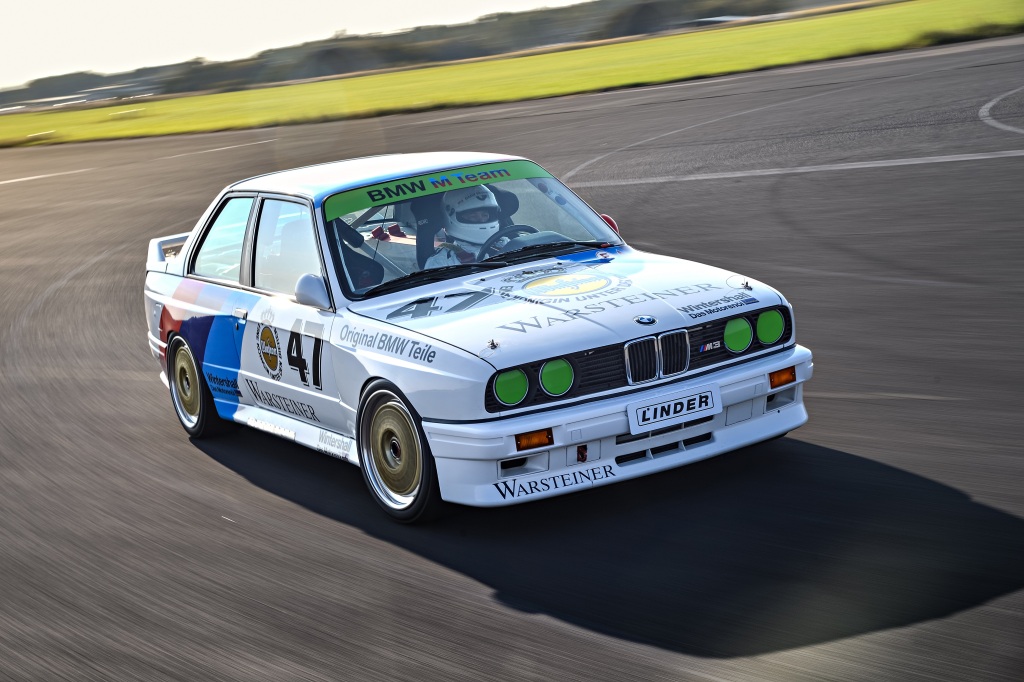
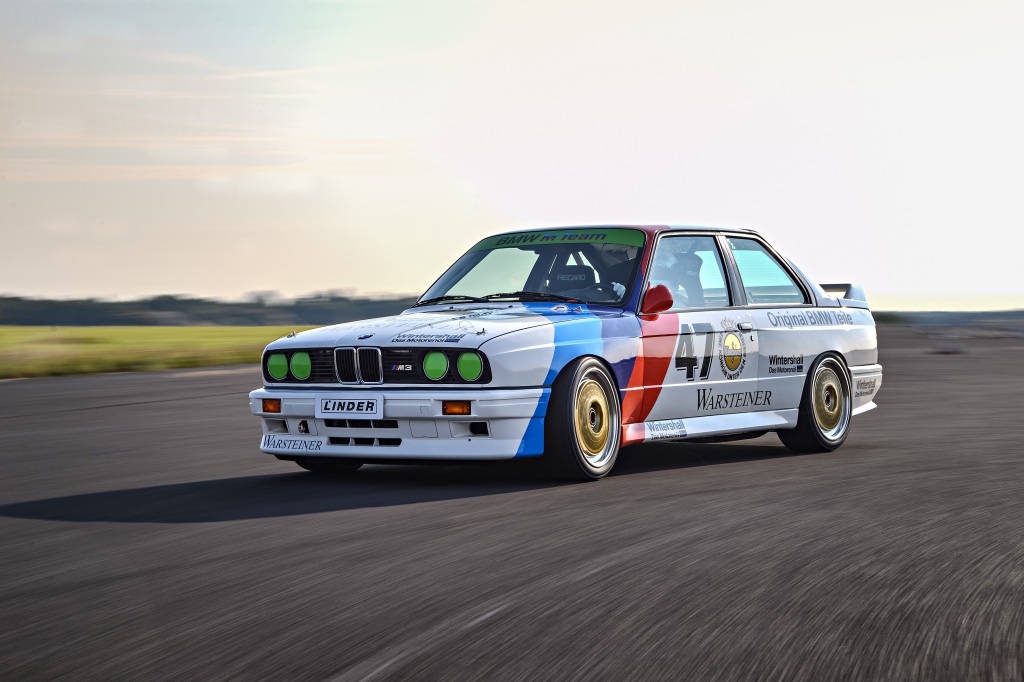
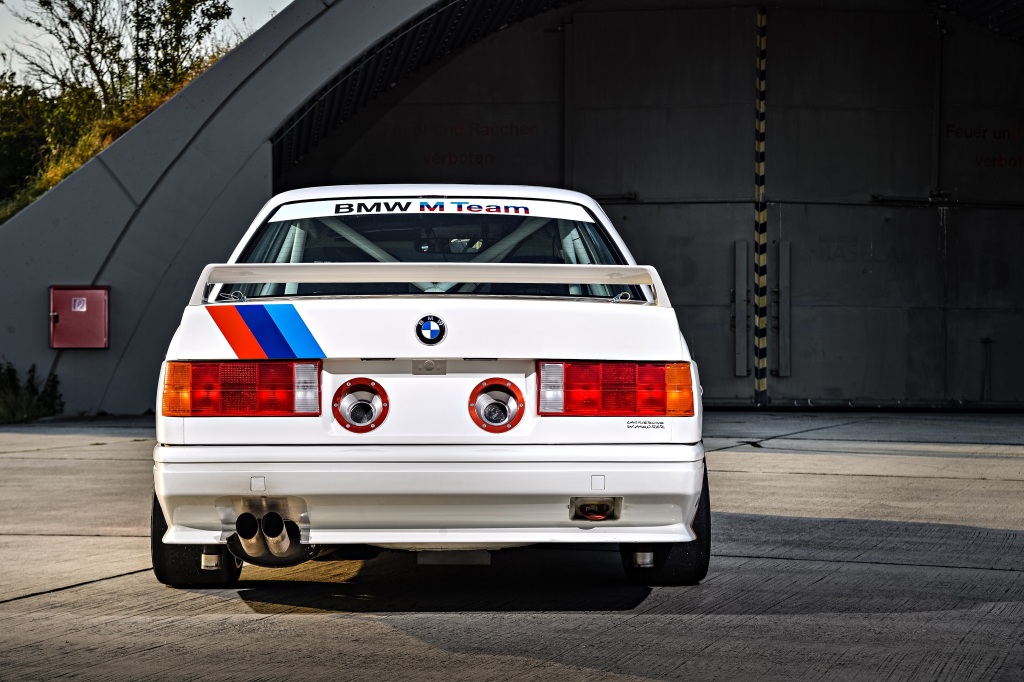
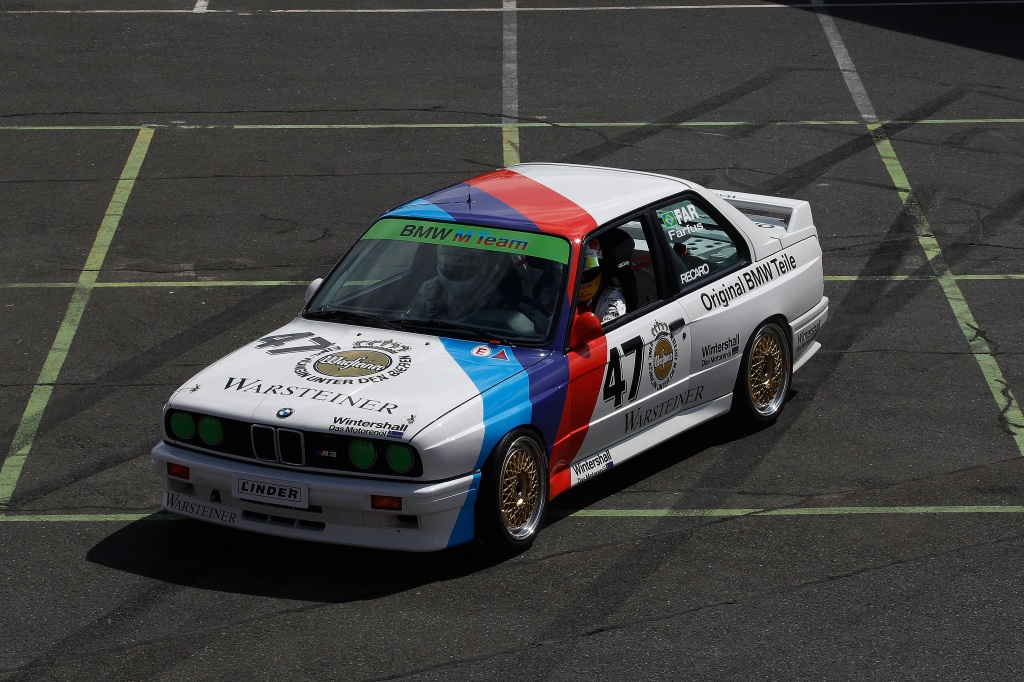
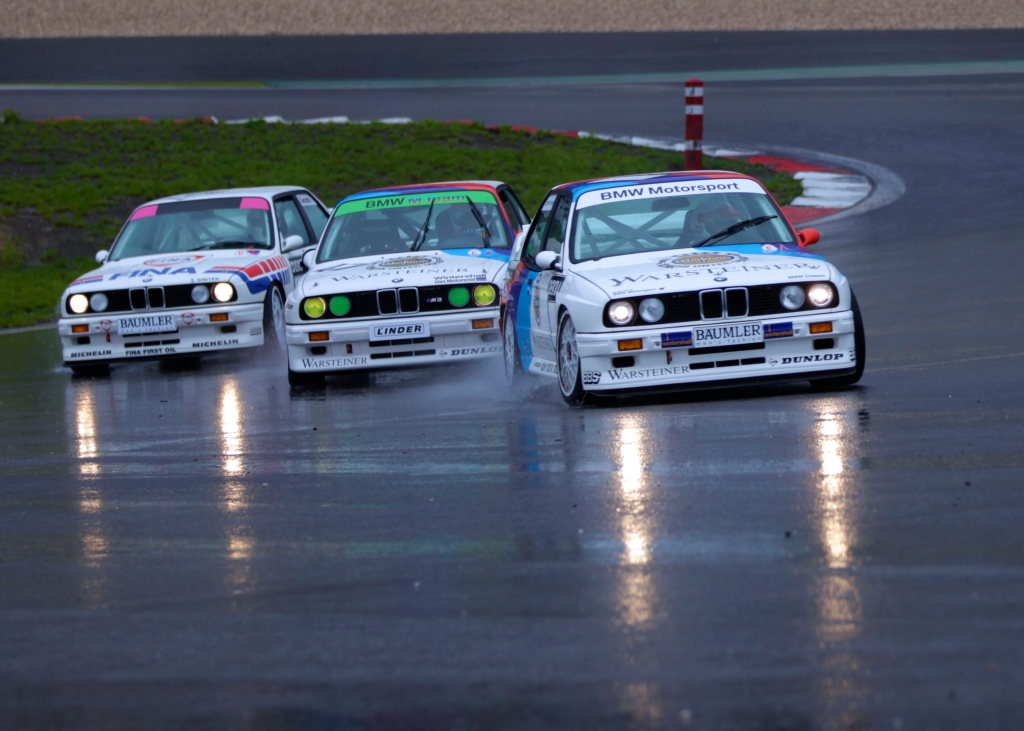
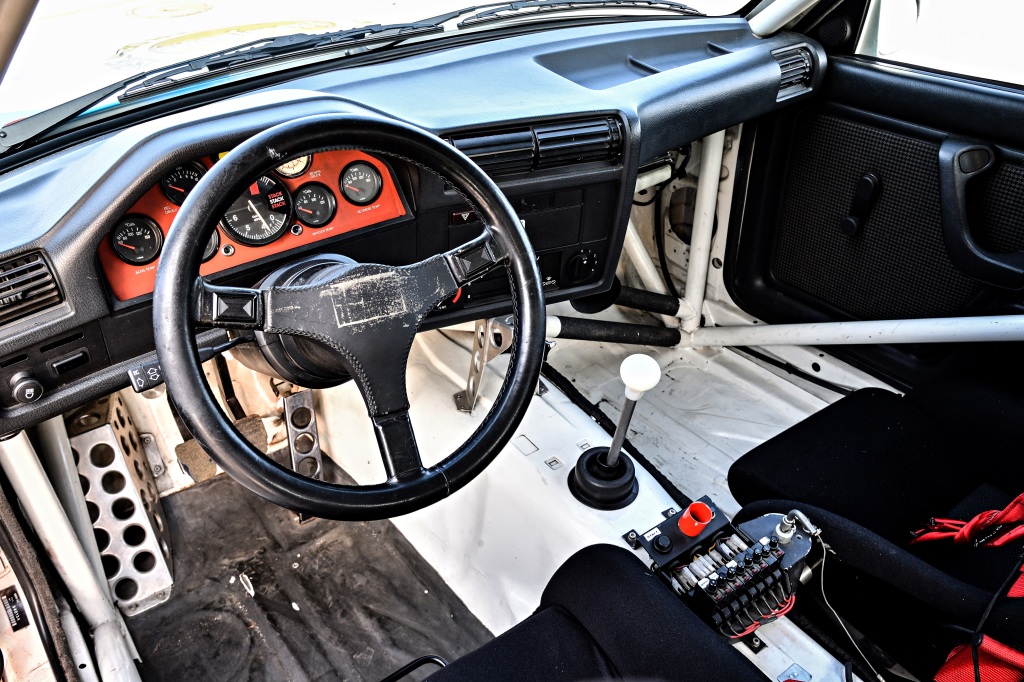
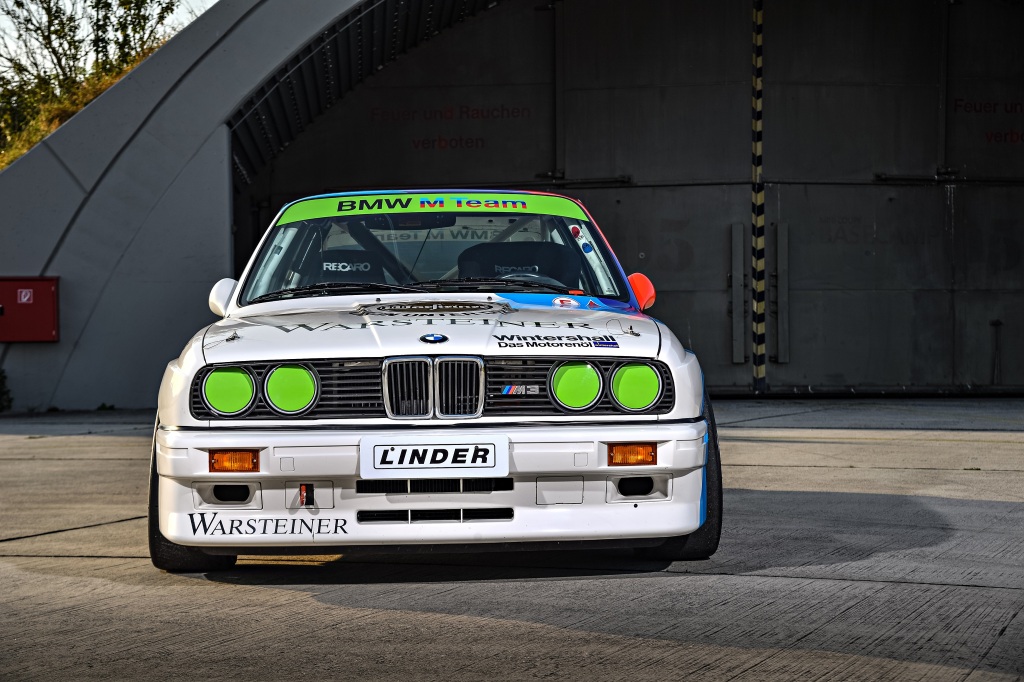
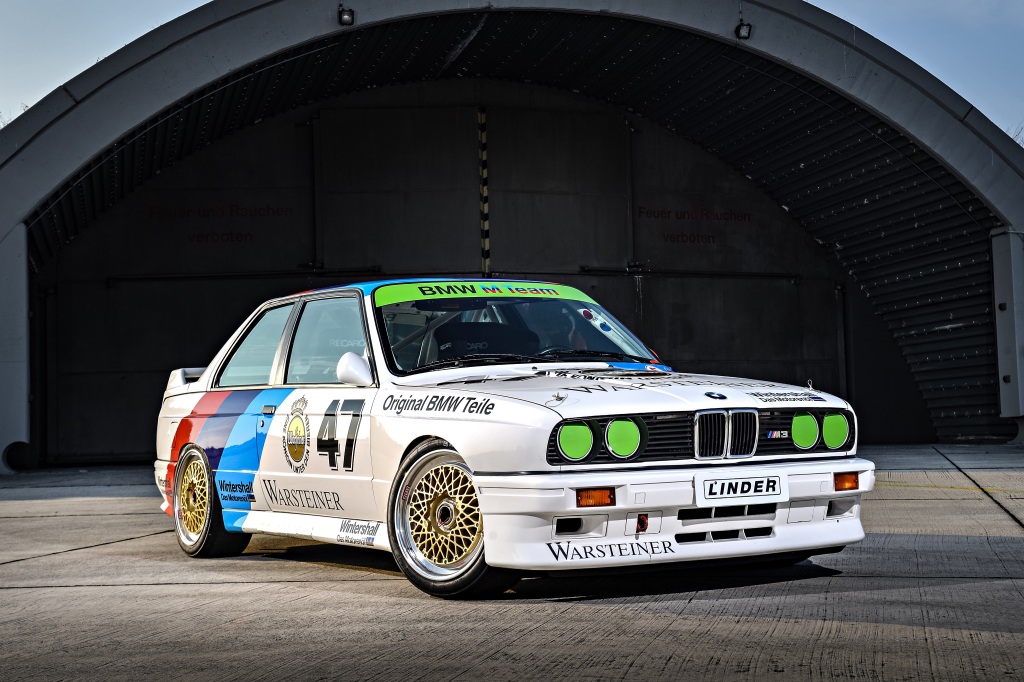
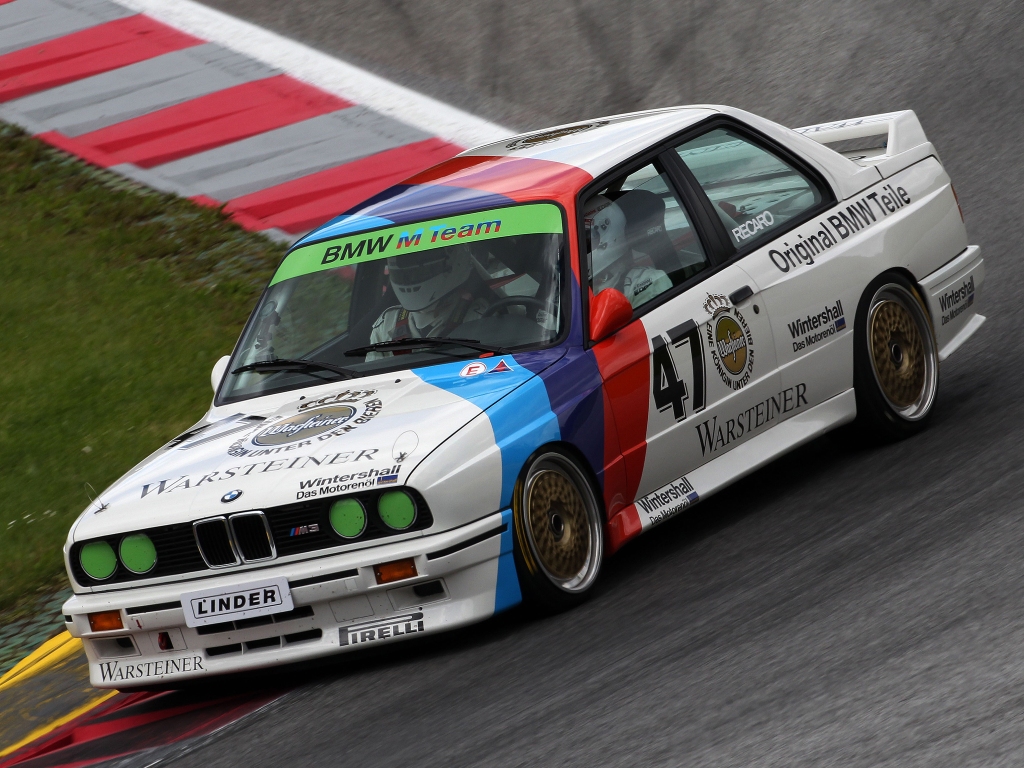
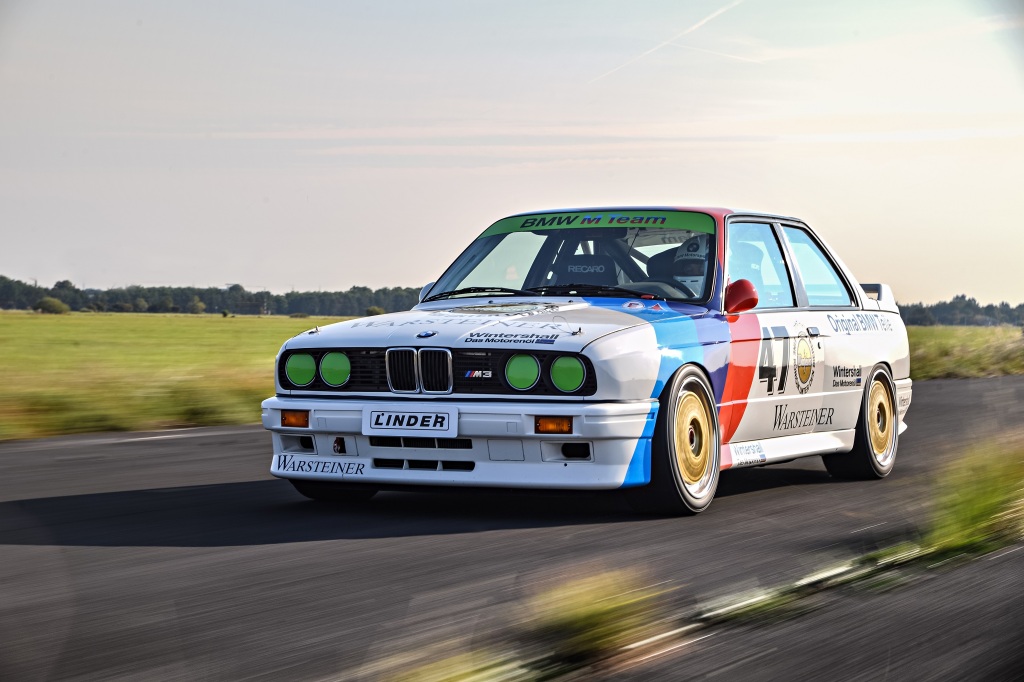
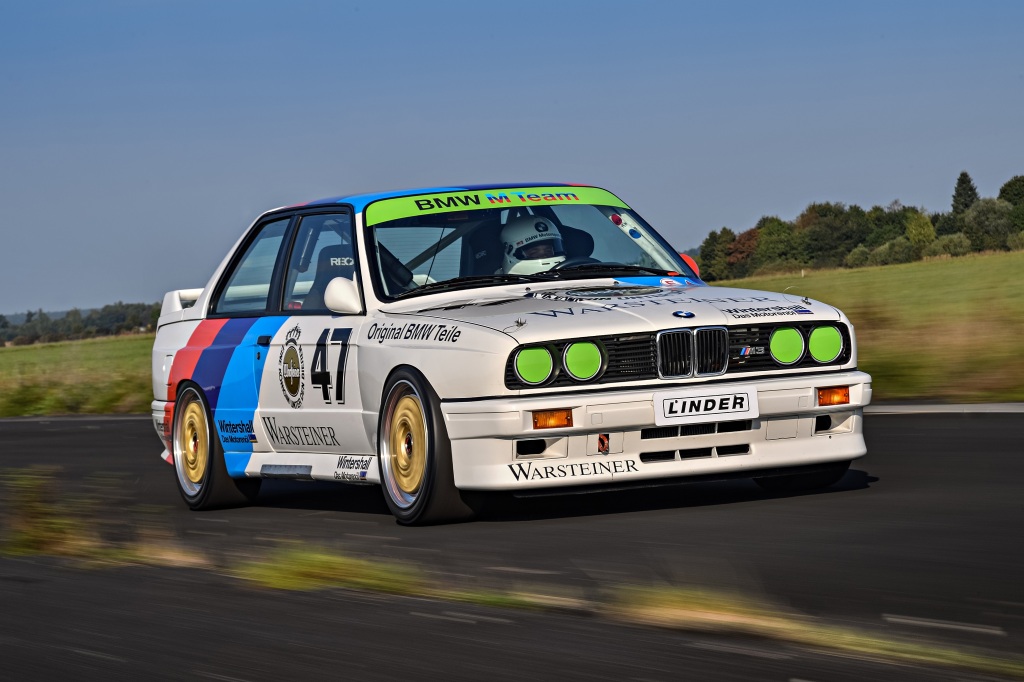
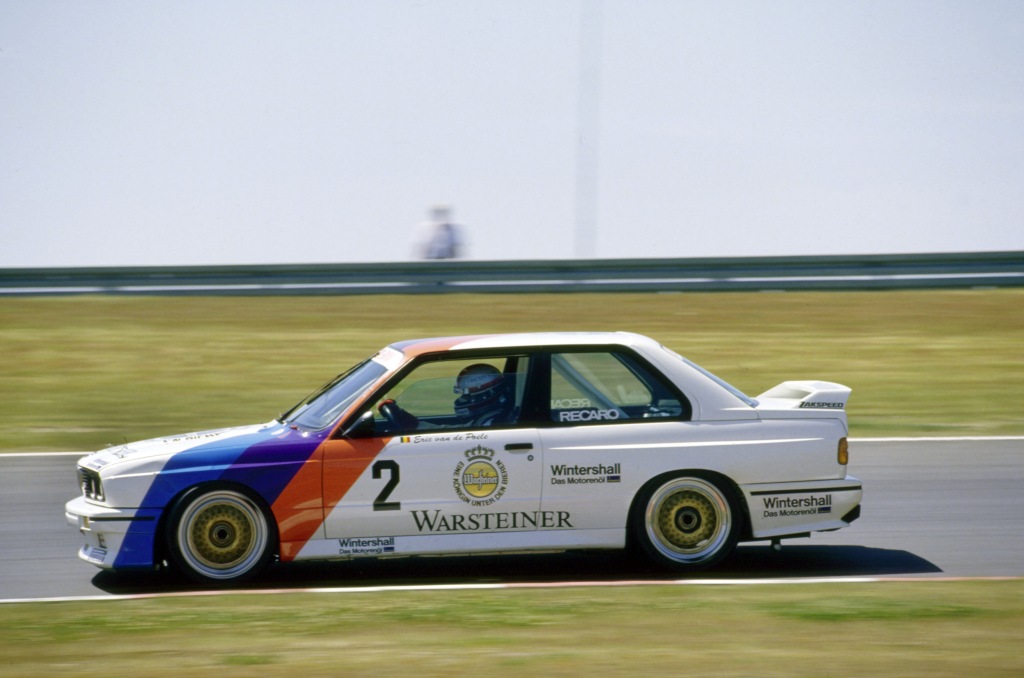
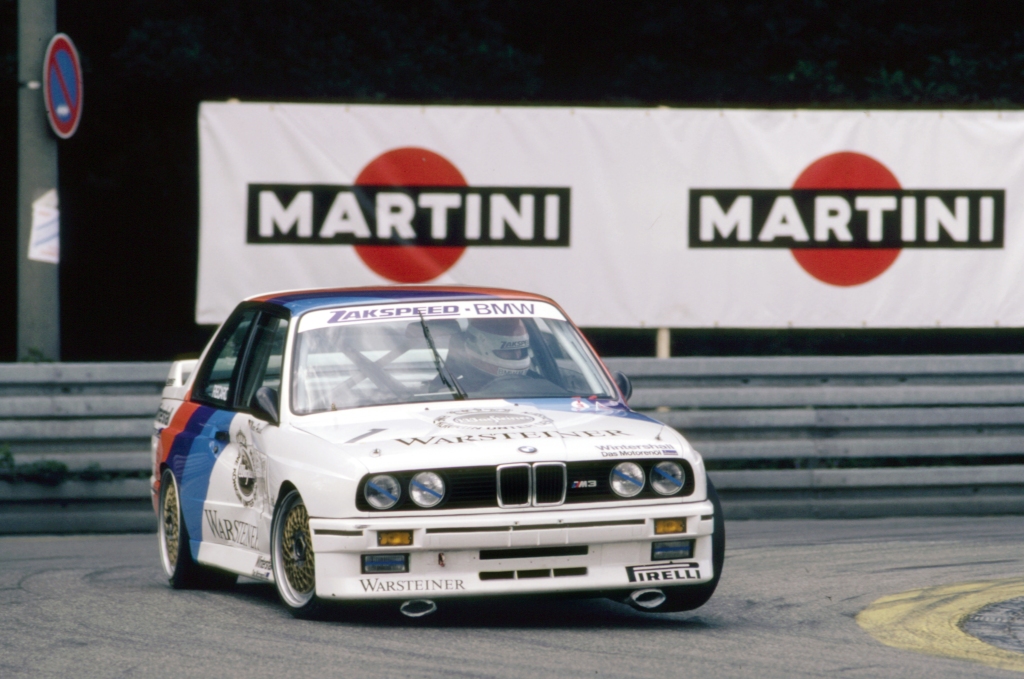
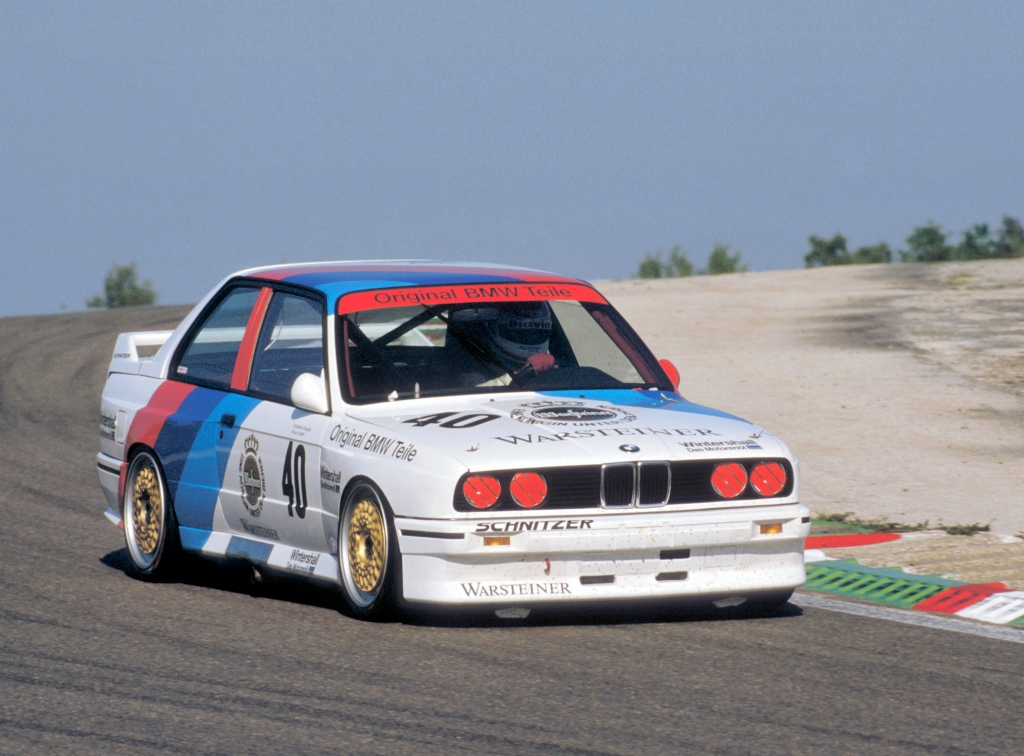
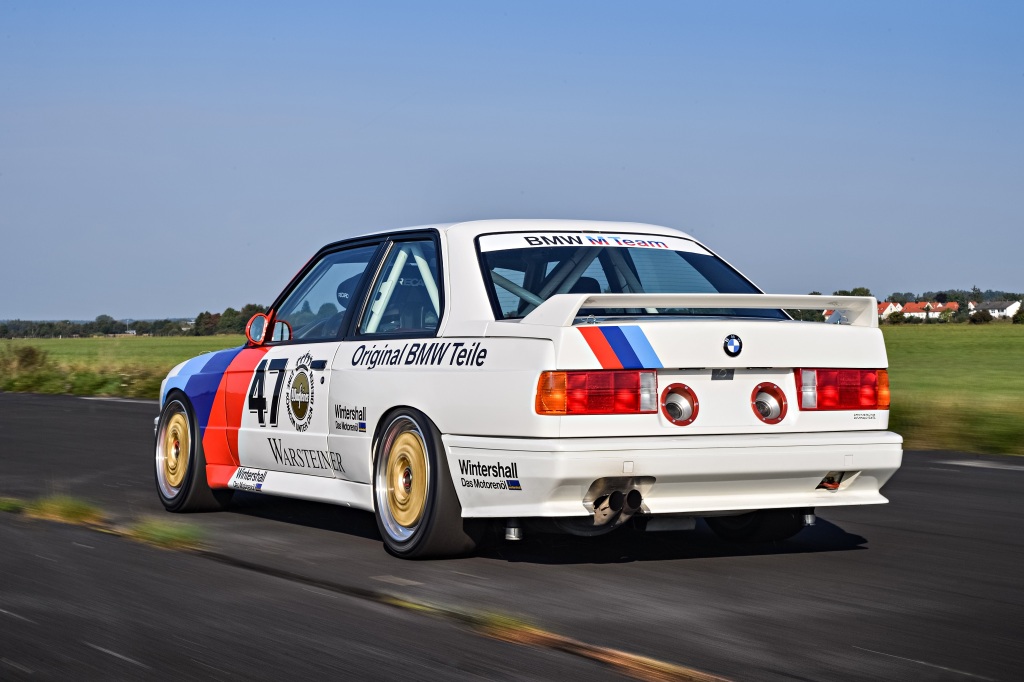
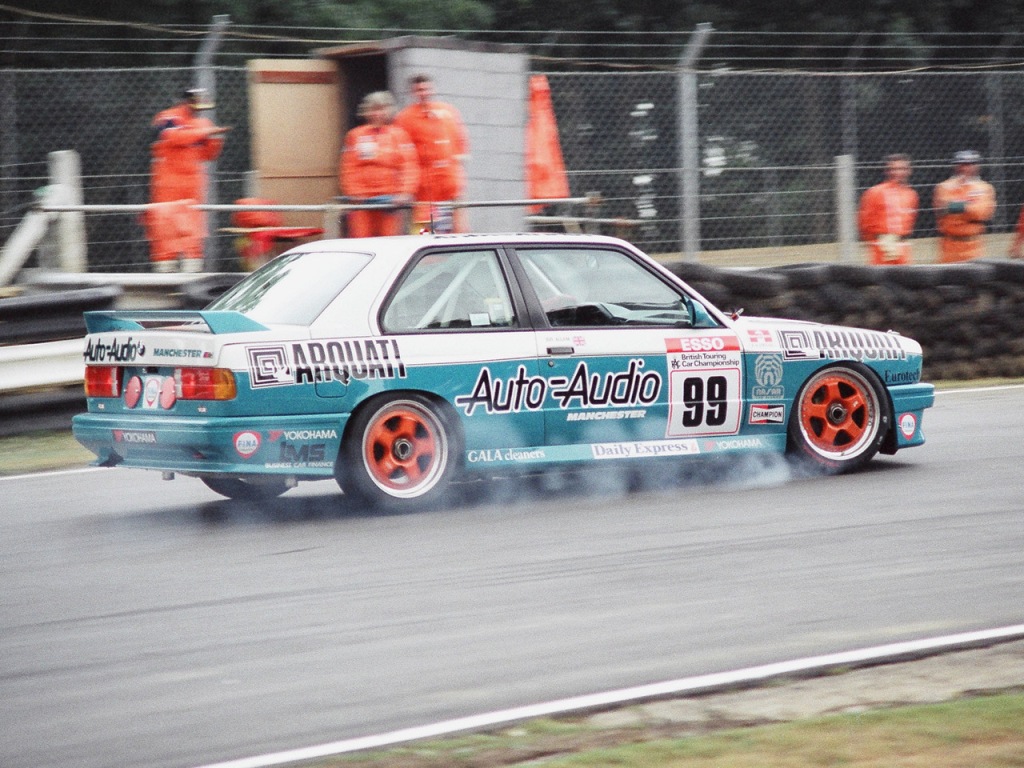
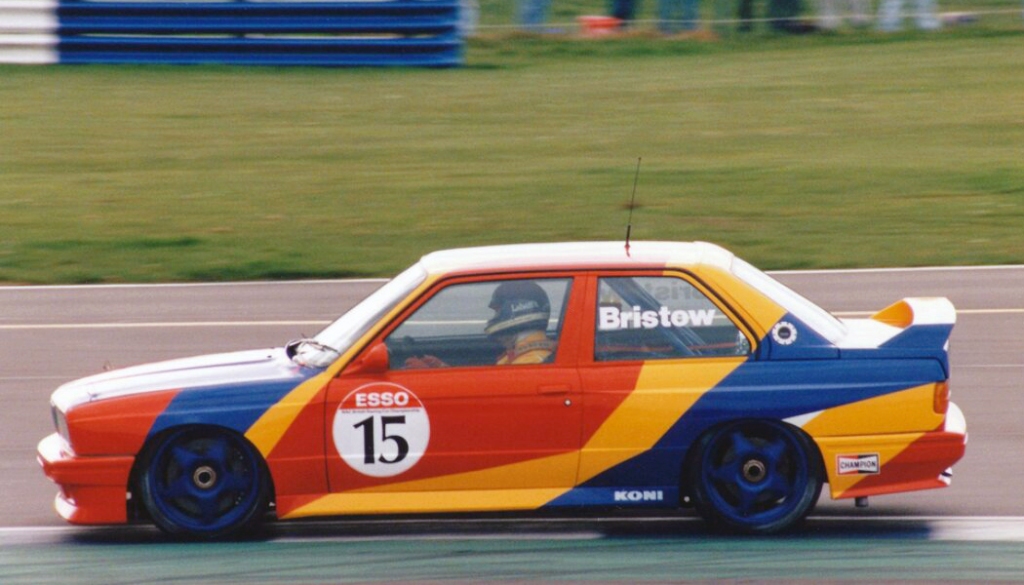
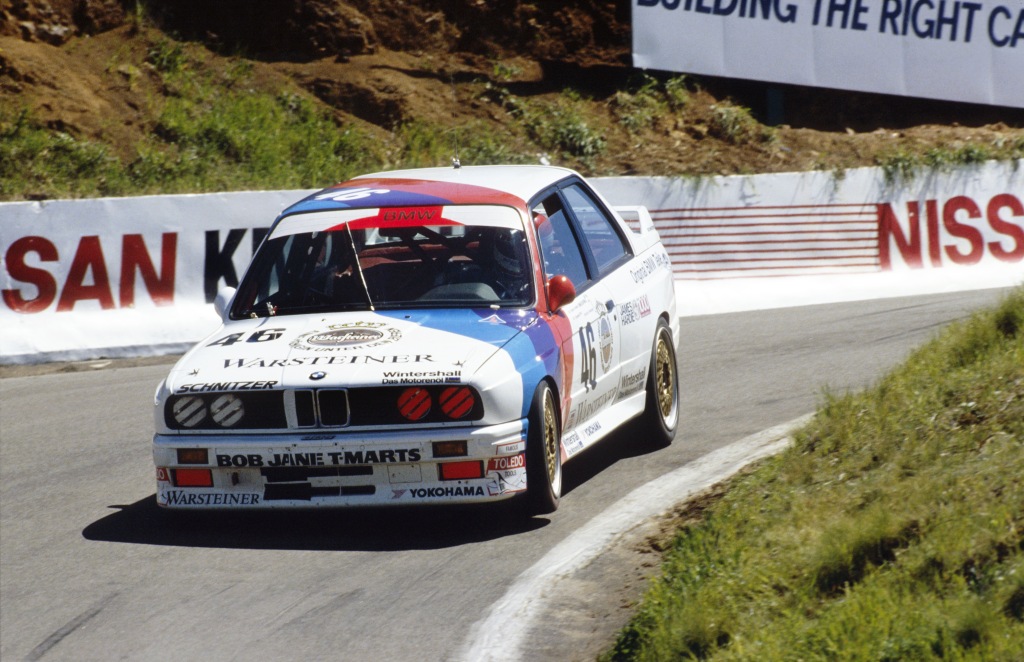
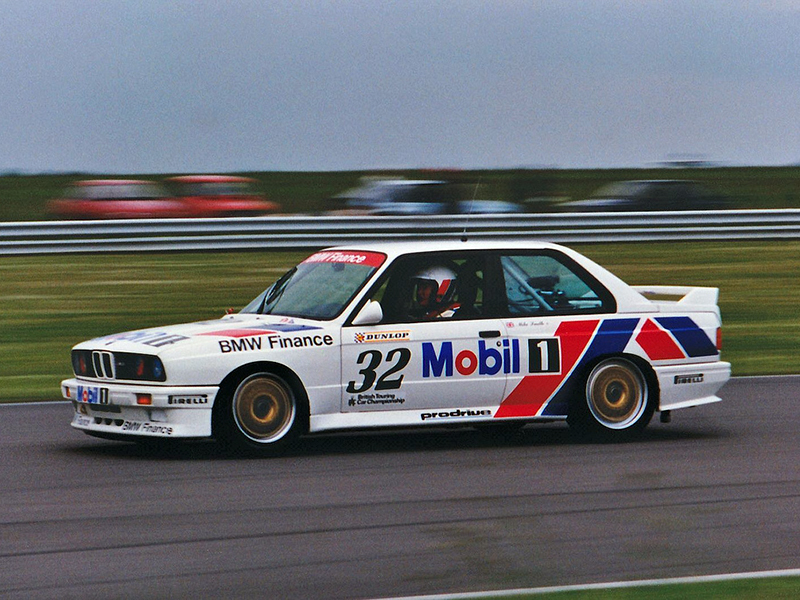
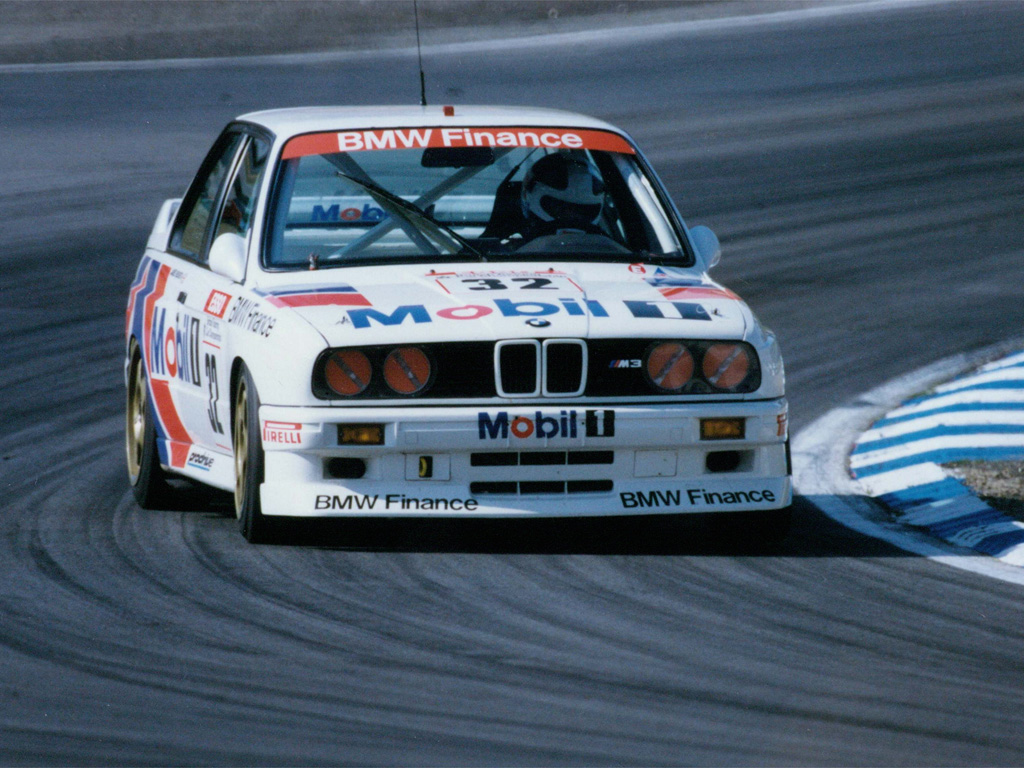
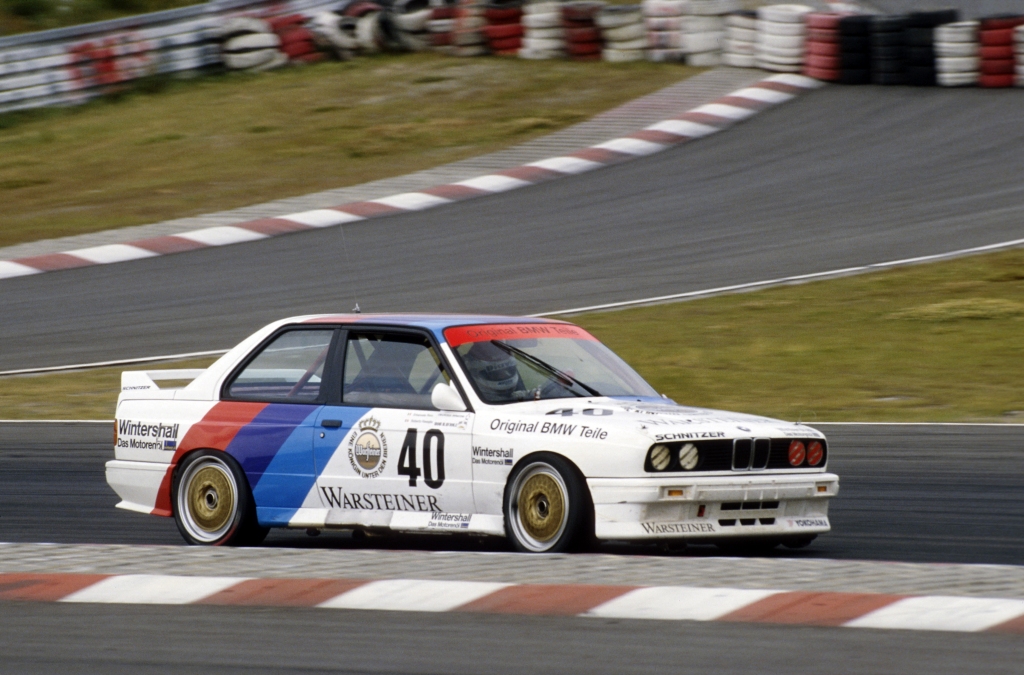
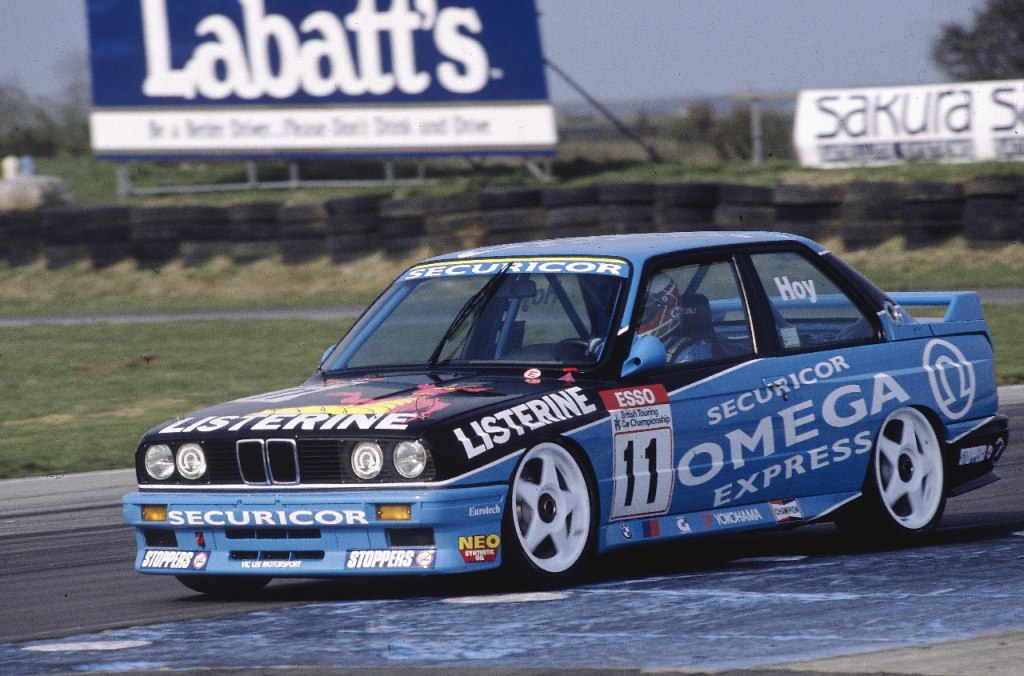
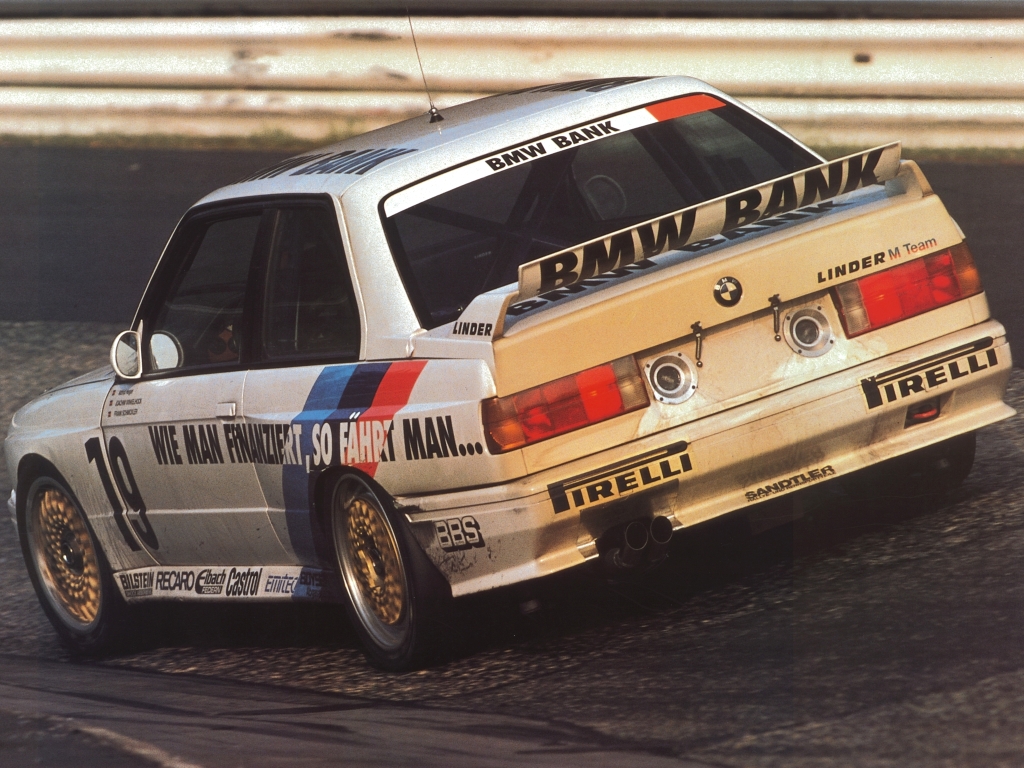
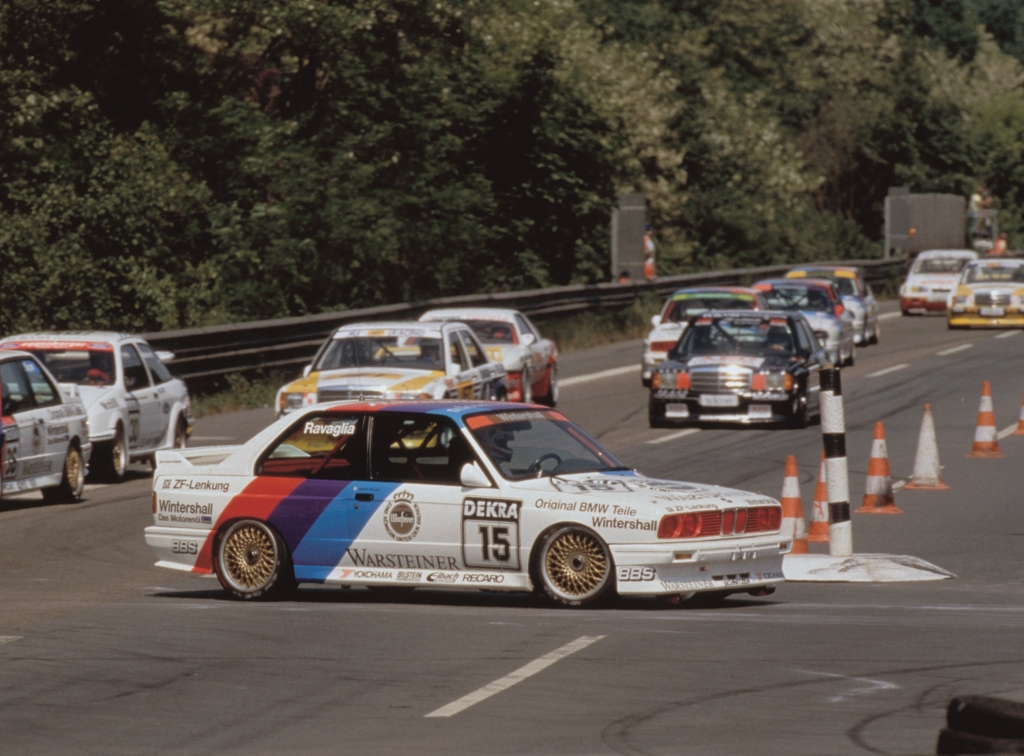
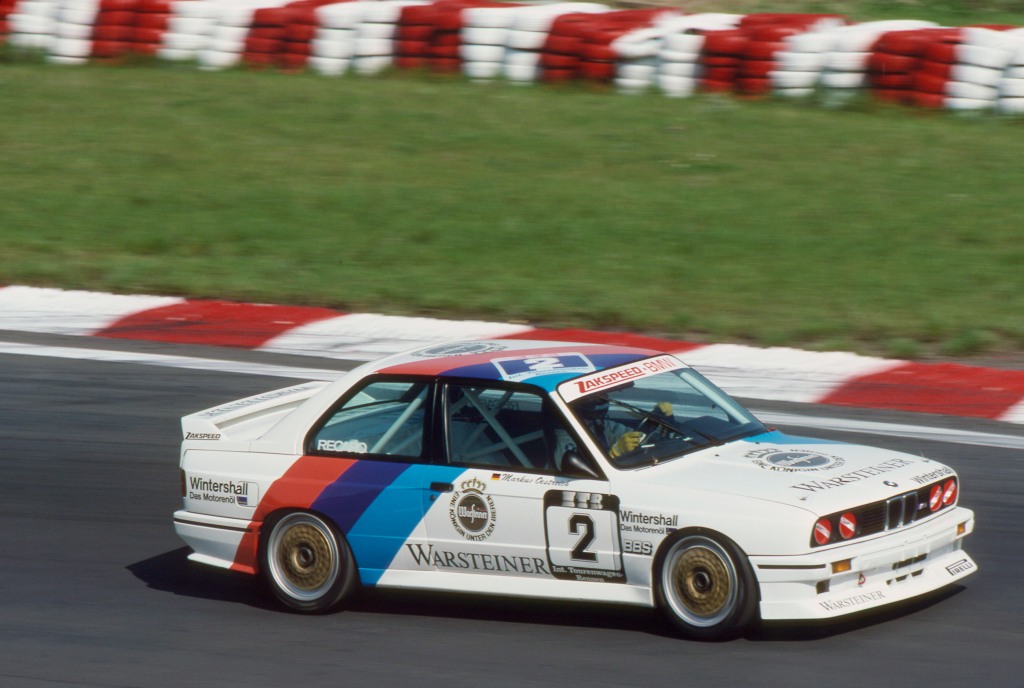
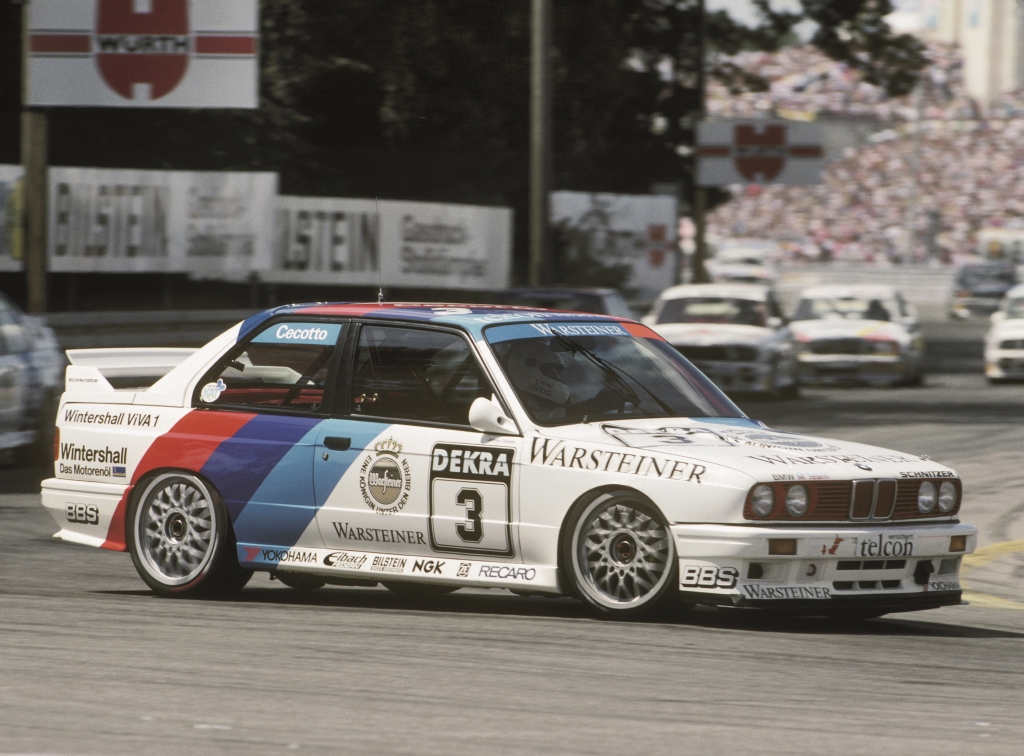
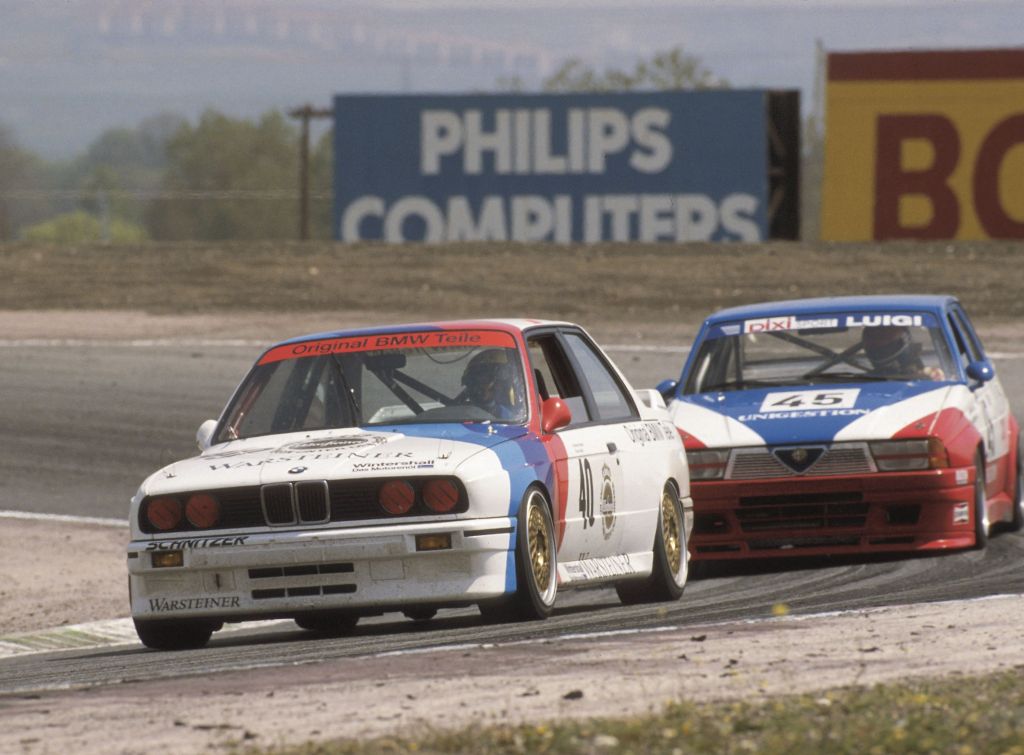
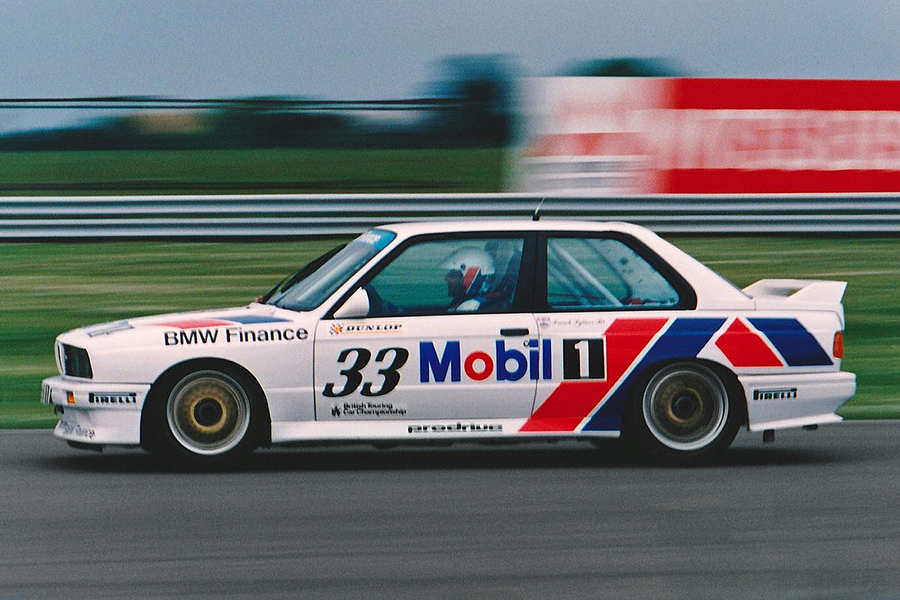
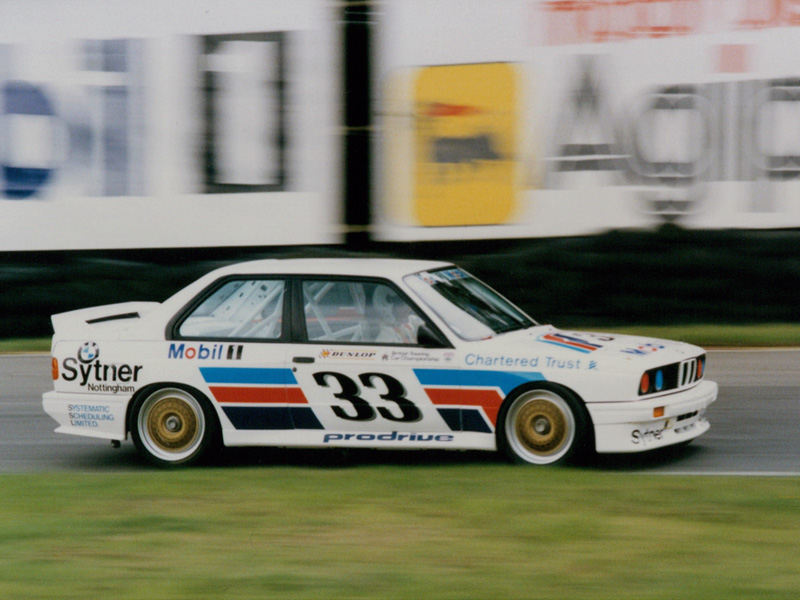
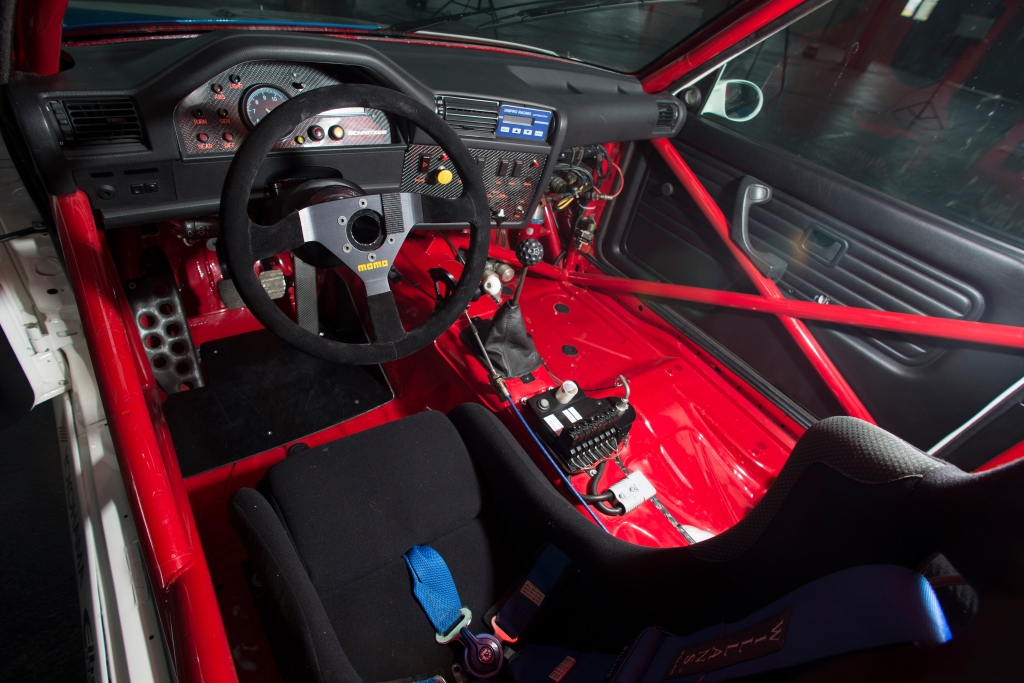
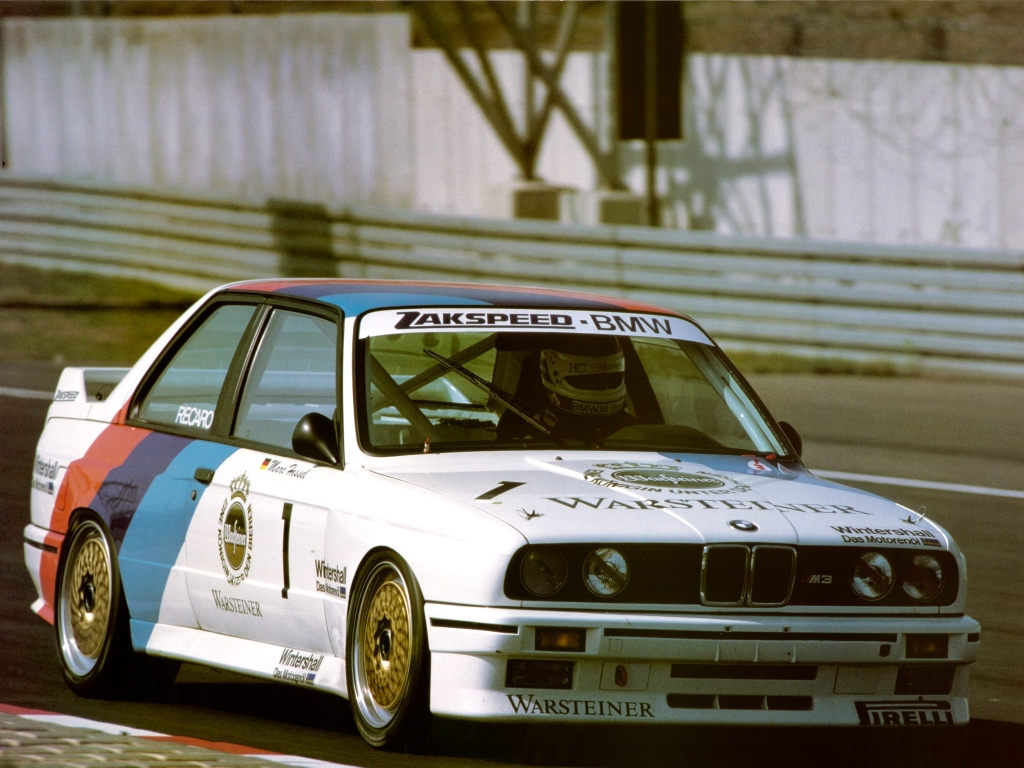
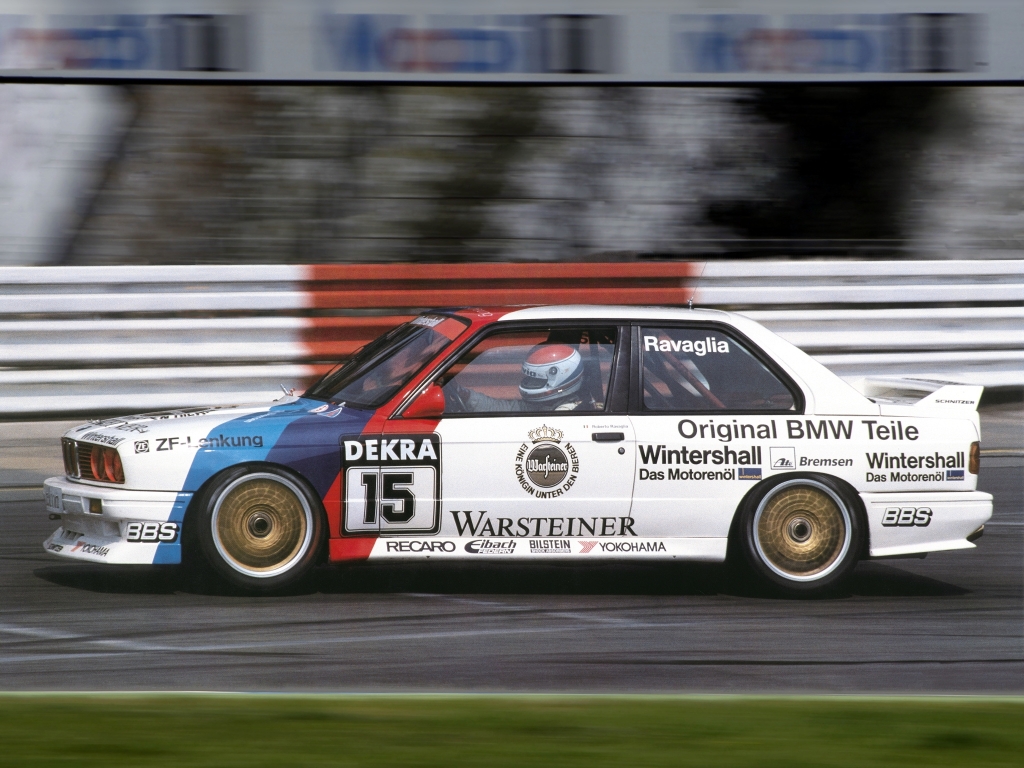
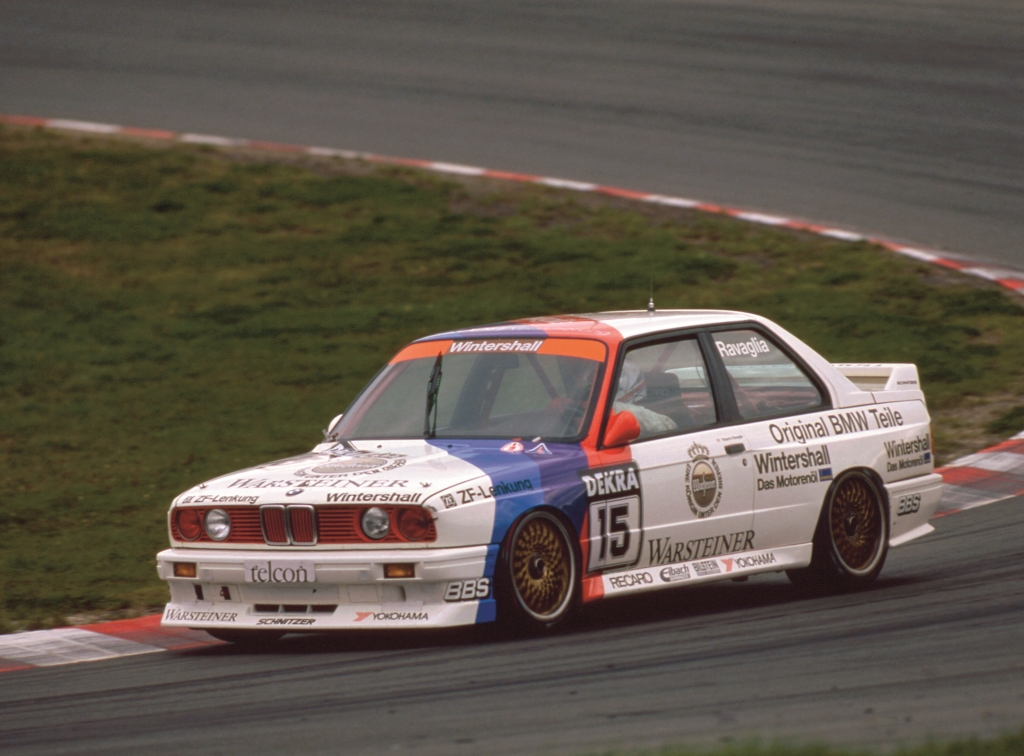
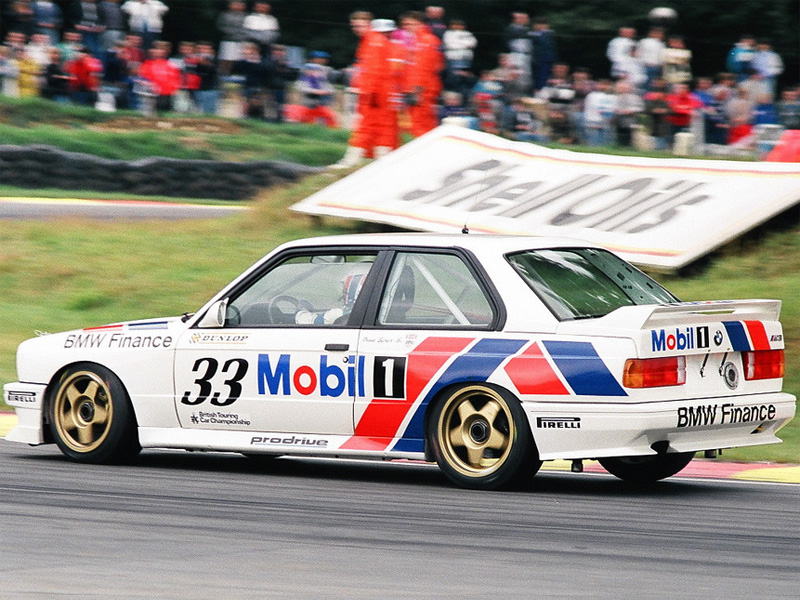
1987 – BMW M3 E30 Group A

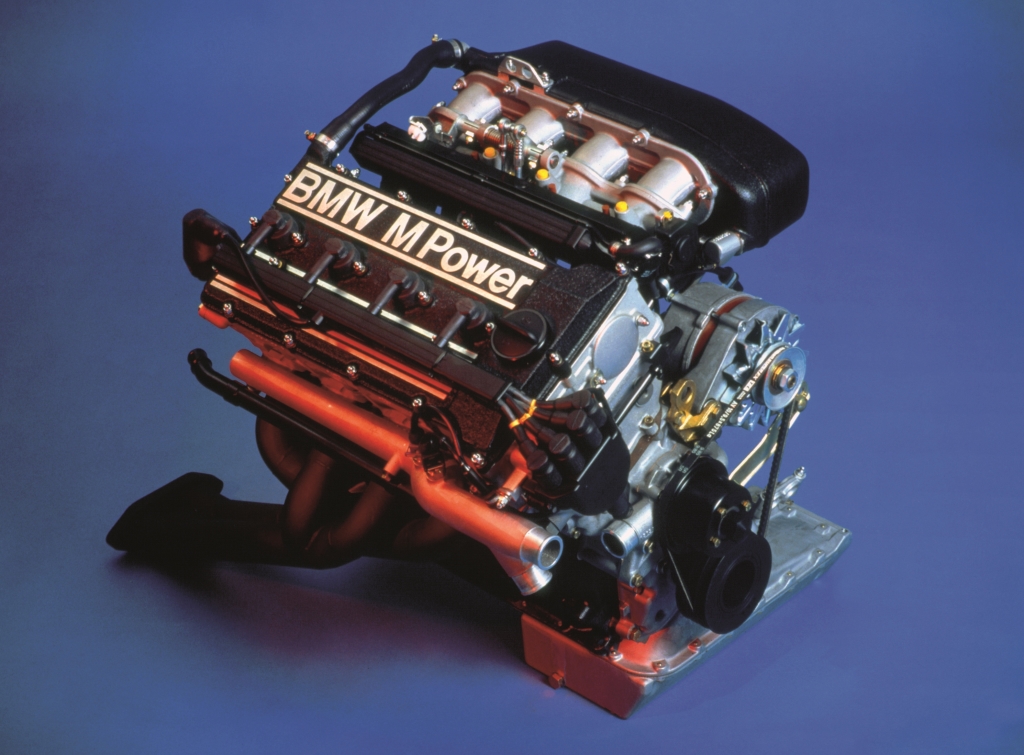
Configuration: BMW S14 B23 Straight 4 16V DOHC
Location: Front, longitudinal
Displacement: 2.302 l (140.4)
Aspiration: N/A
(Bosch Motronic electronic multipoint injection)
Power: 300 bhp
Gearbox: Getrag 265 5 speed manual dogleg
Drive: RWD
Weight: 1025 kg

Niewiele jest aut, które zostały ikonami – takimi prawdziwymi ikonami motoryzacji – rozpoznawalnymi na całym świecie. 911, Mustang, Quattro… pewnie jeszcze Garbus. Jest jeszcze BMW z modelem, który potrafił wzbudzać emocje przez ponad 5 generacji od czasów jego przedstawienia, i który przez dekady był jednym z najbardziej porządanych w swoim segmencie. M3 jest oczkiem w głowie BMW Motorsport – i nie bez powodu…

Seria 3 odnosiła sukcesy sprzedażowe i ponoć sam premier BMW – Obersturmbannführer Eberhard von Kueneheim rozkazał rozst… sporządzić sportową wersję tego auta. Oddelegował w tym celu dajrektora technicznego BMW M Paula Rosche. Dzisiaj ten dział znamy jako Motorsport. Cel, jaki im przyświecał, to było ogarnięcie auta w Group A specifikazionen – a poootem to się do niego dopasuje jakieś wygody do drogowych wersji. Liczba aut, które dział Roscha do tamtej pory zdążył przygotować zamykała się w trylogii pt. M1, M535i oraz M635 CSi. Maczali również brudne palce w silniku M12 Turbo, który lądował w Brabhamie z F1, a Nelson Piquet lądował takim Brabhamem z hitlerowskim silnikiem – na pierwszym miejscu w klasyfikacji kierowców. A wiecie ile czasu im zajęło przygotowanie takiego silnika? A 2 tygodnie. Pewnie myślisz, że wzięli jakieś tam części co leżały im na garażu, elementy z różnych poprzednich projektów, złożyli na szybkiego do kupy i taki silnik dostarczono jako gotowy… No to surprise motherfucker, bo… dokładnie tak było.

Ale my nie o tym – to jest historia na osobną flaszkę. W M3 pompowała seria S14 powstała specjalnie do nakurwiania. 4-cylindrowy blok pochodził z M1 i taki też został użyty do prac nad M12 Turbo do F1. Głowica do M3 rozpoczęła swą historię w silnikach M88 i tak, po ucięciu 2 cylindrów, trafiła spowrotem na warsztat. M88 to – przypomnę – silnik z M1 jest: projektowanego do wyścigów auta, które walczyło w każdych warunkach – torowych, rajdowych, procar dzikie węże. Wszystko. Miał 6 cylindry i to już była legenda. Cały ten cyrk BMW zebrało do kupy i podniosło na koniec pojemność do 2.3 litery. Miało działać.

A dlaczegóż Niemcy nie użyli po prostu 6 cylindrów albo turba, skoro mieli takie doświadczenie w tym temacie? A dlategóż, że to miało być auto do zawodów i weź kurwa wykonaj 5 tauzenów sztuk dla biedaków w 12 miesięcy. Jeśli ci się uda, no to gratuluję. I moszna było zostawić 6 cylindrów – a moszna, jak najbardziej, i to jak! Ale 4 cylindry były lżejsze i łatwiejsze do upchania pod maską a oferowały potencjalnie wyższy pułap obrotów, dzięki czemu były bardziej uniwersalne. Wersja z katalizatorem kręciła do 7k obrotów a wyczynowa specjalizacja jebała do 9 tysięcy i mogła dzięki temu łatwiej mordować – a o to przecież Niemcom chodziło.

Słowem: chciano auto lekkie i żeby nie telepało nim od 6 cylindrów – bo tak by zapewne było. Jeśli chodzi o turbo, to przestudiowano regulacje Grupy A i przecież FIA dojebała by im karę za taki system – poza tym uważano, że ówczesna technologia była skomplikowana i mało przyjazna w codziennym użytkowaniu na drogach publicznych, więc lepiej było z tym poczekać. W miarę upływu lat powstawały różne wersje silnika do M3.

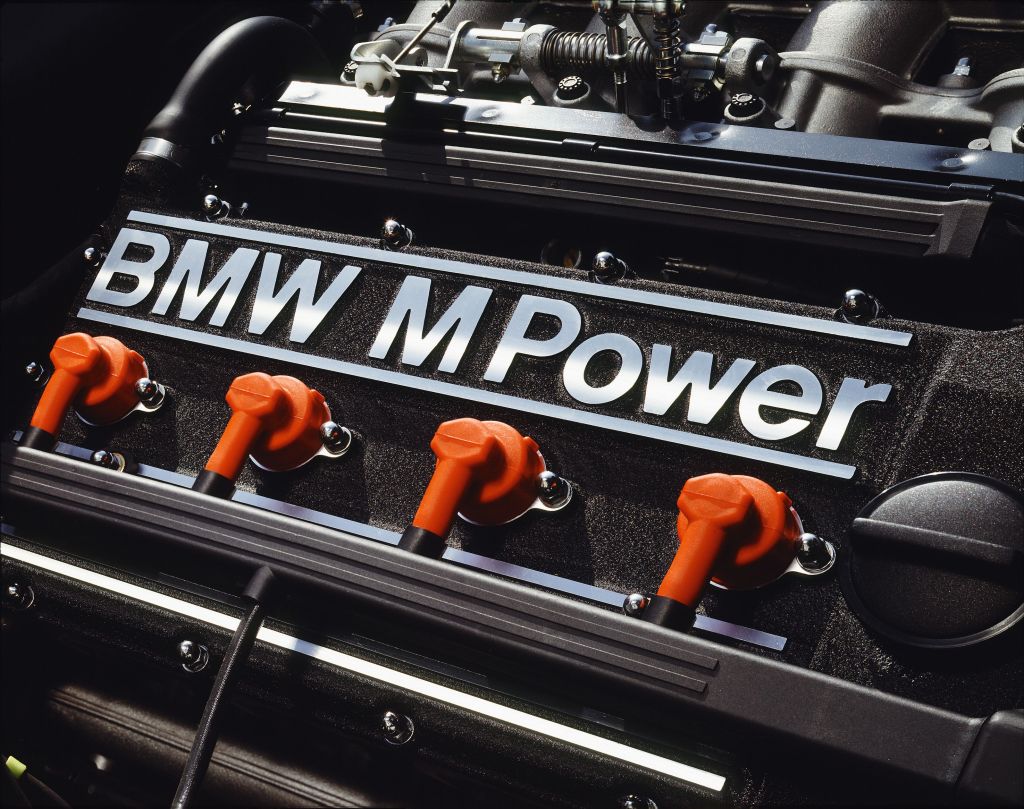
Zaczęło się od B23, który potrafił 200 koni mocy bez katalizatoru. Poza Europę trafiły auta z katalizatoryma i były biedniejsze o te 5 koni mechanicznych. Tam potem wychodziły edycje specjalne z pomieszanym oprogramowaniem i Bosch się postarał, żeby nawet z katalizatorem moc utrzymywała się na poziomie 215 koni – a miało być tylko lepiej. Z czasem pod maskę trafiły lżejsze części, dolot był bardziej wydajny a sam silnik przeprogramowano. Ta wersja właśnie ma pod maską barwy działu Motorsport na białym tle i po tym można ją poznać. Drogowe wersje zamknęły się na 238 koniach w Evo 3 – BMW M3 E30 Sport Evolution z 1990 roku. Silnik był wtedy w wersji S14B25 EVO 3 i miał zwiększone zawory i sportowy rozrząd a do tego tłoki były chłodzone dyszami wystrzeliwującymi olej pod ciśnieniem. Ten można poznać po czerwonych kablach na pokrywie silnika.

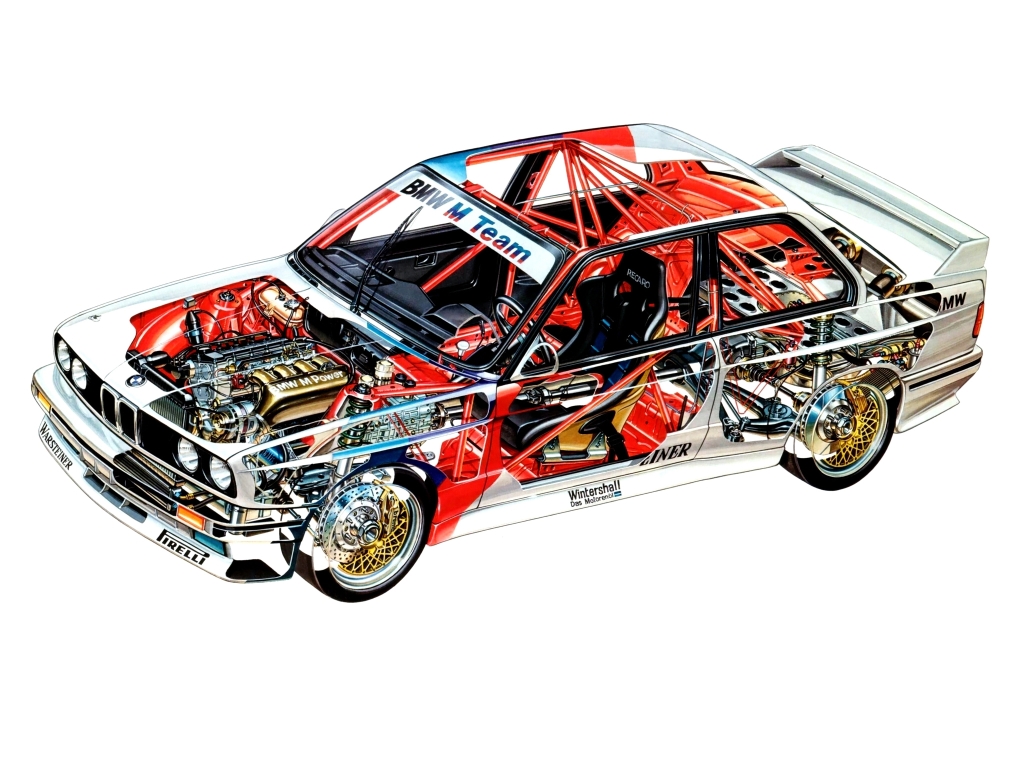
Skrzynia biegów z hydraulicznym sprzęgłem była zestrojona na krótkie przełożenia a zawieszenie w postaci kolumn McPhersona pochodziło wprost ze zwykłch E30. Problem w tym, że E30 to bieda i gdy przycisnąć, to giba się jak pierdolony rezus i gubi trakcję przy pierwszej okazji. To niedobra jest i pierwsza myśl to było 4×4. Projekt mocno przybrałby wtedy na wadze, więc to się mijało z celem. Przeprojektowano cały przód zawieszenia, usztywniono, dano rozpórki. Amortyzatory zamieniono na lepsze i przekalibrowano wspomaganie aby było szybkie i precyzyjne jak germański snajper. Poszerzono aero, co umożliwiło użycie szerszych opon. Dla zwiększenia stabilności pomieszano w geometrii. Akumulator wysiedlono do bagażnika przyczyniając się w ten sposób do rozkładu mas rzędu 52:48 na przód.

Takie coś musiało się zatrzymywać, więc wymieniono tarcze na większe a z przodu – wentylowane. Do tego wzmocnione zaciski z „Piątki” E28 i ABSy od Boscha – specjalne do tego modelu. Popracowano nad aerodynamiką, poprawiono sztywność względem zwykłej śmieciary. W porównaniu do Serii 3 dla biedaków, to M3 ma tą samą tylko maskę. Zderzaki były inne, szyby były inne i pod innym kątem. Uwagę zwracał tylny spojler a elementy aero były wykonane z kompozytu.

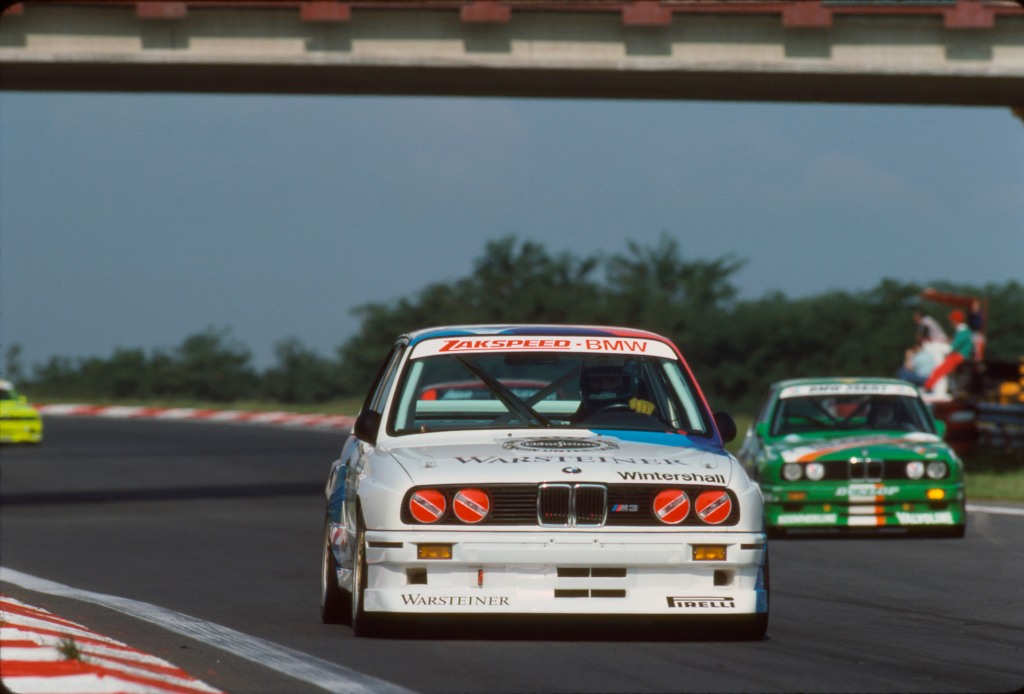
Tak powstało auto do Grupy A – a raczej auta, bo M3 Group A nie miało jednej specyfikacji i różniło się w zależności od formatu. Rajdowe M3 nie było lustrzanym odbiciem Group A do DTMu – te „trójki” są siostrzyczkami, ale nie bliźniakami – tak to ujmę. I w ’87 odbyła się pierwsza edycja Mistrzostw Świata Samochodów Turystycznych. No dla BMW to było perfecto! Doskonała okazja, żeby pokazać bydlaka na torze. Oficjalnego teamu nie było, ale wspierano takie ekipy jak Schnitzer, czy Zakspeed – więc było srogo. Seria zyskała popularność jeszcze zanim wystartowała a ścigać się miano w 11 eventach na torach takich jak Spa, Nurburgring, Bathurst, czy Fuji. Przyszedł jednak Bernie Ecclestone – niedojeb, cały na biało – i wszystko spierdolił. W ostatnim momencie dojebał 60 małych Sasinów wejściowego. To znaczy jeździć można było i bez tego, ale jeśli chciałeś zdobywać punkty i odbierać nagrody – to 60 tysięcy, kurwa! W dupach się poprzewracało… Tylko 15 drużyn uczestniczyło oficjalnie na pełnych prawach.

Pierwszy event był na torze Monza i powiem… nie bardzo. BMW zajmowało czołowe pozycje – w tym pierwszą – ale zostały zdyskwalifikowane za zbyt cienką konstrukcję dachu oraz kevlarową maskę (na homologacyjnej, drogowej M3 była plastikowa). Bezpośredni rywal BMW – Sierra RS Cosworth teamu Eggenberger też odpadła, bo miała inne sterowniki silnika niż w homologacji. Jeden nawet próbował być mądry – Andy Rouse zdrapał naklejki Boscha i przylepił Marelli-Weber, jak w drogowych wersjach i nawet by mu uszło na sucho, gdyby nie wykurwił uszczelki pod głowicą. Później udało się uniknąć dyskwalifikacji i nawet Sierra potrafiła robić dobre czasy, ale M3 było po prostu szybsze. 4 zwycięstwa z rzędu zawędrowały do Niemców a Ford mógł triumfować dopiero po 6 evencie. Silverstone łatwo trafiło do BMW – niczym Francja w 1940. Cosworthy RS500 zdychały ale w Australii na torze Bathurst zajęły dwa pierwsze miejsca. Jeździli jednak na niedozwolonych częściach – mieli nieprzepisowe nadkola i odebrano im zwycięstwo. Roberto Ravaglia w wywalczył mistrzostwo w modelu BMW M3. I Fordy wygrały ostatnie 3 wyścigi, ale zawsze czuli niemiecki oddech na karku.

W cieniu Mistrzostw Świata odbywały się zawody na szczeblu europejskim. M3 zdominowało ten format i nie było takich fajerwerków, bo konkurencja nawet się nie broniła. Vogt zdobył najwięcej zwycięstw a wogóle M3 było najszybsze podczas 6 z 7 wyścigów. Żeby zobrazować wam jaki piach pokazywali rywale dodam, że drugim miejscem w mistrzostwach nagrodzono Toyotę AE86, która przekroczyła magiczną liczbę ZERU PODIÓW w tym sezonie. Emocje…

Na szczęście po jednym sezonie WTCC zniknęło z kalendarza, co przywróciło ETCC dawny blask. Walka Forda z BMW przeniosła się na europejskie podwórko. Ford był szybszy na torze Monza, ale M3 deptały po piętach. Pierwsze 7 wyścigów skończyło się dominacją Fordów – BMW wygrało do tej pory raz – ale 24-godzinny wyścig na torze Spa rządził się swoimi prawami. To był prestiżowy event – najważniejszy w sezonie i, co najistotniejsze, nagradzał podwójnymi punktami. Ravaglia wygrał a na torze Zolder również był najszybszy, przez co doskoczoczył w punktacji – a po Silverstone zapewnił sobie kolejny tytuł. I znów zatriumfowało dobro (w nawiasie: BMW) a Ford był drugi w klasyfikacji konstruktorów. Niestety… na kolejne zmagania w ETCC przyjdzie nam czekać 15 lat!

Przenieśmy się więc do Niemiec, gdzie w 1987 DTM powolutku, pomalutku – krok po kroczku – zaczynał pracować na swoje imię. Jeszcze nie wszyscy najlepsi kierownicy jeździli w tej serii, ale pojawiali się coraz częściej. Sezon zaczął się od dwóch lujów-ogłuszaczów od M3 w pierwszych wyścigach ale w trzecim starcie niemiecka federacja postanowiła namieszać z handicapem, żeby Fordy nie zarywały lepy na ryj za każdym razem i nawet tam potrafili walczyć o mistrzostwo – ale to trafiło do Erica van de Poele z BMW Junior. Eric nie był najszybszy ani razu – ale i tak okazał się najlepszy.

Rok później też były emocje – w ostatnim wyścigu aż 4 kierowców walczyło o tytuł. Największy problem sprawiały Mercedesy 190E 2.3 oraz Fordy Sierra RS500 Cosworth. Każdą maszynę prowadził kierowca na poziomie. W końcu Ford Klausa Ludwiga zdołał wyprzedzić w tabeli Mercedesa i dowieźć trofeum. BMW skończyło tuż za podium.

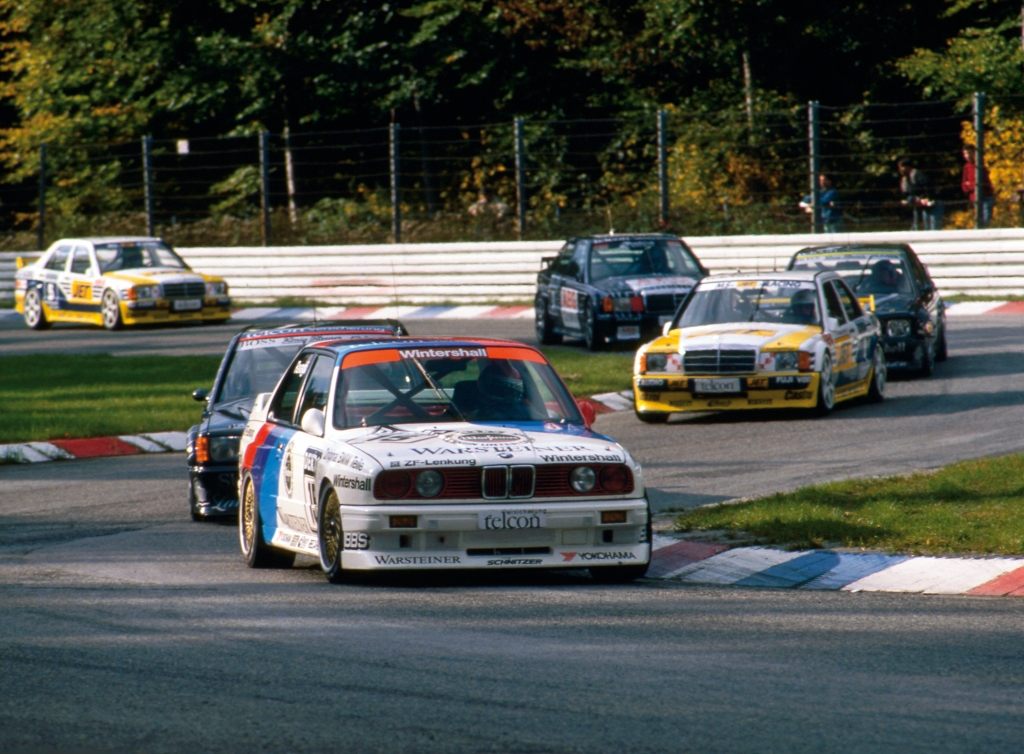
ETCC zdechło i cały ciężar przeniósł się na niemieckie tory. DTM miała już należny prestiż a walkę podjęły teamy pokroju Schnitzer BMW, czy Eggenberger Ford a także A M G. Stoimy u progu złotych lat DTMu i to był dobry rok dla Bawarczyków. Nie dość, że ich auto było obecne na prawie wszystkich podiach, to w pierwszej piątce znajdowały się trzy M3-ki. Wszystkie walczyły do końca o pierwsze miejsce a ostatecznie trofeum ponownie trafiło do Ravaglii.

Rok 1990 był pełny nadziei – bo raz, że Fordów niet – a dwa, że M3 już występowało wtedy w wersji Sport Evolution, a to dobra jest. Plany pokrzyżować mógł tylko Mercedes. Ktoś inny przyglądał się jednak zmaganiom na niemieckiej ziemi i, po najebaniu Amerykanom do dupy, wrócił po swoje. Poszczuli resztę V8 z napędem quattro i zdominowali całe zawody. Johnny Cecotto z BMW miał jeszcze szanse na zwycięstwo i do przedostatniego wyścigu – na torze Hockenheim startował jako lider w tabeli, kiedy to pewien jegomość nazwiskiem Schumacher – świeży laureat F3 a ówcześnie kierowca Mercedesa – wyjął go z wyścigu już na pierwszym łuku. Do tej pory jest to jeden z najbardziej pamiętnych momentów w historii motorsportu, a już napewno DTMu. Trofeum zawędrowało do Hansa Joachima Stucka w Audi Quattro.

W roku 1991 BMW wygrało 4 pierwsze eventy, ale to było to samo M3 z poprzedniego sezonu a Audi wprowadziło kolejne zmiany do V8 Quattro i nie dało sobie odebrać mistrzostwa. BMW wygrało 7 z 20 wyścigów i po raz pierwszy nie znalazło się na podium w tabeli. Sezon 1992 był ostatnim na zasadach Grupy A – więc i ostatnim dla BMW M3. Audi wycofało się już wcześniej, więc walka toczyła się wyłącznie z Mercedesem. Mercedes jednak stale wzmacniał konstrukcję ich 190E i Evo II wyjęło tytuł mistrza – miażdżąc przez cały sezon. Cecotto – numer jeden w BMW musiał zadowolić się 4 miejscem.

BMW atakowało również serie maratonów wielogodzinnych jak Spa 24h, gdzie najwięcej trofeów trafiało do Bawarii – również dzięki M3, które jeździło 6 lat z rzędu i tylko dwukrotnie nie wygrało. W ’87 zajęli całe podium. 24-godzinne wyścigi na Nurburgringu były zdominowane przez E30 – również przynosząc 4 trofea z sześciu lat.

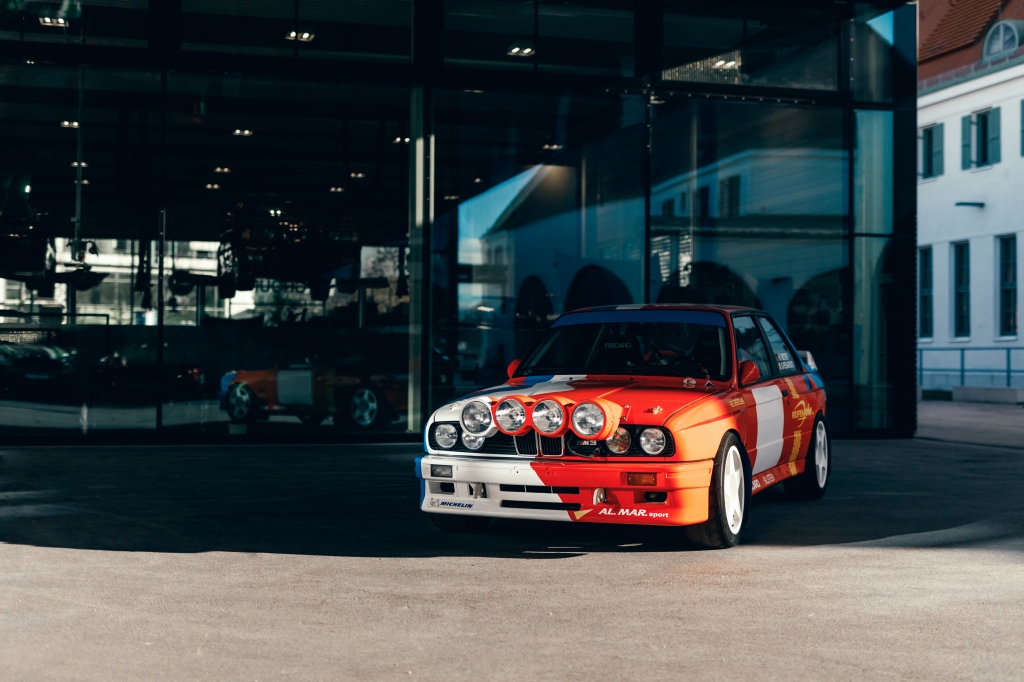
Najgorzej M3 radziło sobie w rajdach samochodowych. FIA zakazało B-Grupowych potworów i z rokiem 1987 należało mieć papiery z Grupy A. Dzięki temu wiele rywalizujących aut mogło przyjechać prosto z zamkniętego toru i walczyć na asfalcie Rajdowych Mistrzostw Świata. To dokładnie taki przypadek ale BMW zdołało wygrać zaledwie jeden event – Rajd Korsyki w 1987 roku – ostatnie zwycięstwo BMW i pierwsze dla Prodrive. Niemcy byli na tyle dumni z tego osiągnięcia, że BMW Motorsport wydało edycję specjalną M3 Tour de Corse. Niestety – nie mogli powalczyć, bo w rajdach liczyło się już tylko 4×4 a Bernard Beguin będąc najszybszym w Korsyce, przyniósł jedno z ostatnich rajdowych zwycięstw dla pojazdu z napędem na jedną oś. BMW M3 łapało podia do 1990 roku a w pierwszej dziesiątce kończyło aż do 1995.

ZDJĘCIA: wheelsage.org
ARTYKUŁ: tech-racingcars.wikidot.com | ultimatecarpage.com | dirtfish.com | bmw-m.com | motor-fanatics.com | touringcarracing.net
WERSJA POLSKA: Krzysztof Wilk