1990 – Alpina B12 E31 Coupe

EngineDisplacementPowerAccelerationTop Speed
V125.0-5.7 L350-416 bhp5.8-6.4s280-300 km/h
174-186 mph

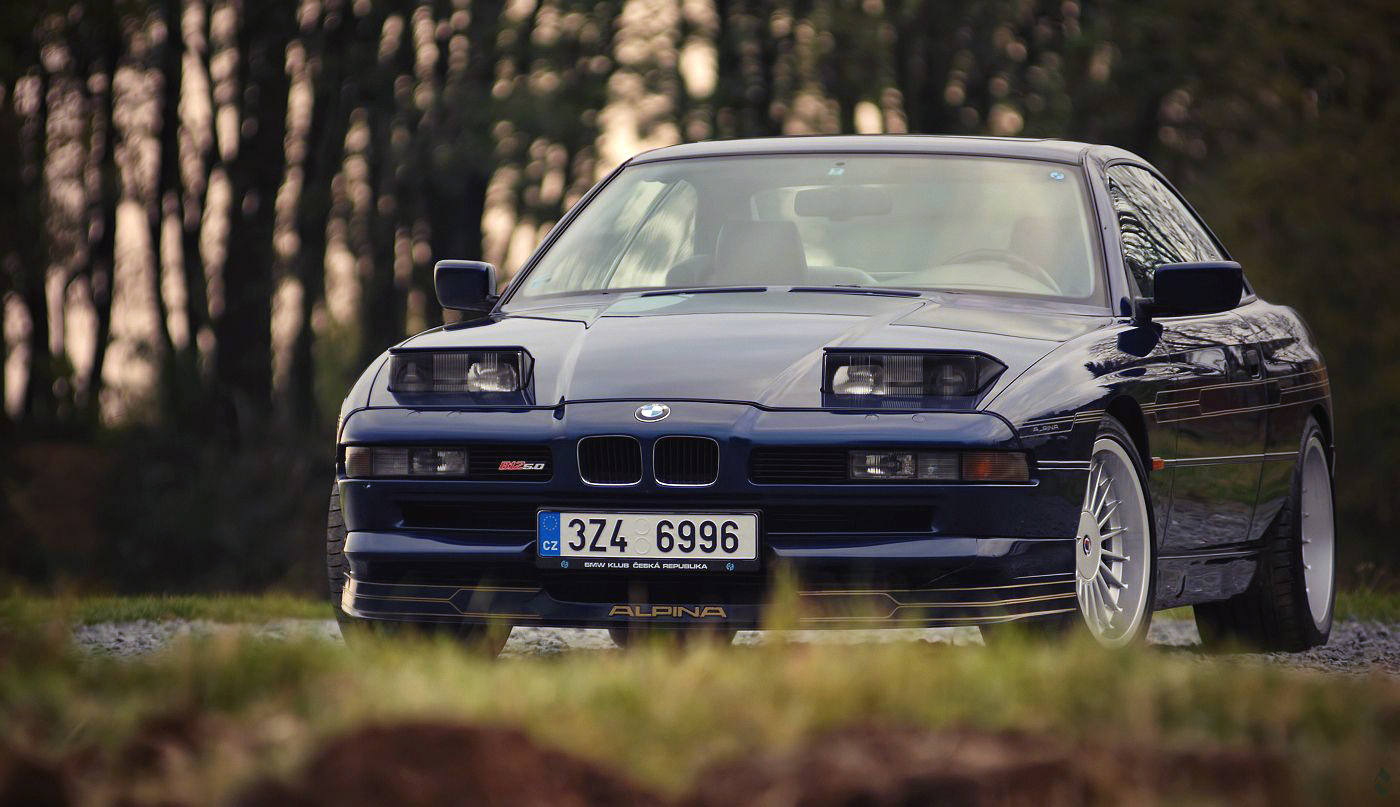
One of the fastest cars to wear an Alpina badge was the B12 – and in fact, there were two different cars carrying the same name. There was the Alpina B12 based on the four-door BMW 7 Series sedan, and there was the Alpina B12 Coupe built on the 8 Series. The B12 Coupe was a proper upper-class GT. Fast, comfortable… with a touch of luxury. It was created to satisfy customers for whom an ordinary BMW simply wasn’t enough. By turning to Alpina, they could feel a certain sense of exclusivity, while still retaining the advanced engineering of these German machines and their remarkable driving characteristics – AND they could even feel an improvement over the standard 8 Series.

The 8 Series was introduced in 1990 as the successor to the BMW E24 6 Series. It was not a pure sports car, but rather a large GT powered by either a V8 or a V12. The 850i served as the basis for the Alpina B12 5.0, but when BMW Motorsport unveiled its 850CSi, it turned out to be so good that Alpina chose that very car as the foundation for building the B12 5.7 Coupe.

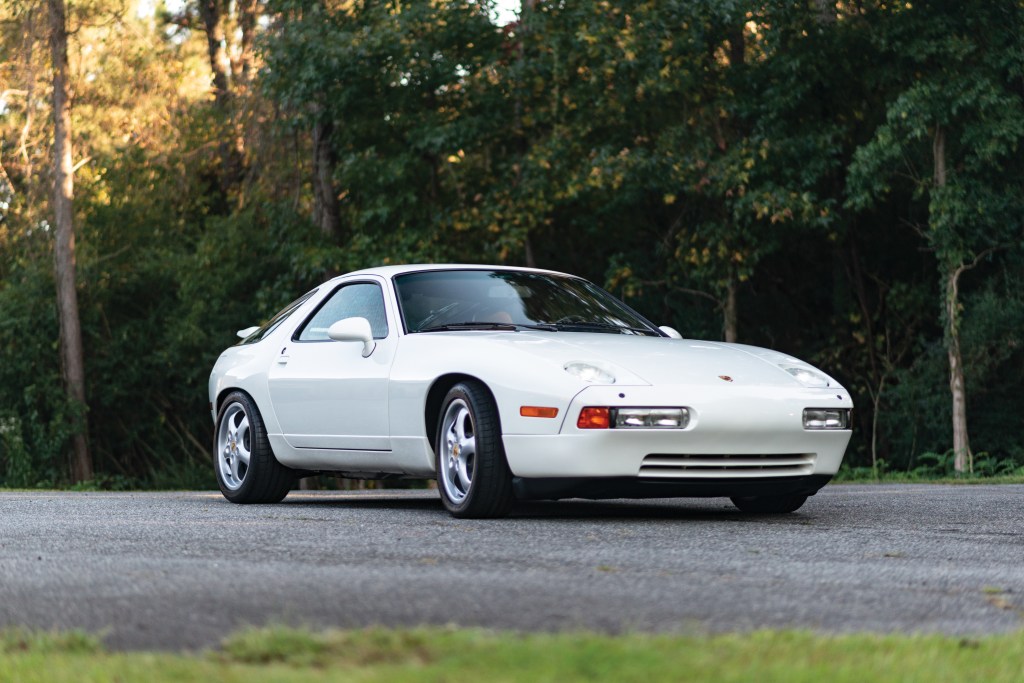
The Alpina Coupe was available exclusively as a V12, and it had an incredibly difficult task ahead of it, as very serious competition was waiting both on a domestic market and abroad. It had to exist in the world where there was the Porsche 928 – and from 1992 onward, also in GTS form, with a larger V8 smoothly delivering at least 350 cheerful horses. 5.5 seconds to 100 km/h was still slower than I take my whiskey, but already dangerously close to the Testarossa of that era (the 512 TR did it in 5.0 seconds). And Porsche, after all, was a 2+2 GT – not a supercar. So in terms of performance, the rivalry was fierce.

And when it comes to prestige… there was also something like the Mercedes 600 SEC roaming the German autobahns. This was the coupe variant of the S-Klasse – of the third generation, coded W140 (C140 for the Coupe) – and by that point it already had a 6.0-liter V12 making 400 horsepower (or nearly 400, depending on the facelift). So the driver of something like that really had no right to complain about mid-range acceleration. And when it comes to ride comfort and equipment, I only have two words to say: S-Class. Thank you for your time. Any questions?

You could say that Gran Turismo is a very tightly defined niche, but even on that shelf there is plenty of room for reshuffling. The competition was highly varied: the performance-focused Porsche, the luxurious Mercedes, and the well-balanced Jaguar. Each of them was a natural rival to BMW, and Alpina had to be better than ALL OF THEM. That is why it introduced its own alternative to the 8 Series – more exclusive, and loaded enough to provide the driver with sensations unmatched by any competition.

Alpina made changes to the car’s aesthetics, but also carried out mechanical modifications to underline its dominance in performance. The architecture of the E31 8 Series was a very good base to work with. The BMW 850i was an exceptionally well-thought-out car (and I will likely show it myself before long), which meant Alpina already had a lot to gain from the very start.

It certainly looked the part, because BMW had given it sleek, aerodynamic lines, though naturally it did not go without Alpina touches both outside and inside the car. The E31 was fitted with some clever suspension with Bilstein dampers and Eibach springs. So at that point it had both the comfort and the driving dynamics, because the E31 delivered the ideal balance – while also leaving its rivals behind in that regard.

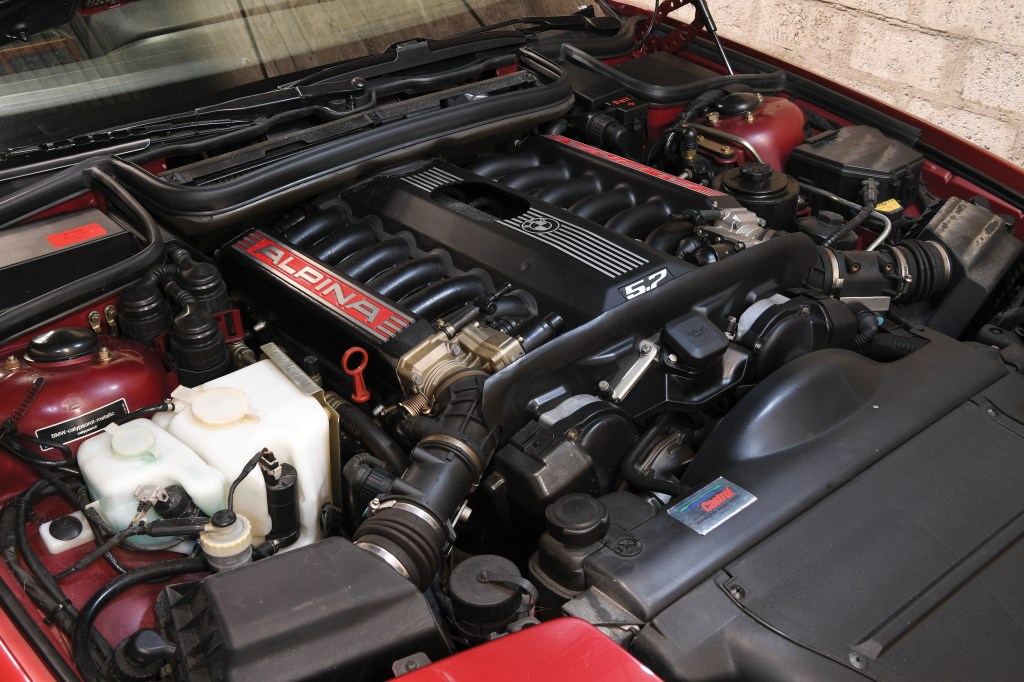
It had to be powered somehow, too – and what sat at the base was BMW’s 5.0-liter V12. It had an aluminum-alloy block and made somewhere in the region of 300 horsepower. Alpina made their changes first raising the output to 350 horsepower, and later increasing displacement to 5.7 liters (410 hp).

It was essentially a ‚double straight-six,’ as it had two distributors, a set of ignition leads for each bank of six cylinders, and a twin air-filter setup of the kind you would normally associate with that layout. The crankcase had been designed specifically with a V12 in mind, but the block itself, the crankshaft, the connecting rods, and all the manifolds remained unchanged. The pistons were thrown out and replaced with ones of higher compression, enlarged intake valves were fitted – they lifted higher and with more aggressive timing – and Bosch ECU control was added as well. Aside from the manifolds, the entire stainless-steel exhaust system was completely new.

The gearbox remained the same 4-speed automatic as in the 5.0-liter BMW, but Alpina reworked its programming so it could fully exploit the car’s new capabilities. Later on (for the 5.7), there was a 6-speed manual Getrag, as well as ShiftTronic with an electronically controlled clutch. This is the only Alpina ever offered with such system.

Inside, there were bespoke made-to-order elements, special color options, and unique upholstery – beyond everything you could already get in the most expensive BMW E31s. Alpina drivers had their own seats and different interior trim than in a standard BMW. From the outside, the car differed only in the details.

Depending on the version, the car could accelerate from 0 to 60 in 5.5 to 6.4 seconds and reach as much as 174-186 mph. Even the 5.0-liter V12 variant was one of the fastest GT cars of its time. The B12 was something magnificent. It combined colossal, supercar-worthy power – but delivered it in a smooth manner – with the refinement of a luxury limousine.

The suspension modifications ensured excellent handling, while the might of the V12 delivered effortless acceleration and exciting sound sensations coming from the exhaust. The regular BMW 8 Series was already a magnificent GT, but the B12 stood above all of them in terms of technology and class equipment. The car remained stable at any speed, inspired confidence in the corners, and braked hard. All of that had to amplify the sense of certainty behind the wheel.

It was a strong entry into the fast GT market. The press fell in love with the car immediately. It hardly had any flaws, while the list of advantages seemed endless. It was a serious contender in this segment right from the start, because it combined Alpina’s craftsmanship with BMW’s underlying architecture.

Machine was prime and price for it was prime – but there was never a shortage of buyers for this car. Even its rivals had to give the Germans their due. People began to recognize the strength of this market segment, and before long, new large coupes would appear, all competing in performance, refinement, and exclusivity. In a way, Alpina opened everyone’s eyes to the true value of this corner of the industry.

The Alpina B12 E31 Coupe is now a true icon of the 1990s, and one of the better – yet also rarer – classics of the era. It stands as a symbol of Alpina’s peak achievements and of their collaboration with BMW. The finest blend of comfort and luxury with performance and emotion – sharpened with a touch of exclusivity. In seven years, fewer than 200 examples of both versions of this model were built. Today, it is a real prize for collectors, available only for very serious money.

Krzysztof Wilk
All sources: it was a text retrieved from my lost webpage – sources will need to be filled later
1990 – Alpina B12 E31 Coupe

EngineDisplacementPowerAccelerationTop Speed
V125.0-5.7 L350-416 bhp5.8-6.4s280-300 km/h
174-186 mph

Jednym z najszybszych aut ze znaczkiem Alpiny było B12 – i tak naprawdę istnieją dwa auta o tej samej nazwie. Alpina B12 w czterodrzwiowym sedanie na bazie BMW Serii 7, oraz Alpina B12 Coupe z Serią 8 u podstaw. B12 Coupe to typowe GT z górnej półki. Szybkie, wygodne… z odrobiną luksusu. Powstała po to aby zadowolić klientów, dla których zwykłe BMW to za mało. Zwracając się w stronę Alpiny, mogli oni czuć się w pewien sposób ekskluzywnie, wciąż zachowując zaawansowaną inżynierię tych niemieckich pojazdów i niebanalne właściwości jezdne – a nawet mogli czuć poprawę względem zwykłej Serii 8.

Serię 8 zaprezentowano w 1990 roku jako następcę BMW Serii 6 E24. To nie było auto czysto sportowe, ale właśnie duże GT z V8 bądź V12. 850i stanowiło bazę dla Alpiny B12 5.0, ale kiedy BMW Motorsport przedstawiło swoje 850CSi to było tak dobre, że wtedy Alpina właśnie na nim dokonywała zmian budując B12 5.7 Coupe.

Coupe Alpiny dosępne było wyłącznie jako V12 i miało niesamowicie trudne zadanie, bo czekała na nie solidna konkurencja zarówno z kraju, jak i zagranicy. Na rynku obecne było Porsche 928 – od 1992 roku jeszcze w wersji GTS z większym V8 jedwabiście zapodającym 350 wesołych koników co najmniej. 5.5 sekundy do setki, to wciąż wolniej jak Kwaśniewski, ale już niebezpiecznie blisko Testarossy tamtych czasów (512TR robiło 5.0s). A przecież Porsche to GT 2+2 a nie supersamochód. Dlatego pod względem osiągów rywalizacja była zaciekła.

A jeśli chodzi o prestiż… Po niemieckich autobahnach jeździło również coś takiego jak Mercedes 600 SEC. To była S-Klasa w wersji Coupe – 3 generacja o kodzie W140 (C140 dla Coupe) i to tam już było 6 litrowe V12 o mocy 400 koni (bądź prawie 400 – w zależności od wersji liftu). No to kierowca takiego czegoś nie miał prawa narzekać na elastyczność swego pojazdu. A przechodząc do komfortu jazdy i wyposażenia, no to mam dwa słowa do powiedzenia: S Klasa. Dziękuję za uwagę. Jakieś pytania?

Można powiedzieć, że Gran Turismo to bardzo sztywno określona nisza, ale i na tej półce jest sporo miejsca do przetasowań. Konkurencja była bardzo różnorodna: nastawione na osiągi Porsche, luksusowy Mercedes oraz zrównoważony Jaguar. Każdy był naturalnym rywalem dla BMW, a Alpina musiała być lepsza od nich wszystkich. Dlatego wprowadziła do oferty ich alternatywę dla Serii 8 – bardziej ekskluzywną i dopakowaną na tyle, żeby zapewnić kierowcy wrażenia nieporównywalne do aut konkurencji.

Alpina dokonała zmian w estetyce pojazdu, ale i mechanicznych modyfikacji dla podkreślenia dominacji w osiągach. Architektura Serii 8 E31 to dobra baza do manipulacji. BMW 850i było bardzo przemyślanym autem (ja o nim zapewne niedługo też opowiem), dzięki czemu Alpina sporo zyskała już na starcie. Na pewno dobrze wyglądała, bo BMW miało smukłe aerodynamiczne linie, ale nie obyło się bez wstawek Alpiny tak na zewnątrz, jak i wewnątrz pojazdu. Do E31 dołożono kurwa sprytne zawieszenie z amortyzatorami Bilstein i sprężynami Eibach. To już wiemy, że ani o komfort, ani dynamikę jazdy nie ma co się obawiać, bo E31 stanowiło idealny balans – przy okazji dystansując rywali w tym temacie.

Coś musi go też napędzać – a jest to motor z 5-litrowym V12 BMW u podstaw. Miał blok ze stopów aluminium i moc w granicach 300 koni mechanicznych. Alpina przypudrowała nosek i temu misiu, podnosząc power do 350 koni, a potem litraż do 5.7L (410 hp).

To właściwie „podwójna szóstka”, bo ma dwa rozdzielacze, parę przewodów zapłonowych dla sześciu cylindrów i podwójny filtr powietrza z tego typu silników. Skrzynia korbowa była projektowana z myślą specjalnie o V12, ale sam blok, wał korbowy, korbowody i wszystkie kolektory – były niezmienione. Tłoki wyjebano i wstawiono takie o wyższym stopniu sprężania, dano powiększone zawory w dolocie – wyżej się podnosiły i miały agresywny timing – oraz sterownik ECU Boscha. Oprócz kolektora – układ wydechowy ze stali nierdzewnej cały był w ogóle nowy.

Skrzynia biegów pozostała tym samym 4-biegowym automatem co w 5-litrowym BMW, ale Alpina pozmieniała w niej oprogramowanie, żeby dała radę wykorzystać w pełni nowe możliwości pojazdu. Później (dla 5.7) wszedł nawet 6-biegowy manualny Getrag, jak i ShiftTronic z elektronicznym sprzęgłem. To jest jedyna Alpina kiedykolwiek oferowana z tym systemem.

We wnętrzu dostępne były elementy na życzenie, specjalne opcje kolorystyczne i unikalna tapicerka – już poza wszystkim co można dostać w najdroższych BMW E31. Kierowcy Alpiny mieli własne siedzenia i inne obicia wnętrza niż w BMW. Z zewnątrz auto różniło się tylko detalami.

Pojazd w zależności od wersji potrafił przyspieszać od 0 do 100 w 5.5s – 6.4s i osiągać do 280-300 km/h. Nawet wariant z 5-litrowym V12 był jednym z najszybszych GT swoich czasów. B12 było czymś wspaniałym. To połączenie kolosalnej mocy godnej supersamochodu – ale podanej w płynny sposób – z wyrafinowaniem luksusowej limuzyny.

Modyfikacje zawieszenia zapewniały doskonałe prowadzenie, a potęga V12 dostarczała bezwysiłkowe przyspieszenie i ekscytujące wrażenia dźwiękowe dochodzące od strony wydechu. Zwykłe BMW Serii 8 było wspaniałym GT, ale B12 to już nad każdym górowało technologią i klasowym wyposażeniem. Auto jest stabilne przy każdej prędkości, prowadzi się pewnie i mocno hamuje. To wszystko musi wzmagać pewność za kierownicą.

To było dobre wejście na rynek szybkich GT. Prasa od razu pokochała to auto. Właściwie nie miało żadnych wad a lista zalet się ciągnęła w nieskończoność. Mocny konkurent w tym segmencie już od początku, bo łączył w sobie rzemiosło Alpiny i architekturę BMW.

Cena była niemała – ale chętnych na to auto nie brakowało. Nawet rywale musieli oddać Niemcom, co należne. Dostrzeżono siłę w tym segmencie rynku i wkrótce pojawią się nowe modele dużych coupe prześcigających się osiągami, wyrafinowaniem i ekskluzywnością. Alpina w pewnym sensie otworzyła wszystkim oczy na rzeczywistą wartość tego rynku.

Alpina B12 E31 Coupe to już kultowe auto lat ’90-tych i jeden z lepszych – a zarazem rzadszych klasyków. Symbol szczytowych osiągnięć Alpiny i ich współpracy z BMW. Najlepsze połączenie komfortu i luksusu, z osiągami i emocjami – podrasowane szczyptą wyjątkowości. W 7 lat zbudowano niecałe 200 sztuk obu wersji tego modelu. Dziś jest kąskiem dla kolekcjonerów do dostania tylko za grube szekle.

Krzysztof Wilk
Żródła: to odzyskany tekst z utraconej witryny – źródła są do uzupełnienia

1981 – BMW M1 E26 Rallye

M1 was a BMW’s halo car between 1978-1981, and even though it had some production issues, enough examples were made for Germans never to worry about the Group 4 homologation. BMW then tried to rival the Group 5 Porsches, but the fact was – the M1 was never designed as a Motorsport vehicle, be it race or rally car. Late ’70s though, rally racing got really popular everywhere in Europe – including France – and France housed numerous tarmac events. A local BMW division decided to up their image by launching the brand’s flagship sportscar’s rallying program. Oreca Team was signed and that was the most fruitful privateer cooperation then.

The M1 Group 4 Rallye was a platform for many high-performance systems from the – now defunct – Procar examples. That’s why the two configurations didn’t really differ that much in specification or performance. The road-going M1 was already a big and wide car, but for the rallying it gained additional 10 cm. New were the fiberglass spoilers and wheel-arches. When they had to, BMW sold their actual Procar M1s as road-legal homologation specials. The M88-series Straight 6 generating 277 bhp from factory, now in rally trim was capable of 430 figure. None had such power as the BMW. All of it was sent to the rear via the close-ratio 5-speed. Its brakes had enlarged aluminum calipers. The French started racing this thing in 1981. Bernard Darniche – 5 times the French Champion, twice the European. The man who won every event on the French soil since 1975 – he drove an HF Stratos then – now in a Group 4 M1 he doesn’t finish the race. The car’s suspension doesn’t make it. It’s a bad sign…

Oreca Team got a new sponsor for the year 1982. The cars with Motul stickers are preparing for Tour de Corse and… well, Corsica is known for numerous narrow corners – often tight or very tight. The BMW was big, with huge power and a tiny handbrake that could do fuck all. Darniche tried his best but the oil pump failed this time. And the whole season was like this. ONCE they make it to the finish line – they make 9th place in German ADAC Rallye Vorderpfalz. Fritzinger Klas drove a similar M1 variant then and even managed 2nd.

Darniche had a flawless sports career… until he sat behind the wheel of that M1. At the end of 1982 he said “fuck it – I care not!” – and BMW was forced to find another victim in his place. France had one more motorsport legend – Bernard Beguin – thrice the France Champion and once for the EuroReich. He was also a 911 veteran, for his SC/RS campaign. With the year 1983, all Group 4 cars transferred to Group B and so did the rally M1, but the car itself didn’t suffer any changes. All they did was, they offered the Procar parts as Evo and that was it. The M1 Evo never came to be, cause that would require another 20 examples physically built to the new standard and the Germans said – “why, absolutely!” – and they redirected their funds elsewhere.

Bernard Beguin made his starts in 1983’s edition of Rally Corsica and… what this time? The engine, of course. The car, again, failed to deliver and it could not finish a single event that year. On a plus side: Beguin managed to complete clean runs – never crashed even though the size of car itself was massive. If only it could last till the end – you could clinch some points with that thing. But the 1983 season… Jesus Christ, don’t even make me start… BMW prepared special upgrades for brakes. A new VO system – dedicated for tight handbrake corners. Spoiler alert – didn’t help shit, because the car still kept retiring early from events. In the final – Rallye d’Antibes, M1 got just 33s behind a Lancia 037.

All in all, BMW was too big for rallying – even dry tarmac. Too heavy, unreliable and generally expensive to run. The rally world was quickly flooded with Group B supercars – highly advanced off-road beasts – and the Germans could pack their shit and go home. Oreca Team surrendered without even trying to address the new rivalry and Beguin returned to Porsche, successfully restarting his 911 campaign. He even managed to win some wins for the BMW in a Group A M3 between ‘87-’89. And the M1? Its papers expired in 1986, so till that moment, it still fought in private hands. There was a time when BMW was the most powerful rally car in the world. Too bad – that’s only numbers in the Excel. And in reality? Not as competitive.

Krzysztof Wilk
All sources: favcars.com | wheelsage.org | wikipedia.org | ultimatecarpage.com | Top Gear: The Cool 500 – The Coolest Cars Ever Made | M Buckley – The Complete Illustrated Encyclopedia Of Classic Cars | autozine.org | rallygroupbshrine.org | carthrottle.com |

1975 – BMW E9 3.0 CSL IMSA Group 2

The touring car championships started in the early ’60s and the format quickly grasp the hearts of both the fans and manufacturers. It was a chance to show your muscles on a racetrack – and the audience could see the drivers fight head-to-head. The early stars were Alfa Romeo Giulia and Ford Cortina, but the rules were often changed, so the 2-door Alfa GTA or BMW 2002 could be allowed. All you had to do was to sell 1000 examples to get the paper. End of the ’60s, Alfa Romeo was the largest player in ETCC, but in their shadow others emerged. Ford and BMW grew strong enough to engage in such an epic battle, that it will shape this format for years to come.

Let’s start with defining what a touring car is. At the time Porsche tried to make their 911 legal, but it’s backseats were too small to ever consider it. Giulia GTA though, or a BMW 2800 CS were almost as tight in the back, yet they could race. 911 drivers then had to be happy with a GT championships, and bigger coupes with a specified passenger space and manufactured in certain volume – they could be raced in ‚touring’ series. A few categories of those were devised for fair competition, and smaller cars could compete side by side with the bigger and more powerful vehicles in one event, as everyone was matched against similar rivals based on their gross weight. Year and year the rules had been polished, and one of the more important changes was allowing more extreme car upgrades after a given part was released in 100 examples.

The touring sport starts off and the BMW quickly change their focus from big 8-cylinder sedans that are expensive to make, and they start building more smaller and cheaper – well, relatively at least – 6-cylinder cars that would attract new niche. The new motors were also far better for racing, so much so, that as soon as in 1964 the Germans could successfully enter their machines in ETCC. And along with their sport campaign, they managed construction of the very same motors for single seater and sports prototype purposes. At some point BMW had a chance to show their support to one of the local marques – Alpina – and help them enter their own racing team in same format, right next to Works BMW racing program. And the ’50s were shit, but later BMWs started actually winning and for some time you couldn’t see any end to the mayhem those cars were bringing on European tracks.

European Ford sent the very new Capri Coupe to fight the German flood, and it entered ETCC in 1970. It was both light AND with a powerful 6-cylinder engine. When Alpina guys saw this shit, they decided to devise a proper racing 2800 CS iteration. 3 enormous Weber carburetors, 3-litre V6 screaming out 300 bhp – and that was not enough to catch up with the Ford! The Germans then made such far going modifications that their car had to undergo another homologation process. They made it lighter, changed the carburetors to a Kugelfischer fuel injection – that alone upped the power to 335 bhp. And Alpina could do a lot, but making 1000 examples for the common folk was too much. In order to get their cars homologated, it was the BMW who took that responsibility upon themselves – otherwise they wouldn’t be allowed to race the Ford at all.

To minimise the risks, the BMW hired the Ford Motorsport Director Jochen Neerpasch, an icon that put the grounds for what we will later know as BMW Motorsport. They made huge modifications on the latest 3.0 CSi – that is how under BMW Motorsport Department’s wings – the 3.0 CSL was born. Its name meant Coupe Sport Leicht (Lightweight Sport Coupe) and the Germans removed everything from it. The bonnet, boot and the doors were all aluminium. The poor people could buy a 180 bhp variant of a 3-litre sport coupe, but starting in 1973 the CSL could be obtained with a more powerful 3.2-litre motor. Now we think of it as a flamboyant batmobile-looking vehicle, but truth be told, none of the road cars ever stood next to those spoilers. They were necessary and very purposeful on a racetrack, but very much illegal in public. However… if you managed to purchase one of such cars in a dealership and took it home, you could then open the boot and find a nice surprise the Germans had a fancy leaving there in form of an 8-step instruction on how to transform your generic BMW road car in a fucking batmobile!

Racing CSLs were ready to fight in 1973, and after the season started they had their displacement increased from 3.2 to 3.5-litre, as well as a new 5-speed Getrag transmission in place of the previous 4-speed gearbox. All in all, the new car was over 150kg (330lbs) lighter than Alpina’s initial car and 75 bhp more powerful. Such cars in BMW Works liveries, the M-Sport colors we know all too well, as well as Alpina and Schnitzer paints – they took the challenge of facing the mighty Ford. At the end of the season, it was Toine Hezemans in his 3.0 CSL who took the first prize, and BMW could live in glory as the new manufacturers champions.

Winter passed and both Ford and BMW used that time for their preparations. All changes were made by the book and with the 100 examples for public use to fulfill homologation requirements. Both sides had Double Overhead Camshaft, 4 valves per cylinder and their power increased to 400 bhp with eyes-fucking-closed. Ford changed their aero, so that it could stand a chance against BMW’s extreme downforce. Bad news – global scale oil crisis reached another level and it took its toll in motor racing. Both the Ford and the BMW were absent for the first round of the season, but they could compare their dick size in the second race – and with the machines in their strongest variants. The Ford chose to sacrifice some reliability for more performance, but the BMW was the hit! 10 out of 10 CSLs that entered the Nurburgring race – never crossed the finish line. Zakspeed team Escort had no rival for the first place run. After such display, the Germans said ‚Auf Wiedersehen you fuckin-…’, well you know… and they retired from that format. Hans Heyer was the best that year and he drove an Escort.

Ford followed the BMW eventually, and they quit with the end of the season. Year 1975 was left to the private teams – 24-valve CSLs still raced in Schnitzer or Alpina’s colors. The latter did even win the driver’s title. Nonetheless, year 1975 shows how quickly the whole format can go to shit. First they changed the homologation rules to cut the costs for following season and suddenly 4 valves per cylinder are a no-no, same with the huge spoilers. Can’t have anything anymore. The last CSLs with 3.2-litre motors and 4-speed transmissions stood strong till very late – successfully fighting off even the new racecars. People even took some 24V variants overseas to enter IMSA GTO format in America and win points in Groups 4 and 5.

Krzysztof Wilk
Na podstawie: favcars.com | wheelsage.org | ultimatecarpage.com

1981 – BMW M1 E26 Rallye

M1 Produkowano od 1978 do 1981 roku jako pokaz technologii BMW. Były jakieś drobniejsze problemy z produkcją, ale powstało ich tyle, że o homologację do Grupy 4 nie trzeba było się martwić. Chciano natomiast włączyć się do walki w Grupie 5 i rywalizacji z Porsche. Ten pojazd nie był projektowany do rajdów i nigdy nie był zamysłem jego twórców udział w szutrowych wyścigach. Pod koniec lat ’70-tych WRC stało się popularne – również we Francji, gdzie większość eventów była asfaltowych. Francuska sekcja BMW chciała podbudować wizerunek marki wystawiając do rywalizacji swój flagowy model – M1. Podpisano kontrakt z Teamem Oreca i była to najbardziej udana współpraca z prywatnym teamem.

W M1 Rallye znalazło się wiele części z rozebranych już M1 Procar, przez co samochody nie różniły się bardzo specyfikacjami. Seryjne M1 już było długie i szerokie a do rajdów zostało jeszcze powiększone o 10cm. Dodano błotniki i spojler z włókna szklanego. Gdzie trzeba było – użyto starych wersji Procar i oddano je jako auta drogowe. 277-konny początkowo silnik M88, to wolnossąca rzędowa szóstka, której moc podniesiono do 430. Nikt nie miał tyle poweru co BMW. Wszystko szło na tył dzięki 5-biegowej skrzyni z krótkimi przełożeniami. Koła były mocowane centralnie i można je było szybko wymieniać, a większe hamulce miały aluminiowe zaciski. Francuzi wyjechali tym po raz pierwszy w 1981 podczas Rallye du Var. Za kierownicą zasiadł weteran Bernard Darniche – 5-krotny Mistrz Francji, 2-krotny Europy. Wygrał prawie każdy event na francuskiej ziemi od 1975 roku (jeździł wtedy Stratosem HF). Niestety, zawieszenie wypadło. Zły znak…

Na sezon 1982 Oreca Team dostał nowego sponsora – Motul. Rozpoczęły się przymiarki do Rajdu Korsyki i… Korsyka jest znana z tego, że zakrętów jest tam w chuj i jeszcze więcej – często bardzo ciasnych. BMW było duże, miało od kurwy mocy i malutki hamulec ręczny, który można było sobie co najwyżej w dupę wsadzić. Darniche robił, co mógł, ale tym razem pompa oleju dała o sobie znać. I tak, kurwa, do zajebania. Przez cały sezon podobne historie. Raz tylko udało się dojechać do końca, podczas ADAC Rallye Vorderpfalz w Niemczech zdołano przejechać metę na 9 pozycji. Podobnym BMW M1 jechał wtedy też Fritzinger Klas i zajął nawet 2 miejsce.

Darniche miał wspaniałą karierę aż wsiadł do BMW. Po zakończeniu sezonu ’82 powiedział, że on to w dupie ma i musiano szukać kolejnej ofiary. Padło na inną legendę francuskiego motorsportu, Bernarda Beguina – 3 Mistrzostwa Francji i 1 Eurokołchozu. Przed przesiadką do BMW, Beguin zdrowo śmigał w Porsche 911 SC. W 1983 wszystkie auta z Grupy 4 dostały transfer do Grupy B, jeśli producent sobie tego zażyczył. Tak stało się z BMW M1, ale sam pojazd nie uległ zmianie. Wystarczyło tylko odpalić wszystkie części do Procar jako wersje evo i było git. Same M1 Rallye Evo nigdy nie powstało, bo BMW Motorsport musiałoby fizycznie wykonać 20 kolejnych pojazdów, więc Niemcy stwierdzili, że „ależ absolutnie – a komu to potrzebne?”. I tak właśnie fundusze przeznaczono w innym kierunku.

Bernard Beguin wystartował w M1 podczas Rajdu Korsyki 1983, ale… Co tym razem? Otóż silnik. Auto znów dowiodło swej zawodności i nie ukończyło w tym sezonie nawet jednego eventu. Plusem był fakt, że mimo gabarytów Beguin nigdy pojazdu nie rozbił. Jakby samochód dawał radę do końca, to dałoby się nim nawet punktować. Sezon ’83 to w ogóle szkoda strzępić ryja. Na rok 1984 BMW przygotowało nowy, lepszy układ hamowania VO – specjalnie do pokonywania ciasnych zakrętów na ręcznym. Spoiler alert – nic to nie dało, bo pojazd w dalszym ciągu nie dojeżdżał do końca. W ostatnim evencie – Rallye d’Antibes BMW zajęło 2 miejsce 33 sekundy za Lancią Rallye 037.

Samochód był za duży na rajdy – nawet te asfaltowe. Za ciężki, cierpiał od usterek i w ogóle był za drogi. W następnym sezonie nastąpił zalew nowych supersamochodów i BMW nie miało już czego szukać. Team Oreca poddał się bez walki a Beguin znów zaczął odnosić sukcesy za kierownicą Porsche. Pomógł też później przywrócić honor marki w modelu M3 Group A w latach ’87-’89. BMW M1 jeździło w rękach innych prywaciarzy aż do końca homologacji w 1986. Był czas, że M1 było najsilniejszym mocą samochodem rajdowym. Szkoda, że tylko na papierze

Krzysztof Wilk
Na podstawie: favcars.com | wheelsage.org | wikipedia.org | ultimatecarpage.com | Top Gear: The Cool 500 – The Coolest Cars Ever Made | M Buckley – The Complete Illustrated Encyclopedia Of Classic Cars | autozine.org | rallygroupbshrine.org | carthrottle.com |