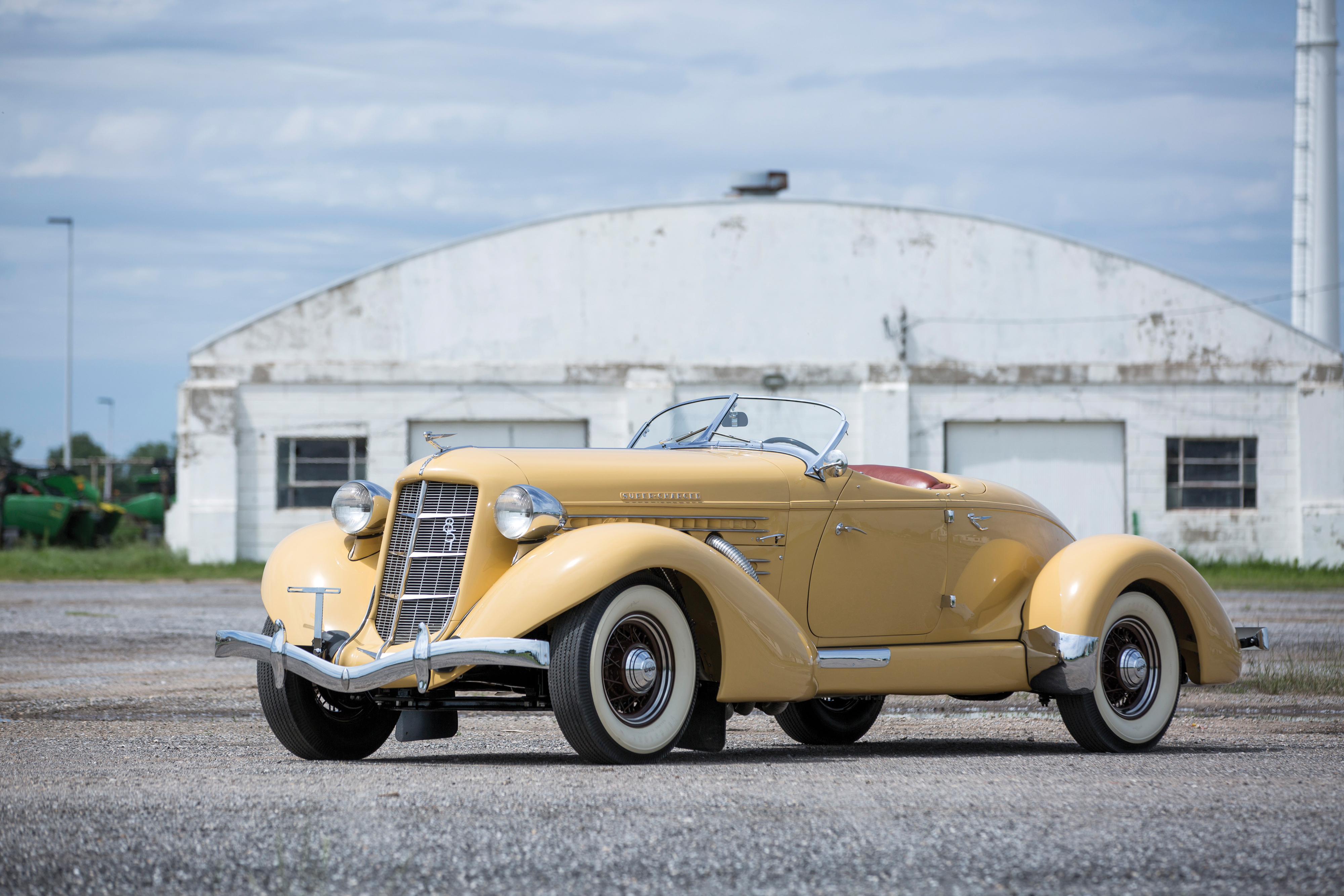
| Engine | Displacement | Power | Acceleration | Top Speed |
| Straight 8 side-valve | 4.6 L | 115 bhp | 161 km/h 100 mph | |
| Straight 8 side-valve Supercharged | 4.6 L | 150 bhp | ~15.0s | 161 km/h 100 mph |
The brand behind this vehicle was actually the Eckhart Carriage Company – that was its real name – and it was a firm that produced quite decent carriages. It had existed long before the automobile era, as early as 1874. It was this very company that, in 1900, created a separate brand in its home town of Auburn, Indiana. It began with a single-cylinder automobile, then came a 6-cylinder model, and eventually a shutdown of production due to lack of funds.


And they did not deserve that fate, because the cars were solid and fairly inexpensive to buy. The real problem was distribution. A small company had neither the money for proper advertising, nor much of a dealer network. They were bought out by a gentleman named Wrigley (and yes – the on who did the chewing gum), but even he was not able to solve problems. Only Cord had the power to do that.
Errett Lobban Cord went to school and all that, but at some point he decided it was boring as fuck and said ‚screw this shit’. He preferred spending his time in the garage and at the track when racing. He also found work in a car dealership and turned out to be damn good at it. From his sales commission, he built up such a respectable sum that he was able to leave the company and move over to the struggling Auburn. He took control of the brand in 1924 and guided it safely through the Great Depression, but by the 1930s the debts had begun to pile up to completely unmanageable levels.


The plan was, essentially, to offer the cars at lower price – but instead of simply taking the deal while it was there, people started coming up with their own conspiracy theories. ‚There must be something wrong with the car,’ they figured, if it had a V12 yet at lower tier cost of some lower tier eight-cylinder machine of a lower tier. Well, this time they were wrong – mistaken. Incorrect. The 12-160, despite not selling well, was actually a good car. It was the car to take. Besides, under Cord, nothing but beautiful automobiles were ever built – powered exclusively by either eight- or twelve-cylinder engines.
They did not break their legs straight away. When Cord introduced his plan, he first had to get rid of the 1,000-plus cars they already had sitting around with no idea what to do with them. The new boss gave them a light refresh, and sent them out on special offer. The radio featured his cars. They wrote about them in the newspapers. It gave the company such a kick that even Cord did not expect it. And he made so much money that he went from being the frontman of the band to owning the whole circus. By around 1930, he controlled close to 150 businesses, for which he created the parent company: the Cord Corporation.


And it worked! It fucking worked. Cord’s era brought new models powered by straight-eight engines. They were fairly lively, and generally regarded as affordable. Sales were growing at an exponential rate, and the company was strengthening itself with talented people from both the technical and design departments.
That was when the first Speedster model came to be. It served more as a showpiece, and nobody really saw it as a product for the masses. But it could stand outside the showroom doors and tempt people into buying the brand’s cheaper models. Then the crisis came along and flipped the whole table.
The situation looked like this: America was already at the start of the era ruled by the big trio – the Ford, the GM, and that third one – and Cord Corporation never regained its former scale. They tried… they really did. Great V12s appeared in the style of Packard, Pierce-Arrow, or Cadillac. Auburn’s V12 competed quite literally with the best in the country, and yet it was the cheapest of them all. The premium segment was reinforced by smaller models with either eight- or twelve-cylinder engines, but the cost of maintaining such powerplants in the middle class was a miscalculation on Cord’s part. Customers gradually grew accustomed to the products of Ford or Chrysler, and stopped believing in smaller brands. Cord never fully recovered its potential. They were but a shadow of their former greatness.


Great hopes for survival were placed in the 851. The 851 was for the rich only. At one point, it was the most expensive car on the American continent. Its beautiful body was designed by Gordon Buehrig specifically for that model.
There were several body styles, but the most desired was the Speedster. An absolute bomb – complete with a grand, lavish interior. The Ferrari of its time – a magnificent machine. No wonder it became the beloved means of transport among both showbusiness stars and gangster bosses. It was an evolved form of the earlier cars, drawing from previous models, but advanced enough that it really has to be taken outside the context of its predecessors.
At first it still carried the 8-851 designation, but the first part, indicating the number of cylinders, was quickly dropped. The cars were equipped with a differential offering two settings, adjustable by a lever from the cabin, allowing the driver to choose between a more aggressive or a more comfortable driving mode. The model used a worm-gear steering system and suspension based on semi-elliptic leaf springs with hydraulic dampers.


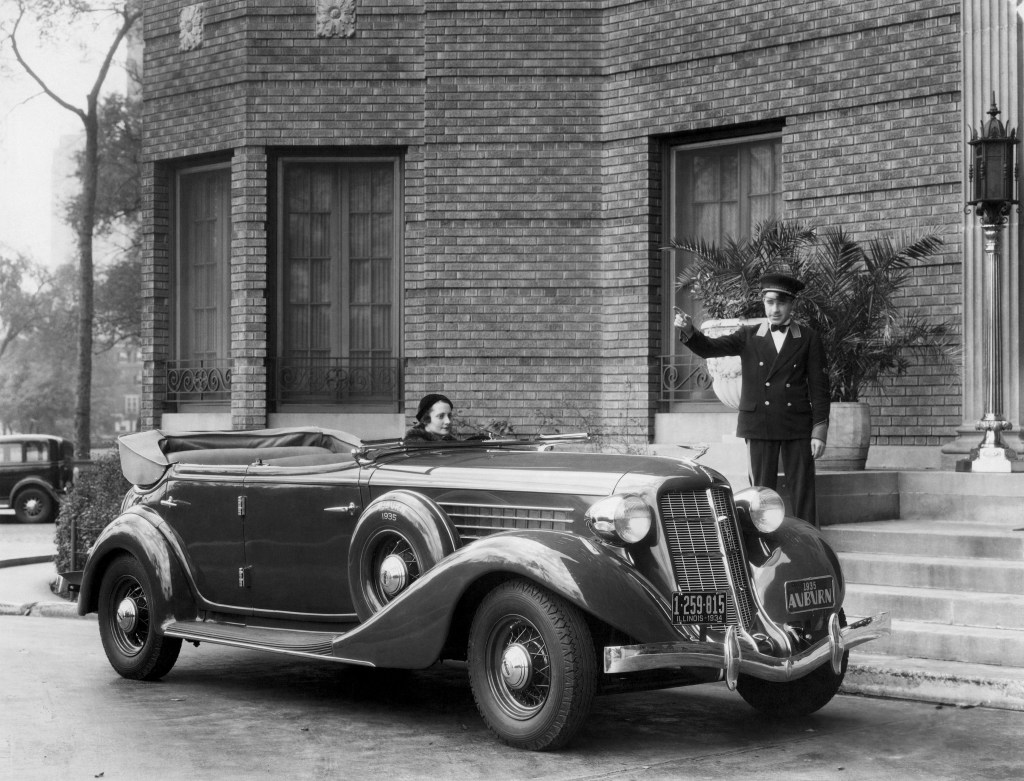
The setup was powered by a 4.6-liter inline eight-cylinder flathead side-valve, and in SC form it came with forced induction from a Schweitzer-Cummins supercharger. 150 horsepower after supercharger. More than enough for spirited driving.
Every single example was 100 mph capable, and that was always verified before it was even allowed to leave the factory. Each one had to do 100 mph – no excuses – or it went back for further work. Very few could say that. These cars were capable of running at top speed for twelve hours straight. Ab Jenkins carried out this test exactly in a standard SC Speedster with no modifications. The man broke 70 records with that car.


There was also a variant called 852, but in truth it was basically the same car with only minor changes. I honestly do not know why they decided to introduce a new name for it. Both were magnificent, but they shared one problem: the way the brand was being managed. Cord turned the marque into a test rat for different marketing methods. On top of that, it also suffered from internal competition from the Cord 810.
The Speedster was wonderful, but it couldn’t carry the sales of the rest of the brand’s lineup. Auburn could not make the numbers work, and as a result the company was placed into liquidation in 1937. This model is extremely rare and expensive as fuck. The market is full of the 851-look replicas.
Krzysztof Wilk
All sources: it was a text retrieved from my lost webpage – sources will need to be filled later

